As Serbia heads into extraordinary parliamentary elections on October 25, the opposition remains fragmented, participating in the elections through three separate coalitions. This division comes despite warnings from public opinion researchers that a unified front would be the most effective strategy against the ruling party led by President Aleksandar Vučić. The political landscape is further complicated by the emergence of the “Student List – Students Win,” a movement gaining traction among voters disillusioned with the current regime.
The opposition’s inability to consolidate has been a recurring theme in Serbian politics. In this election, the coalition “European Serbia – Marinika Tepić – Zdravko Ponoš,” which includes the Freedom and Justice Party (SSP) led by Dragan Đilas, the Ponoš Serbia Center (SRCE), and the Civil Solidarity Movement of Goran Ješić, aims to appeal to pro-European voters. On the other hand, the “Authentic Right,” comprising Miloš Jovanović’s New DSS and the Movement for the Kingdom of Serbia (POKS) led by Vladimir Jelić, focuses on issues surrounding Kosovo and Metohija. The “People’s Serbia” coalition, led by Miroslav Aleksić’s National Movement of Serbia (NPS), Aleksandar Jovanović Ćuta’s Ecological Uprising, and Miloš Parandilović’s Novo lice Srbija (NLS), positions itself in the right-center, advocating for regime change.

The electoral threshold for these coalitions is set at 3 percent, translating to approximately 132,000 votes needed to secure parliamentary representation, assuming a 65 percent voter turnout. This threshold poses a significant challenge for the fragmented opposition, which must collectively gather at least 396,000 votes to ensure all three coalitions surpass the minimum requirement.
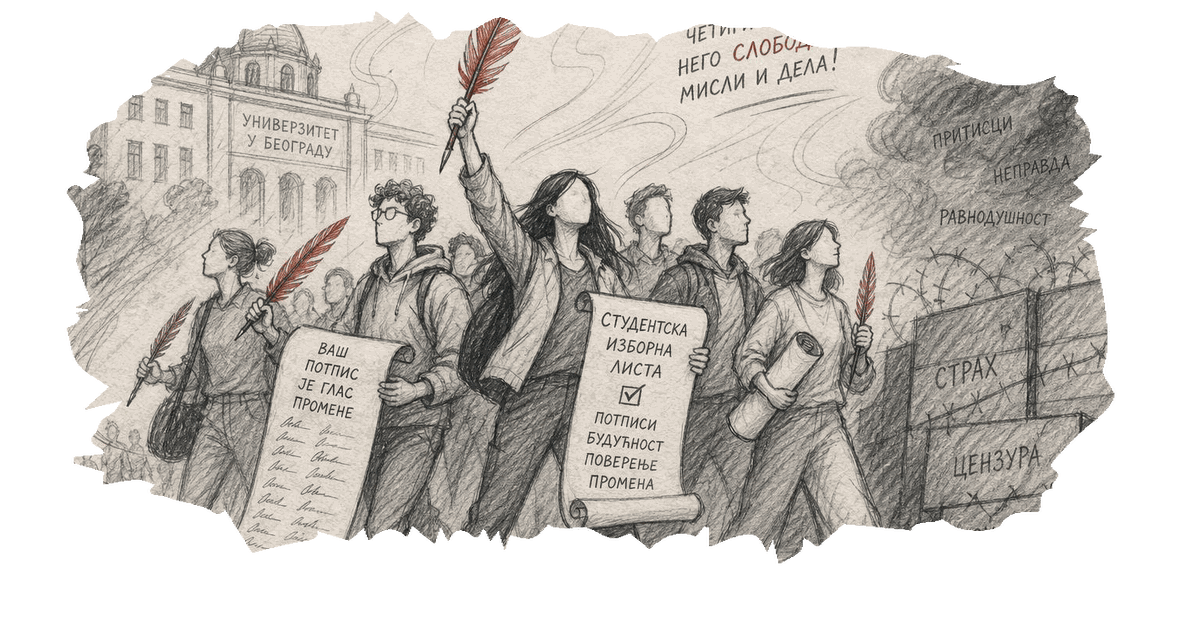
The “Student List – Students Win” has emerged as a formidable force, drawing significant support from those eager to see a change in leadership. This movement has been bolstered by endorsements from some opposition parties, such as the Green-Left Front (ZLF) and the Movement of Free Citizens (PSG), which have opted not to participate directly in the elections but instead support the student-led initiative. This strategic decision reflects a broader sentiment within parts of the opposition that sees the student movement as a viable path to challenging Vučić’s regime.
Historically, the opposition’s struggles to unite have often resulted in electoral setbacks, as seen in past elections where fragmented efforts failed to effectively counter the ruling Serbian Progressive Party (SNS). The current scenario mirrors these past challenges, with the opposition’s division potentially undermining their collective ability to present a robust alternative to voters.
The electoral landscape is further complicated by the dynamics within the opposition coalitions themselves. The “European Serbia” coalition, for instance, is focused on aligning Serbia more closely with the European Union, advocating for justice, anti-corruption measures, and economic reforms. Meanwhile, the “People’s Serbia” coalition emphasizes environmental issues and grassroots mobilization, seeking to position itself as a third political force capable of driving change.
As the elections approach, the stakes are high for both the opposition and the ruling party. The SNS, which has maintained a strong grip on power, is being challenged by the growing momentum of the student movement and the persistent calls for change from various opposition factions. The outcome of the elections will not only determine the immediate political landscape in Serbia but also have broader implications for the country’s future direction, particularly in terms of its relationship with the European Union and its internal governance.
The political environment is charged, with increased voter registration and a heightened sense of urgency among both supporters and opponents of the current regime. The opposition’s ability to navigate this complex landscape, either through coalition-building or strategic alliances with emerging movements like the Student List, will be crucial in shaping the electoral outcome and the future of Serbian politics.