

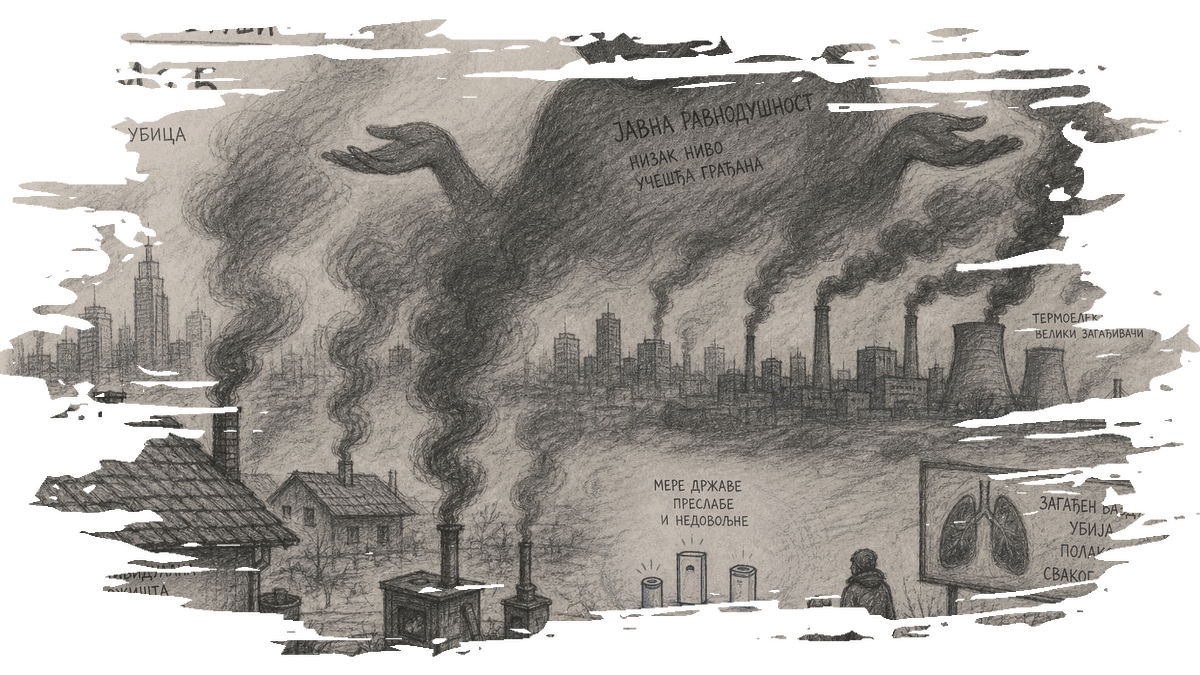
As the heating season commences in Serbia, concerns over air pollution and its public health implications have resurfaced. The onset of colder weather typically marks a significant increase in air pollution levels, primarily due to emissions from individual heating sources and thermal power plants. This seasonal rise in pollution is characterized by high concentrations of PM2.5 particles, which are known to pose serious health risks.
According to the Serbian government’s air protection program for 2022-2030, air pollution is responsible for nearly 10,000 premature deaths annually in the country. The primary contributors to this pollution during winter months are local heating systems and power plants, with industry and traffic also playing a role. There are approximately one million individual heating sources in Serbia, with a substantial number, estimated between 350,000 and 400,000, located in Belgrade alone.
Despite government efforts to mitigate pollution, such as the purchase of 150,000 air filters for individual heating systems in Belgrade, public participation in these initiatives remains low. As of July, only 2,272 residents had applied for the free installation of these filters. Critics argue that these measures address only the symptoms rather than the root causes of the pollution problem.
The health risks associated with PM2.5 particles are significant. These fine particles can penetrate deep into the lungs and even enter the bloodstream, leading to various health issues. In 2025, Serbia’s air quality was reported to be four times worse than the safety levels recommended by the World Health Organization (WHO), with PM2.5 concentrations exceeding safe limits on an average of 104 days per year.
Environmental organizations have long advocated for the creation of a comprehensive registry of heating sources to better understand and address the pollution problem. However, such a registry has yet to be established, complicating efforts to develop effective strategies for reducing emissions.
Serbia’s air quality challenges are not new, as the country has consistently ranked among those with the most polluted air in Europe. In 2025, Serbia was placed 38th globally out of 143 countries for air pollution levels, according to IQAir’s annual report. Furthermore, Serbia holds the dubious distinction of having the highest number of premature deaths in Europe due to environmental pollution, primarily air pollution.
The low uptake of the government’s air filter program highlights a gap between policy initiatives and public engagement. This disconnect raises questions about the effectiveness of current measures and the need for more comprehensive solutions to address the underlying causes of air pollution.
As Serbia enters another heating season, the health risks posed by air pollution remain a pressing concern. The situation underscores the need for more effective public policies and greater public awareness and participation in efforts to improve air quality. Without significant changes, the health and environmental impacts of air pollution are likely to persist, affecting thousands of lives each year.



0 Comments