

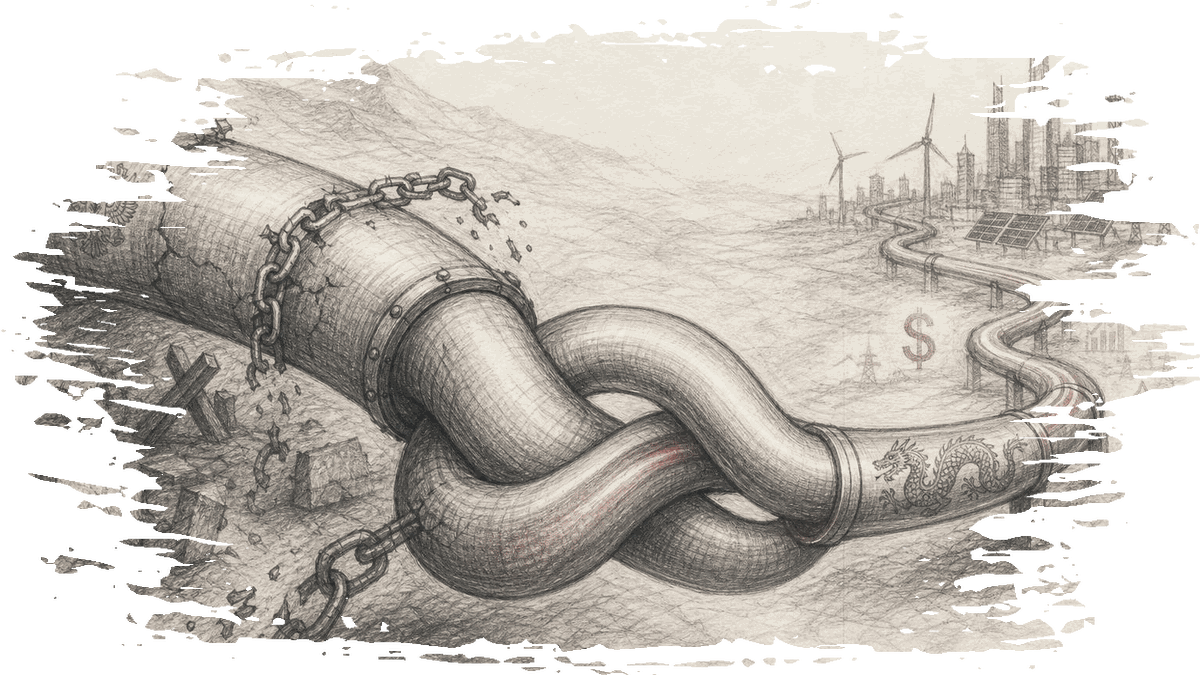
China is poised to benefit from a substantial discount on Russian natural gas, paying approximately 56% less than other foreign customers outside the former Soviet Union in 2026. According to Russian government projections cited by The Moscow Times, China will pay an average price of $248 per thousand cubic meters, compared to $562 paid by other foreign customers of Gazprom. This significant price reduction underscores the Kremlin’s fiscal dependency on Beijing, particularly as Western sanctions and the ongoing war in Ukraine continue to strain Russia’s economic leverage.
The discount is seen as a consequence of China’s political support for Russia’s military efforts in Ukraine. As Western countries impose sanctions and the European Union seeks to reduce its reliance on Russian gas, China’s purchases have become a crucial source of revenue for Russia. This financial dependency has weakened Russia’s negotiating position, as evidenced by China’s ability to secure lower prices compared to those it pays for gas from Turkmenistan. Reports from Carnegie’s Russia Eurasia Center indicate that China pays up to $60 more per thousand cubic meters for Turkmen gas than for Russian gas.
The geopolitical dynamics further complicate Russia’s position. The stalled negotiations over the “Power of Siberia 2” pipeline, due to pricing disputes, highlight the challenges Russia faces in leveraging its vast gas reserves in Siberia’s Yamal Peninsula. These reserves remain largely untapped due to the loss of European customers, thereby enhancing China’s bargaining power.
Sergei Vakulenko, a senior fellow at Carnegie, notes the dual pressures on Russian negotiators. On one hand, the geopolitical tensions between the United States and China, alongside instability in the Middle East, could incentivize China to favor pipeline gas over liquefied natural gas (LNG), potentially benefiting Moscow. On the other hand, the severed ties with Europe have left Russia with abundant gas reserves but limited markets, thus strengthening China’s negotiating position.
China’s growing influence in Central Asia, marked by significant investments in energy and infrastructure projects, further shifts the power dynamics in the region. Chinese Premier Li Qiang’s recent visit to Central Asia resulted in deals with Uzbekistan and Tajikistan, including the establishment of a non-ferrous metallurgy industrial cluster. These initiatives are part of China’s broader strategy to expand its influence and secure energy resources in the region.
The implications of this gas deal extend beyond Russia and China, affecting global energy markets and geopolitical relations. The steep discount highlights the shifting balance of power, with China emerging as a dominant player in the energy sector. As Russia becomes increasingly reliant on Chinese support, the broader geopolitical landscape continues to evolve, influenced by economic dependencies and strategic alliances.
While Russia hopes to reduce the discounts in the coming years, the current arrangement underscores the challenges it faces in maintaining economic stability amid international sanctions and geopolitical tensions. The future of gas pricing and the stability of Russia’s energy market remain uncertain, as the country navigates its complex relationship with China and the broader international community.

0 Comments