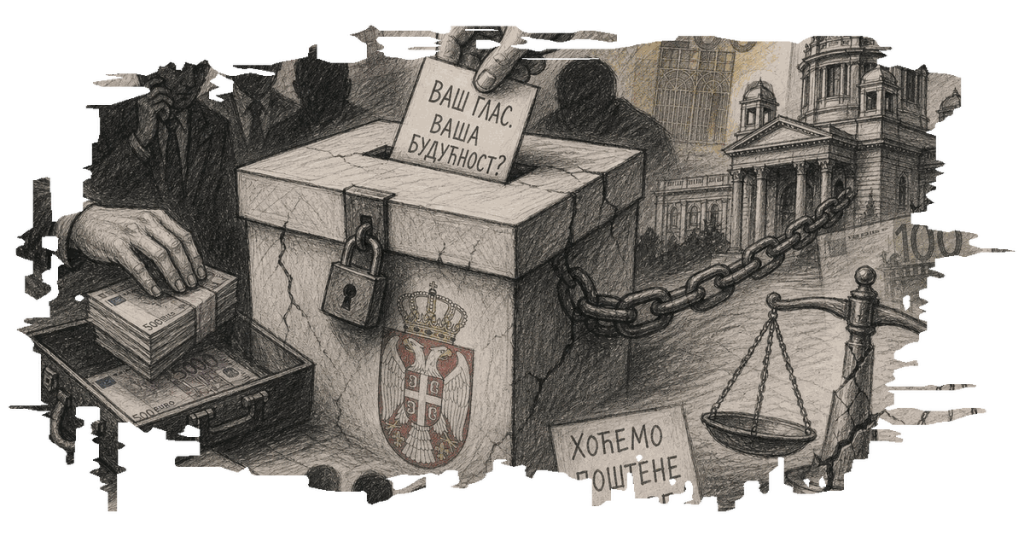
The upcoming elections in Serbia, scheduled for October 25, are expected to take place under significantly worse conditions than those in 2023, according to a statement by the non-governmental organization Transparentnost Srbija. The organization has raised concerns about the electoral integrity, citing the lack of implementation of key recommendations from the Office for Democratic Institutions and Human Rights (ODIHR) related to voter pressure and the distribution of funds before the elections. Transparentnost Srbija highlighted that nearly one billion euros have been allocated for what they describe as “buying voter support,” a substantial increase from the 430 million euros distributed prior to the 2023 elections.
The organization criticized recent amendments to the Law on Preventing Corruption, arguing that they are insufficient for effectively regulating campaign practices. These amendments reportedly apply only to certain officials and the final stages of the campaign, leaving loopholes that could be exploited. Furthermore, the spending limit for parliamentary elections has been set at six million euros, a figure Transparentnost Srbija considers absurdly high compared to similar countries.

Transparentnost Srbija also pointed out that despite changes in campaign financing regulations, these are inadequate. The organization emphasized that even perfect laws are of little value if key institutions, such as the Agency for Preventing Corruption and public prosecutors, do not proactively investigate violations, establish facts even when complaints are filed, or initiate punitive proceedings. Instead, these bodies often issue warnings rather than pursuing legal action.
The NGO’s statement challenges claims made by the Serbian government that electoral conditions have been significantly improved, taking into account the views of political stakeholders and ODIHR’s recommendations. Transparentnost Srbija argues that these claims lack sufficient factual support.
This situation is set against a backdrop of previous elections in Serbia, which have faced scrutiny over fairness and the influence of state resources on voter behavior. The ODIHR has previously issued recommendations aimed at improving electoral conditions in the country, but according to Transparentnost Srbija, these have not been adequately addressed.
The upcoming elections are crucial for Serbia’s political landscape, as they will test the integrity of the electoral process and the public’s trust in it. The significant financial allocations for voter support and the high spending limits for campaigns raise concerns about potential voter manipulation and the fairness of the electoral process. The effectiveness of recent legislative changes and the role of regulatory bodies in enforcing electoral laws will be critical in determining the credibility of the elections.
As Serbia prepares for the elections, the concerns raised by Transparentnost Srbija highlight the ongoing challenges in ensuring a fair and transparent electoral process. The organization’s statement underscores the need for comprehensive reforms and the proactive enforcement of electoral laws to safeguard democratic principles in the country.