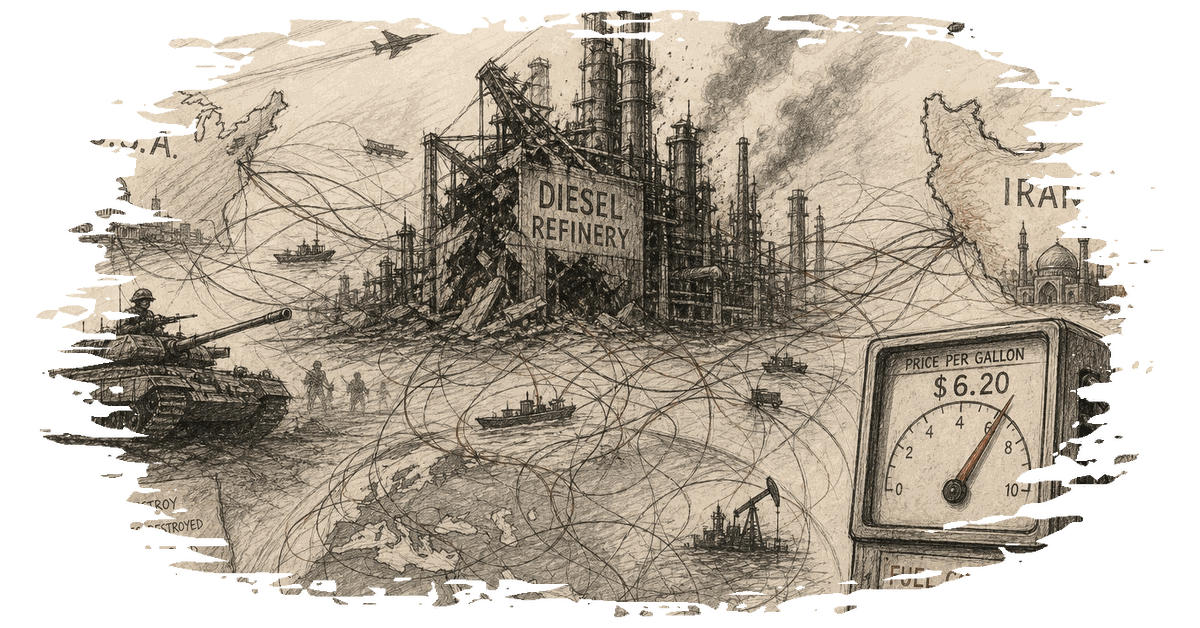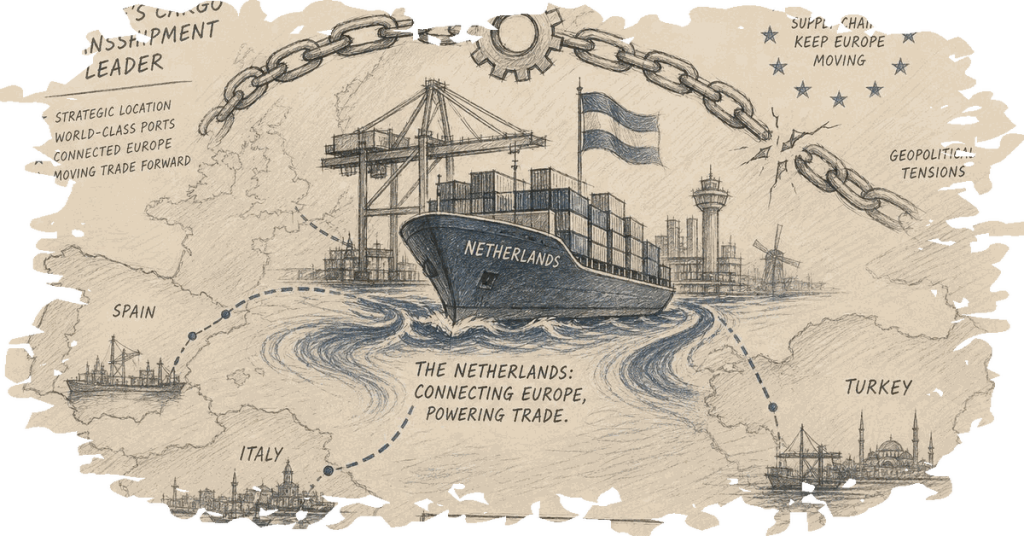
The Netherlands has emerged as the leading nation in the European Union for cargo transshipment, with its port in Rotterdam handling an impressive 397.3 million tons of cargo, making it the busiest port in the EU. This dominance is underscored amidst ongoing geopolitical tensions, particularly the war with Iran, which has disrupted maritime routes and brought maritime transport back into focus for Europe.
According to the EU Blue Economy Observatory, nearly 90% of the EU’s external trade is conducted via maritime routes. In 2024, EU ports collectively handled about 3.4 billion tons of cargo, representing approximately 26% of global maritime traffic. This substantial volume highlights the critical role of maritime transport in supplying Europe with essential goods, food, and energy.

The geopolitical landscape, particularly the conflict with Iran, has affected shipping routes, emphasizing the strategic importance of Europe’s ports. The Netherlands, with its robust port infrastructure, particularly in Rotterdam, has maintained its position as a key player in global maritime trade. This is significant as it underscores the resilience and adaptability of Dutch ports in the face of global disruptions.
Turkey ranks second among candidate countries in cargo transshipment, followed by Italy and Spain. These countries, along with the Netherlands, are significantly ahead of other EU nations in terms of cargo volume. Belgium and Germany follow, with Belgium’s Antwerp-Bruges port handling 243.7 million tons and Germany’s Hamburg managing 97 million tons of cargo.
The European Commission has recognized the historical importance of maritime transport in driving economic growth and prosperity. In March 2026, it adopted strategies to enhance the competitiveness, sustainability, safety, and resilience of the broader European maritime sector, including ports, shipping, and shipbuilding.
The ongoing geopolitical tensions have brought to light the vulnerabilities of maritime routes, which have been a subject of concern in previous discussions. The disruption of these routes due to conflicts has necessitated a re-evaluation of Europe’s maritime transport strategies, ensuring that they are robust enough to withstand such challenges.
The prominence of Dutch ports, particularly Rotterdam, in European maritime trade is not only a testament to their operational capacity but also highlights the strategic foresight in infrastructure development that has positioned the Netherlands as a leader in this sector. As Europe continues to navigate the complexities of global trade amidst geopolitical tensions, the efficiency and capacity of its ports remain crucial to maintaining economic stability and supply chain continuity.