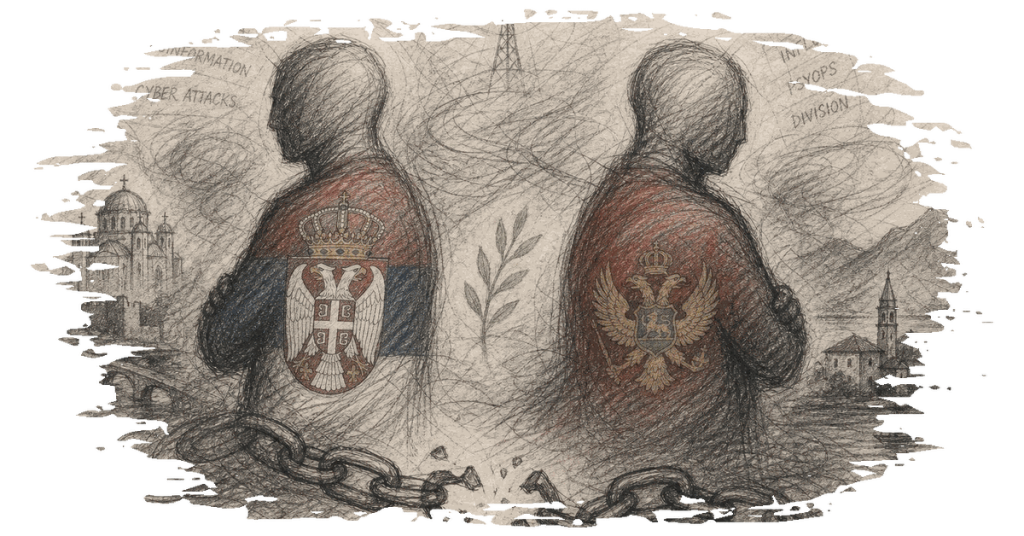
Accusations of hybrid warfare and diplomatic disputes have intensified between Serbia and Montenegro. The Serbian Ministry of Foreign Affairs has accused Montenegro of engaging in hybrid activities that undermine Serbia’s political landscape. This accusation follows Montenegro’s dismissal of Serbian President Aleksandar Vučić’s claims of a hybrid war being waged against Serbia. The Ministry’s statement emphasized the need for resolving issues through institutional dialogue and diplomatic channels, rather than through public accusations and attempts to silence Serbia.
The Serbian government has expressed its commitment to respecting Montenegro’s sovereignty and territorial integrity. However, it has also highlighted a perceived lack of reciprocal respect from Montenegro towards Serbia’s territorial integrity. The Serbian Ministry of Foreign Affairs pointed out that Montenegro’s actions often portray Serbia as a problem, which they argue is used as a convenient excuse for Montenegro’s internal political failures. The Ministry a focus on mutual interests such as economic cooperation, infrastructure development, and the strengthening of trust between the two nations.
This diplomatic spat comes against a backdrop of complex historical and political relations between Serbia and Montenegro. The two countries were part of a union until Montenegro declared independence in 2006. Since then, their relationship has been marked by occasional tensions, often revolving around issues of national identity and regional influence. Montenegro’s recognition of Kosovo’s independence in 2008 further strained relations, as Serbia does not recognize Kosovo as a separate state.
In recent years, the political dynamics within Montenegro have also played a role in shaping its relationship with Serbia. Montenegro’s internal politics have been characterized by a struggle between pro-Western and pro-Serbian factions. Milan Knežević, a prominent Montenegrin politician and ally of Vučić, has been vocal about what he perceives as Montenegro’s unfair treatment of Serbia. He has criticized Montenegro’s foreign ministry for its alleged frustration towards Serbia and a reevaluation of Montenegro’s recognition of Kosovo’s independence.
The Serbian government has reiterated its stance of maintaining a responsible and serious policy towards Montenegro, expecting the same level of respect in return. This expectation includes addressing issues that affect both nations’ citizens, such as economic ties and freedom of movement. Despite the current diplomatic row, Serbia has expressed a desire to work collaboratively with Montenegro on issues of mutual interest.
The situation has drawn attention from regional observers who note the potential implications for broader Balkan stability. The Western Balkans have a history of ethnic and political tensions, and the relationship between Serbia and Montenegro is seen as a key factor in regional dynamics. The European Union, which both countries aspire to join, has encouraged dialogue and cooperation between the two nations as part of its broader strategy for the region.
In conclusion, the recent diplomatic tensions between Serbia and Montenegro underscore the complexities of their bilateral relationship. While both countries have expressed a willingness to engage in dialogue, the path to resolving their differences remains fraught with historical grievances and political challenges. As the situation develops, the international community will be watching closely, hoping for a resolution that promotes stability and cooperation in the Western Balkans.