

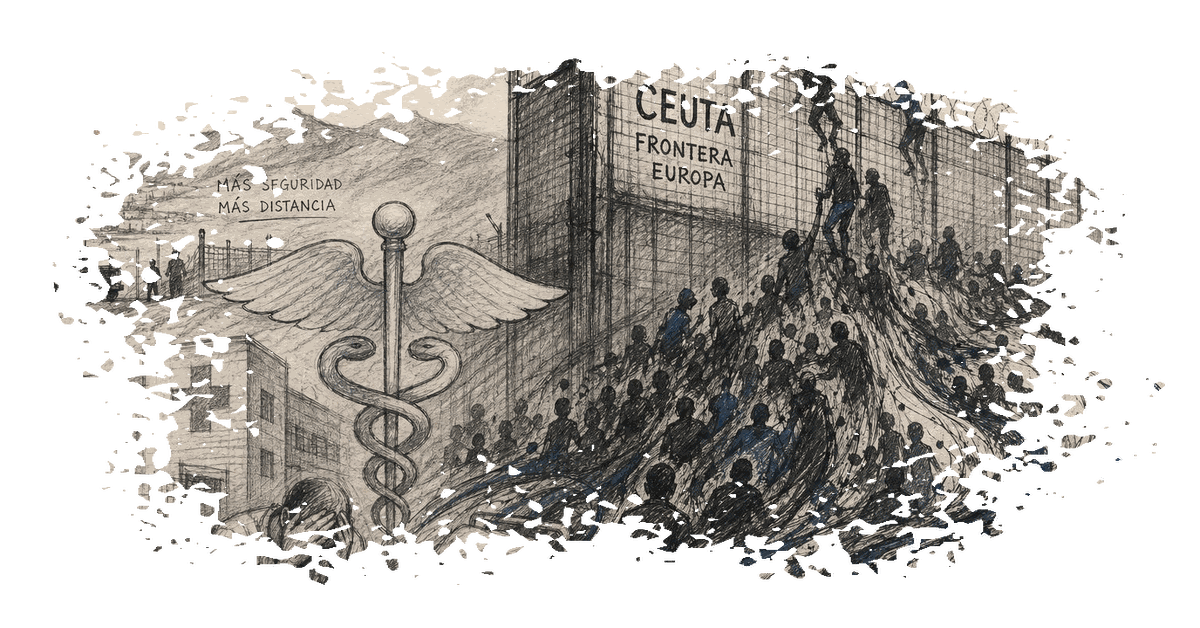
Thousands of migrants, predominantly from sub-Saharan Africa, are reportedly gathering near Spain’s Ceuta border in anticipation of a second attempt to breach the enclave, according to multiple sources. This development follows a previous large-scale attempt just weeks ago, where over 60,000 individuals tried to enter the Spanish territory. The situation has raised significant concerns about security and public health in the region.
The Spanish enclave of Ceuta, located on the northern coast of Africa, has become a focal point in the ongoing migration crisis affecting Europe. The first mass attempt to cross into Ceuta involved tens of thousands of military-aged men, which has been described by some as a form of “hybrid warfare” aimed at destabilizing the region. In response to these events, Morocco has bolstered security around the border city of Fnideq, following unfounded social media rumors suggesting that the border would open.

Footage circulating on social media platforms shows large groups of migrants attempting to breach the Ceuta border, highlighting the scale of the current situation. The Spanish government and local authorities are facing immense pressure as they attempt to manage the influx of migrants, which has strained local resources and healthcare services. The autonomous city of Ceuta, with a population of approximately 80,000 residents, is struggling to cope with the sudden increase in population and the associated public health challenges.
Local healthcare professionals have expressed concerns over the potential spread of infectious diseases due to the overcrowded conditions and lack of sanitation facilities. Reports from the area indicate that the healthcare infrastructure is nearing collapse, with medical professionals warning of the dire consequences if the situation is not addressed promptly.
The political ramifications of the crisis are also significant. Spain’s Vox Party has demanded that Morocco bear the financial responsibility for the migration crisis, as tensions between the two countries escalate. The Spanish government has criticized Italy’s decision to suspend the Schengen travel agreement with Spain, a move that was made in response to the migration crisis and perceived security threats.
The European Union is facing a broader challenge in managing migration policies, as member states adopt different approaches to border security. The situation in Ceuta underscores the ongoing difficulties in balancing humanitarian concerns with national security priorities. EU leaders have warned that the current migrant flows could be part of a broader strategy to exert pressure on European governments, further complicating efforts to find a unified response.
As the situation develops, the Spanish government is likely to face increased scrutiny over its handling of the crisis. The potential for further attempts to breach the Ceuta border remains a concern, and the implications for Spain and the broader EU migration policies are significant. The coming weeks will be crucial in determining how the crisis is managed and whether effective solutions can be implemented to address the underlying issues driving the mass migration.




0 Comments