

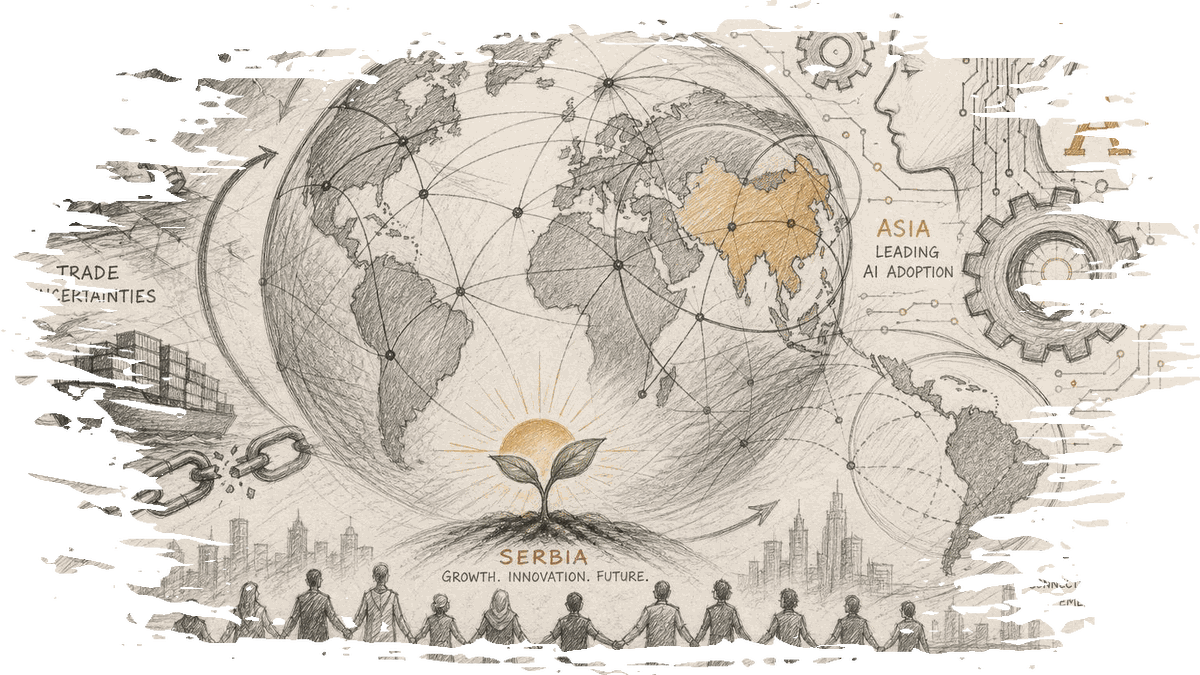
The global economy is demonstrating resilience despite the challenges posed by rising geopolitical tensions, uncertainties in international trade, and inflationary pressures, according to the latest findings from the International Chamber of Commerce’s (ICC) “Chamber Pulse 2026” survey. This research, which involved more than 350 chambers of commerce from 113 countries, representing 90% of global GDP, was highlighted by the Serbian Chamber of Commerce.
The survey results underscore the growing importance of artificial intelligence (AI) across global markets, with Asia leading the charge in AI adoption and readiness. Latin America and the Caribbean have also shown significant progress in AI implementation compared to the previous year. In the ongoing global race for AI development, China is perceived to have an advantage over the United States, a view shared even by respondents from North America.

The Serbian Chamber of Commerce (PKS) and ICC Serbia regularly contribute to this international survey, ensuring that the perspectives of Serbian businesses are included in the global dialogue on economic trends and challenges. The ICC, as the largest and oldest international business organization, represents the interests of 45 million companies in over 170 countries, focusing on promoting international trade and creating conditions that enable businesses to thrive in the global market.
Serbia’s involvement with the ICC dates back to 1923, with the establishment of ICC Serbia in 1927. The Serbian Chamber of Commerce is a founding member of ICC Serbia, and its president, Marko Čadež, serves on the General Council of the World Chambers Federation of the ICC. The activities of ICC Serbia are geared towards supporting the domestic economy in its efforts to engage with international markets and adopt globally accepted business standards.
The survey’s findings have significant implications for Serbian businesses, particularly in the context of AI adoption. As AI technologies continue to advance, there is a growing need for Serbian companies to integrate these technologies to enhance competitiveness and innovation. The survey suggests that policy recommendations could focus on fostering AI development and addressing potential challenges associated with its implementation.
While the survey provides a broad overview of global economic resilience and AI advancements, it does not capture the specific nuances of local economic conditions in Serbia or the broader Balkans region. There remain uncertainties regarding how these global trends will specifically impact the Serbian economy, particularly in terms of local business adaptation and policy responses.
As the global economy navigates these complex challenges, the role of AI is expected to become increasingly significant. The survey highlights the need for continued dialogue and collaboration among international business communities to address the challenges and opportunities presented by AI and other technological advancements.
In conclusion, the “Chamber Pulse 2026” survey offers valuable insights into the current state of the global economy and the pivotal role of AI in shaping future economic landscapes. For Serbia, these findings underscore the importance of strategic engagement with global economic trends and the adoption of innovative technologies to ensure sustained economic growth and competitiveness in the international arena.




0 Comments