

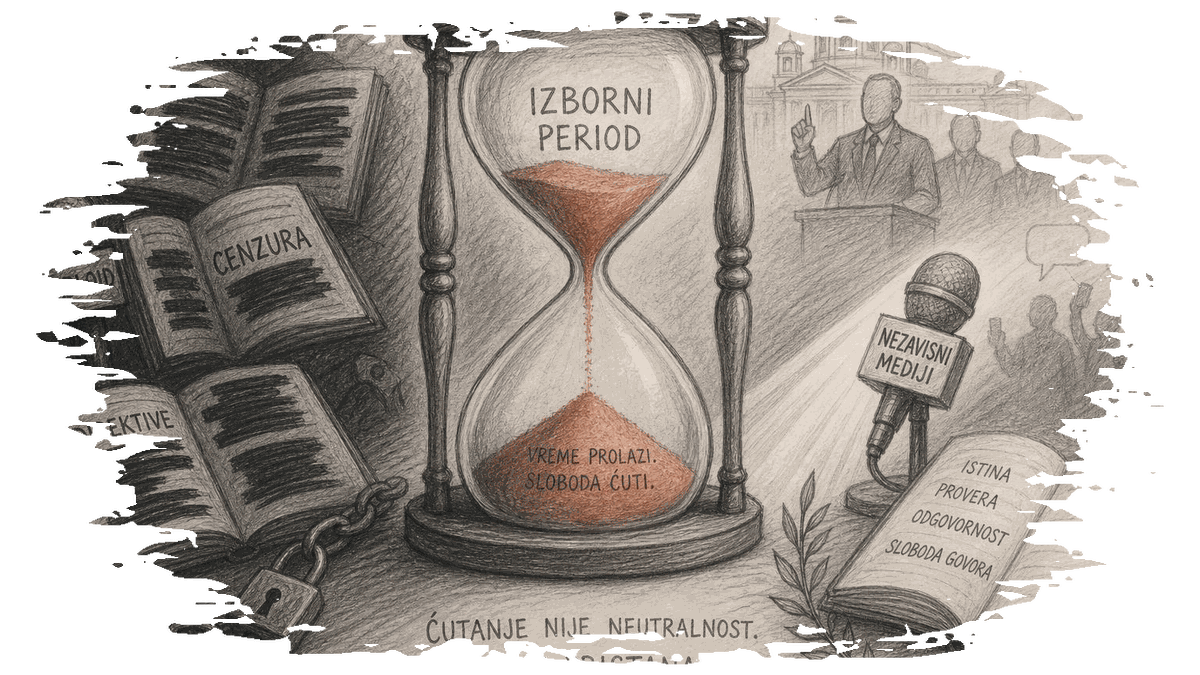
On October 22, Serbia entered a period of electoral silence, which is set to last until the polls close on October 25. This period legally prohibits the promotion of candidates and their programs, as well as any calls for voters to support or oppose specific electoral lists. Despite these restrictions, regime-aligned media outlets have been accused of circumventing the silence by attacking critical media outlets such as N1 and Nova S, alleging that these outlets are using the silence to launch a coordinated attack on Former President Aleksandar Vučić.
The accusations have been prominently featured in tabloids like “Informer,” which claimed that N1 and Nova S, with support from regional and European media, have exploited the electoral silence to attack Vučić. “Informer” described the situation as a “brutal dehumanization” of Vučić, asserting that these media outlets have been engaged in a decade-long campaign against him. Other regime-friendly publications, including “Večernje novosti” and “Politika,” echoed these sentiments, accusing the critical media of attacking Vučić when he is unable to respond due to the restrictions of electoral silence.

In response to these allegations, a criminal complaint has been filed against N1 and Nova S for allegedly breaching the electoral silence. The Regulatory Authority for Electronic Media (REM) is being called upon to monitor these purported violations. Dragan J. Vučićević, the editor-in-chief of “Informer,” and journalist Branka Lazić have urged REM member Rodoljub Šabić to comment on the alleged breaches by the critical media. However, Šabić noted that the monitoring of electoral silence is handled by REM’s professional service.
The accusations against the media outlets are not without controversy. Critics point out that these claims primarily originate from regime-aligned sources, which may lack impartiality. This situation underscores the ongoing tensions between media outlets and the government in Serbia, potentially impacting public perception and trust in the electoral process.
The concept of electoral silence in Serbia, which begins 48 hours before election day and lasts until the polls close, is intended to allow voters to make decisions without the immediate pressure of campaign activities. However, critics argue that the practice is outdated, as political messages continue to spread via social media, billboards, and newsletters. They also highlight concerns about the restriction of free speech and the potential for false news to circulate without timely rebuttal.
The broader context of media relations in Serbia has been fraught with allegations of bias and manipulation, particularly involving the ruling Serbian Progressive Party (SNS). The SNS has faced scrutiny over its control of media narratives, with previous elections marred by accusations of irregularities and media bias.
As Serbia approaches its parliamentary elections, the conduct of media during the electoral silence period remains a contentious issue. The outcome of these elections and the role of media in shaping public opinion could have significant implications for Serbia’s political landscape and its relationship with the European Union. The ongoing media attacks during this period raise questions about media ethics and electoral integrity, highlighting the complexities of navigating political discourse in the country.

0 Comments