

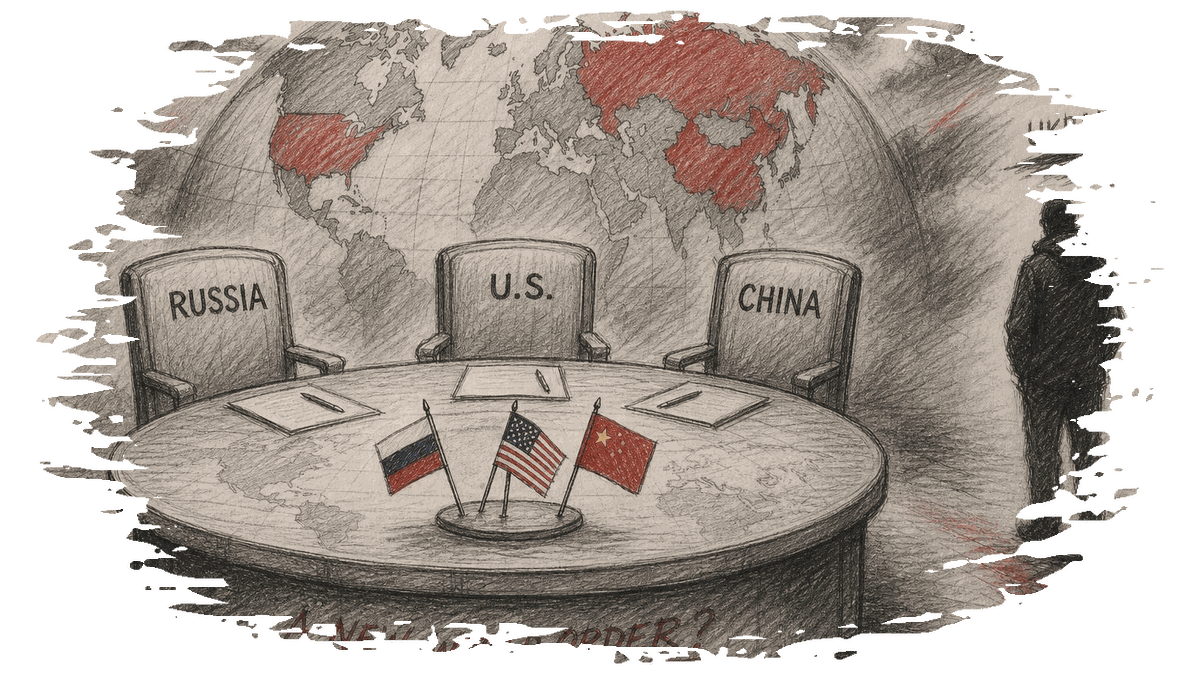
Russian President Vladimir Putin has proposed a summit with U.S. President Donald Trump and Chinese President Xi Jinping to negotiate an end to the ongoing conflict in Ukraine, according to a report by the Wall Street Journal. Notably, Ukrainian President Volodymyr Zelensky has not been invited to this proposed meeting, a decision that has raised concerns among Ukraine and its allies. The summit is suggested to occur on the sidelines of the Asia-Pacific Economic Cooperation summit in November, to be held in Shenzhen, China.
Kremlin spokesman Dmitry Peskov confirmed that discussions about the potential meeting are underway, though there is no definitive agenda or confirmation of the summit taking place. The proposal comes amidst warming relations between Trump and Putin, which have caused alarm in European capitals and among Ukraine’s supporters in Washington. A senior U.S. official indicated that Trump might be receptive to the idea, aligning with his campaign promise to resolve the conflict, which he initially claimed would be settled on the first day of his presidency.

The exclusion of Zelensky from the summit has significant diplomatic implications, as it sidelines Ukraine from discussions about its future. This move has been perceived as a diplomatic snub, potentially weakening Ukraine’s position in the conflict. Analysts suggest that the summit could be seen as an attempt by Putin to solidify Russia’s status as a major global power, alongside the U.S. and China, while excluding Europe, which Russia views as a primary obstacle to its objectives in Ukraine.
The potential summit also highlights China’s growing role as a diplomatic power broker. Analysts, including Yun Sun from the Stimson Center, note that China seeks to be seen as pivotal among great powers and possibly as a mediator between the U.S. and Russia. However, the feasibility of the summit remains uncertain, as Trump has not yet agreed to participate, and the agenda is undefined.
The proposal comes at a time when U.S.-led efforts to broker peace in Ukraine have largely stalled. Trump has recently faced criticism for suspending sanctions on Russia and striking a deal with Putin to import Russian diesel, decisions that have been met with bipartisan backlash in the U.S. and have strained relations with Ukraine. Trump has expressed frustration with Zelensky, particularly following a Ukrainian strike on an oil terminal in St. Petersburg, Russia. Trump accused Zelensky of not wanting to end the war and suggested Ukraine might need new leadership.
The geopolitical implications of a summit involving Trump, Putin, and Xi are complex. While the meeting could potentially lead to a resolution of the Ukraine conflict, it also risks further tensions, particularly if the interests of Ukraine and its European allies are not adequately represented. The exclusion of Zelensky from the talks could undermine Ukraine’s sovereignty and its ability to negotiate terms that are favorable to its national interests.
As discussions about the summit continue, the international community remains watchful of the potential outcomes and the broader impact on global power dynamics. The proposed meeting, if it occurs, could signal a shift in the handling of the Ukraine conflict and influence the geopolitical landscape significantly. However, without the inclusion of Ukraine in the negotiations, any agreement reached may face challenges in implementation and acceptance by the Ukrainian government and its people.




0 Comments