

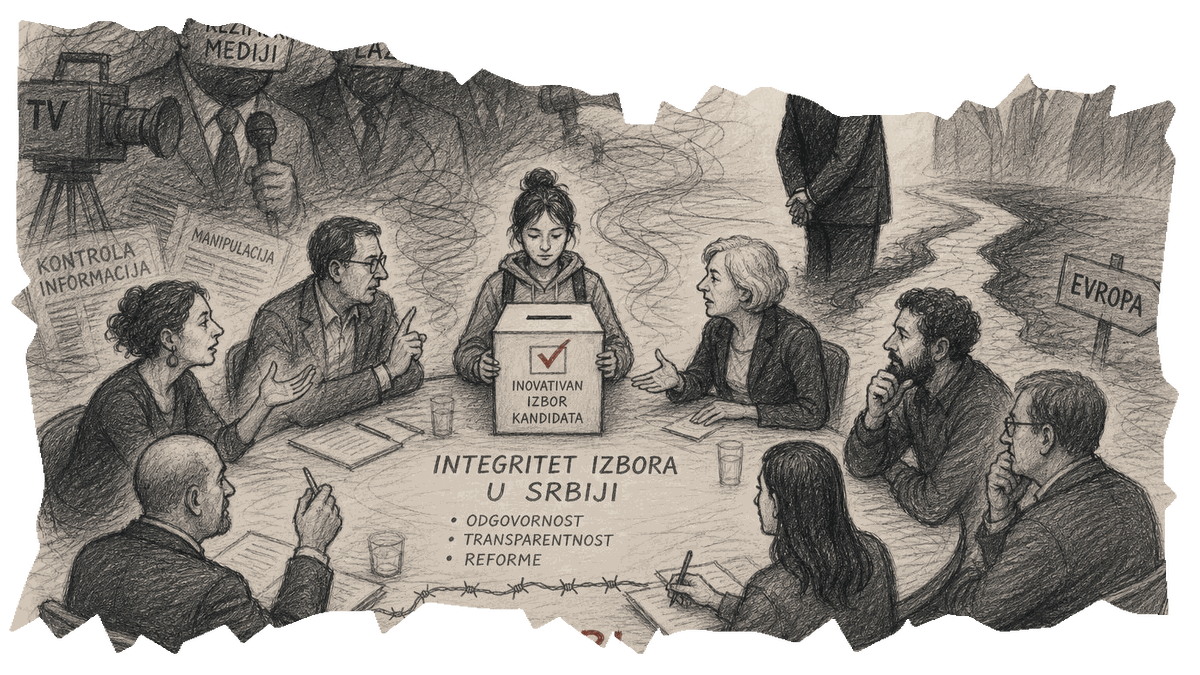
A panel discussion titled “A Captured Field, an Open Contest: Serbia’s Upcoming Elections” was held at Stanford University on October 16, 2026, shedding light on the challenges facing Serbia’s electoral process. The event, organized by Stanford’s Center for Democracy, Development, and the Rule of Law, featured insights from Raša Nedeljkov, Dr. Gazela Pudar Draško, and Dragana Žarković Obradović, with political scientist Francis Fukuyama moderating the session.
The panelists expressed significant concerns about the integrity of the upcoming elections in Serbia, particularly highlighting the issue of false observers. These concerns stem from incidents reported during local elections on March 29, 2026, where individuals from four American organizations, linked to the MAGA movement, were identified as false observers. The European Platform for Democratic Elections (EPDE) had previously flagged some of these individuals for providing favorable assessments of elections in Georgia, raising alarms about the potential impact of such pseudomonitors on the electoral process.

Dragana Žarković Obradović, director of BIRN Serbia, noted a growing detachment of European leaders from the regime of Serbian President Aleksandar Vučić. This shift in attitude is seen as a response to various political maneuvers by the Vučić administration, including controversial projects like the construction of a hotel on the site of the General Staff building and the exploitation of lithium resources. Žarković Obradović’s comments suggest a reevaluation of European diplomatic strategies towards Serbia, potentially influencing the country’s political dynamics.
Francis Fukuyama, in his opening remarks, highlighted the global threat posed by populist nationalism, drawing parallels to similar political climates in Slovakia and Hungary. He warned that such trends could undermine democratic institutions worldwide, including in the United States. Fukuyama’s observations underscored the broader implications of Serbia’s elections, situating them within a global context of democratic backsliding.
The panelists also discussed the unique nature of the student movement in Serbia, described by Dr. Gazela Pudar Draško as a “political experiment” led by young people. This movement, which has been gaining momentum, has developed a process for selecting candidates for the Students’ List through comprehensive interviews, resulting in a slate of 250 parliamentary candidates. Despite fears of election night violence, Pudar Draško expressed confidence that the student-citizen coalition would avoid street clashes, emphasizing their commitment to peaceful participation.
Raša Nedeljkov, addressing the pre-election atmosphere, pointed to a lack of freedom in the upcoming elections, exacerbated by media bias and governmental pressure. He cited data showing disproportionate media coverage favoring Vučić, with the Serbian president receiving extensive airtime on national television. This media landscape, according to Nedeljkov, reflects a broader pattern of state control over information, which has been a persistent issue in Serbian politics.
The panelists agreed that in authoritarian and hybrid regimes, the election day itself is rarely the most critical moment. Instead, they emphasized the ongoing pressures on public and private sector employees, the capture of media and institutions, and the lack of accountability for pro-regime actions. This environment, they argued, stifles electoral freedoms and perpetuates a cycle of impunity, where only critics of the government face consequences.
As Serbia approaches its parliamentary elections on October 25, 2026, the insights from the Stanford panel highlight the complexities and challenges facing the country’s democratic processes. The discussions at the panel underscore the need for vigilance and reform to ensure fair and transparent elections, amidst a backdrop of increasing international scrutiny and shifting political alliances.



0 Comments