

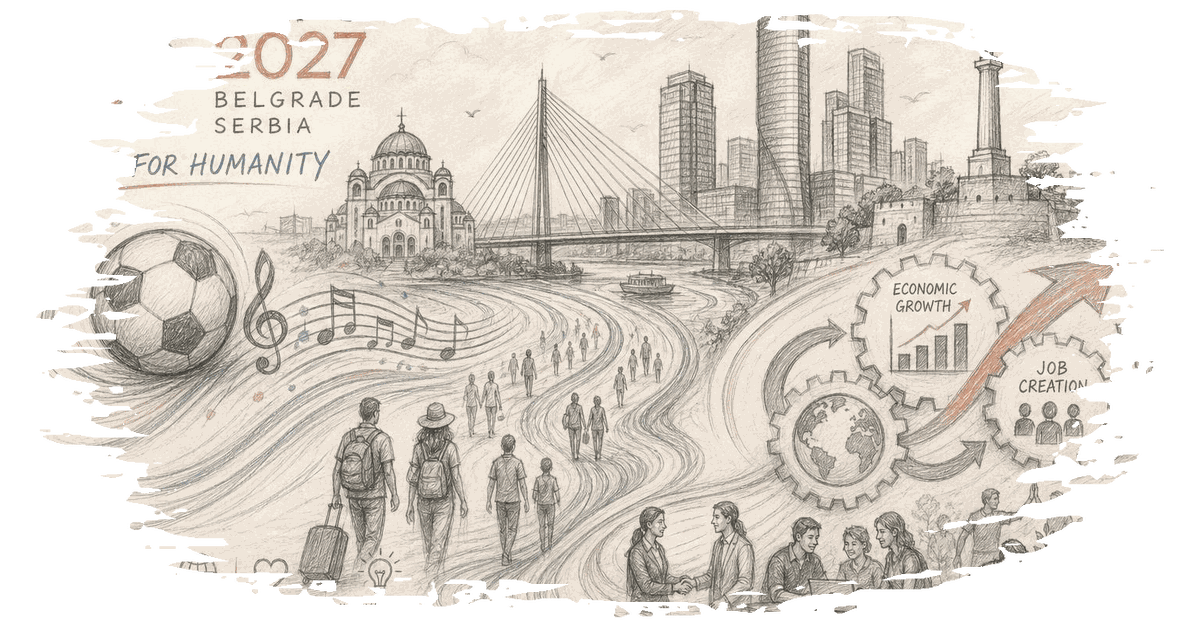
Expo 2027 is projected to bring significant economic benefits to Serbia, according to a recent study by the consulting firm Luis Berger. The event is expected to generate 9.1 billion euros in gross added value, create 359,000 new jobs, and increase tax revenues by 3.8 billion euros. For every dinar invested by the state, a return of 1.91 dinars is anticipated, highlighting the substantial economic impact of the event.
The study, which covers the period from 2023 to 2037, was presented by Marko Ćulić, a consultant at Luis Berger. Ćulić emphasized that the Expo’s impact will not only be immediate but will also extend into the legacy period following the event. “About 60 percent of the total economic effects are expected during the legacy period,” he noted, stressing the importance of effective management of the Expo facilities post-event to maximize long-term benefits.

Tourism is another area where significant impact is anticipated. The study estimates that approximately 1.65 million foreign tourists will visit Serbia during the Expo, with 30 percent being day visitors and the rest staying longer. This influx of tourists is expected to generate substantial economic activity across various sectors. Ćulić highlighted the importance of maximizing tourist spending through the development and promotion of tourism products.
The study also outlines recommendations for maximizing economic benefits, including engaging local contractors for goods and services necessary for the Expo and enhancing tourist spending through targeted measures. The methodology used in the study involved an input-output model with a symmetric matrix of the Republic of Serbia, assessing the direct, indirect, and induced effects on gross added value, employment, and fiscal outcomes.
Expo 2027, themed “Play for Humanity: Sport and Music for All,” is set to take place from May 15 to August 15, 2027, in Belgrade. It aims to attract over 140 official participants and is expected to draw a total of 2.3 million tourists during the legacy period from 2028 to 2037. The event will feature new tourist attractions, including two amusement parks, which are anticipated to drive further increases in foreign tourist arrivals.
The study underscores the national significance of the Expo, not only in terms of economic outcomes but also in creating measurable social and ecological values. It serves as a model for sustainable urban development, with the legacy phase focusing on transforming the Expo site into a vibrant area with commercial and residential developments.
However, the projections are based on estimates, and there is uncertainty regarding the management of Expo facilities post-event, which could affect the realization of long-term benefits. The study calls for careful planning and execution to ensure the Expo’s legacy contributes positively to Serbia’s economy and society.
In conclusion, Expo 2027 presents a substantial opportunity for Serbia to boost its economy, create jobs, and enhance its international profile. The successful management of the event and its aftermath will be crucial in realizing these potential benefits.




0 Comments