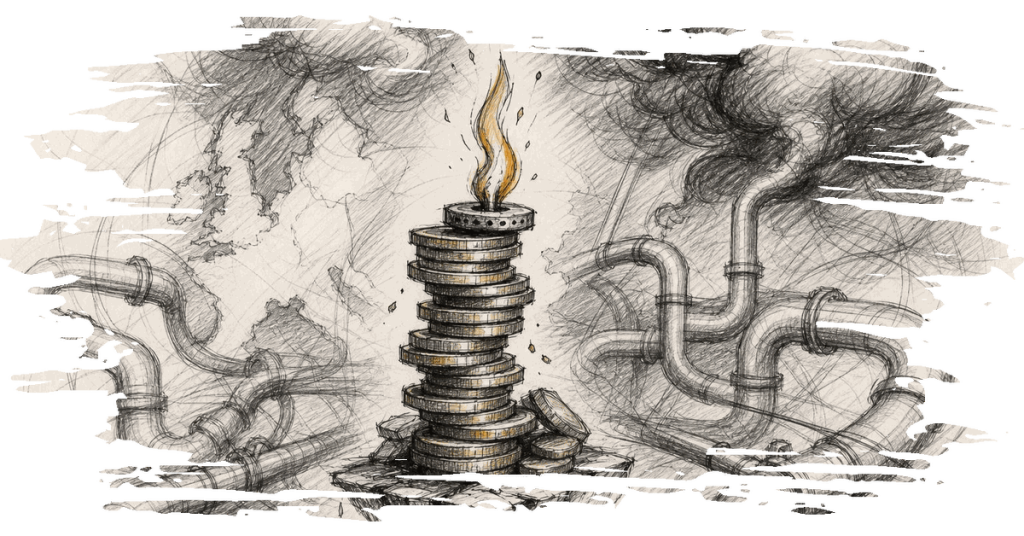
Natural gas prices in Europe have surged to their highest level since mid-March, driven by geopolitical tensions and low storage levels. As of today, futures for September delivery have reached €64.6 per megawatt-hour (MWh), marking an increase of over 20% in the last two weeks. This sharp rise is attributed to renewed tensions in the Strait of Hormuz, a critical chokepoint for global energy trade, where attacks on merchant ships have raised concerns about the stability of oil and gas supplies from the Persian Gulf.
The situation is exacerbated by significantly lower gas storage levels across Europe compared to the previous year. As of August 17, European gas storage facilities were filled to only 61.4%, a stark contrast to nearly 74% a year earlier. Germany, Europe’s largest economy, is particularly affected, with storage levels at just 50.1%, down from nearly 67% last year. This shortage is causing companies to hesitate in purchasing large quantities of gas at high prices, as they await potential government intervention.
The rising gas prices and storage shortages present significant challenges for businesses in Serbia and the broader Balkan region. Serbia, like many European countries, is heavily reliant on natural gas for energy, and the price hikes could impact various sectors, from manufacturing to services. The increased costs may lead to higher production expenses, which could be passed on to consumers, further exacerbating inflationary pressures.
While the current geopolitical tensions are a primary driver of the price surge, the situation highlights the ongoing volatility in energy markets. Previous reports have underscored the need for Serbia to diversify its energy sources to reduce dependency on imported gas. However, such diversification efforts require time and substantial investment, leaving the country vulnerable to external market fluctuations in the short term.
The Serbian government has not yet outlined specific measures to address the immediate impact of rising gas prices on local businesses. However, industry experts suggest that potential government responses could include financial assistance for affected sectors or strategic reserves to stabilize supply. The lack of a detailed response plan raises concerns about the country’s preparedness to handle prolonged energy price volatility.
In the broader European context, the current situation is part of a worrying trend of economic strain exacerbated by energy market instability. The European Union has been grappling with energy security issues, and the current storage deficits only add to the urgency of finding long-term solutions. The geopolitical dynamics in the Strait of Hormuz further complicate these efforts, as any disruption in the region can have far-reaching implications for global energy markets.
As the situation develops, businesses and governments across Europe, including Serbia, will need to navigate these challenges carefully. The ongoing tensions and market conditions underscore the importance of strategic planning and international cooperation in ensuring energy security and economic stability.