

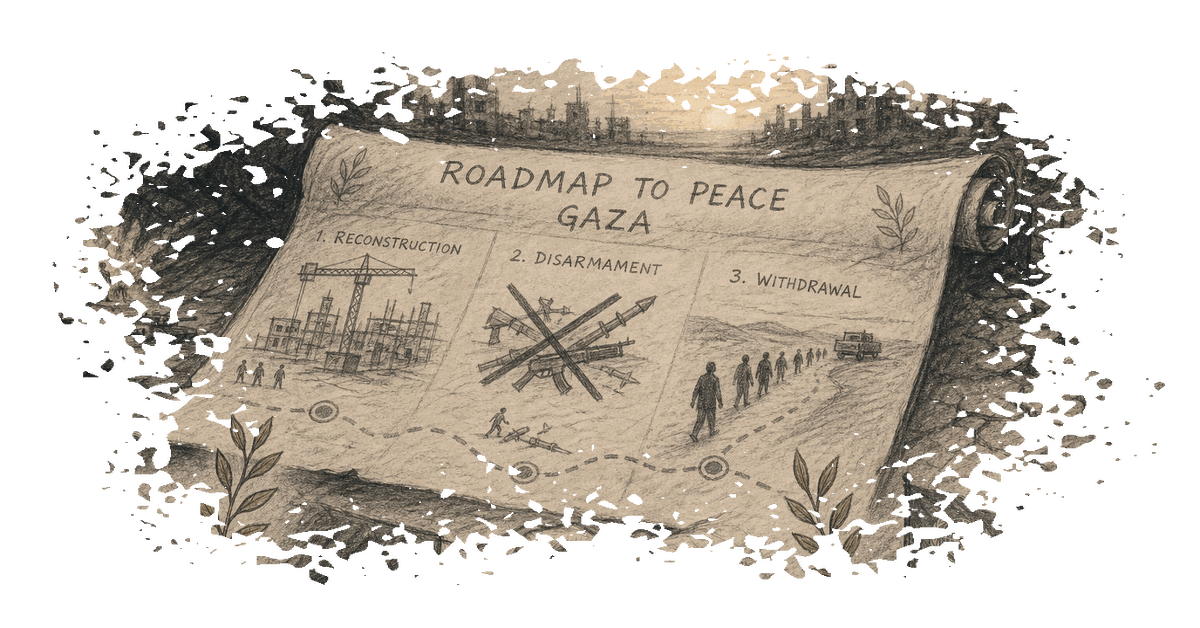
Nicolay Mladenov, the high representative for the Board of Peace, has issued a stark warning regarding the fragile ceasefire in Gaza, emphasizing that the failure of both Israeli and Palestinian sides to adhere to the agreed-upon roadmap for peace could lead to its collapse. In an interview with Al Jazeera, Mladenov highlighted the potential devastation that a return to conflict would bring to the region, stressing that there is “no better alternative to the current plan.”
The roadmap, initially proposed by Mladenov on May 21, outlines steps for reconstruction, the disarmament of Palestinian armed groups, a gradual Israeli withdrawal, and the establishment of an International Stabilization Force (ISF) to ensure peace. While Hamas has approved the roadmap, Israeli Prime Minister Benjamin Netanyahu has rejected it, creating a significant hurdle for its implementation. Mladenov’s warning comes amidst ongoing Israeli raids and attacks in the Gaza Strip, which he argues could spiral into further violence if commitments to the roadmap are not upheld.

The Board of Peace has made progress in determining the mechanism for deploying the ISF in the Gaza Strip, with Morocco agreeing to participate. However, Turkiye’s involvement was vetoed by Israel, illustrating the complex diplomatic negotiations surrounding the ceasefire’s maintenance. Mladenov noted that the ISF’s advance elements are expected to arrive in Gaza soon, although the effectiveness of this force remains uncertain.
In terms of reconstruction efforts, the Board has received pledges amounting to $7 billion, with significant contributions from Qatar, Egypt, and Turkiye. These funds are intended to aid in rebuilding the war-torn region and improving humanitarian conditions. Mladenov also mentioned ongoing discussions with Israel to increase humanitarian aid, expressing hope that a Palestinian national committee will soon take responsibility for civil affairs in Gaza. This committee is envisioned as a technocratic, non-factional authority to manage public services and coordinate reconstruction efforts independently of political factions like Hamas.
Despite these efforts, the situation on the ground remains tense. Since the ceasefire took effect in October 2025, Gaza’s Health Ministry reports that 1,303 Palestinians have been killed by Israeli fire, with 4,336 more wounded. The overall toll from the conflict since October 2023 is reported to be 73,438 killed and 174,447 wounded, underscoring the severe humanitarian impact of the ongoing hostilities.
Diplomatic movements continue, albeit with uncertainty. Recent talks between Hamas’s political chief Khalil al-Hayya and Egyptian intelligence chief Hassan Rashad, followed by a visit from US envoy Jared Kushner, aim to bridge the gap between Israel and the Board of Peace’s plan. However, Netanyahu’s public rejection of the roadmap poses a significant challenge, and analysts suggest that the plan’s viability hinges on securing genuine Israeli buy-in.
Mladenov’s warnings highlight the precarious nature of the ceasefire and the urgent need for adherence to the peace roadmap. The potential collapse of the ceasefire would not only exacerbate the humanitarian crisis in Gaza but also threaten regional stability. The international community, particularly those involved in the peace process, faces the challenge of navigating these complex dynamics to prevent a return to conflict.


0 Comments