

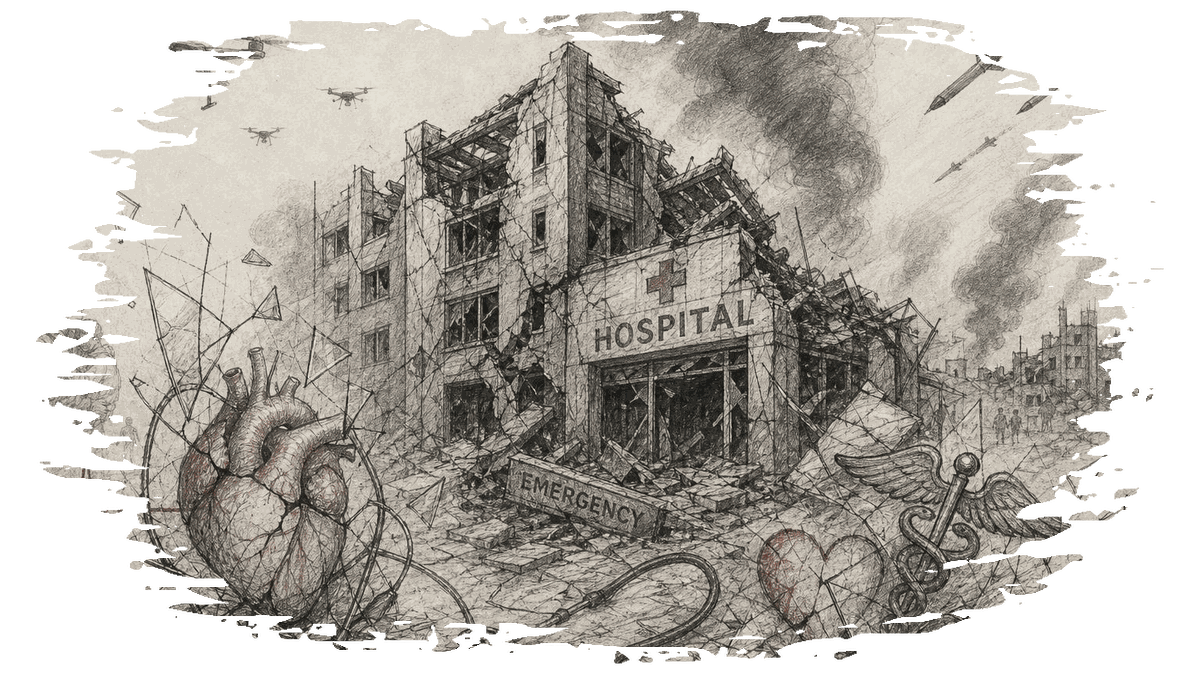
At least 73 people were injured in a Russian bombing of a hospital in Kharkiv, Ukraine, marking a significant escalation in the ongoing conflict between the two nations. Ukrainian President Volodymyr Zelenskyy confirmed the attack, stating that the cardiology department of the city clinical hospital was directly targeted, resulting in substantial damage. Kharkiv Mayor Ihor Terekhov reported that the bombardment shattered more than 1,000 windows in the hospital.
The hospital bombing is part of a larger coordinated assault involving 289 drones and multiple missile strikes aimed at energy infrastructure across several Ukrainian regions, including Odesa and Dnipro. President Zelenskyy described the attacks as a “complex, massive attack” primarily targeting power generation facilities and substations. The regions affected include Odesa, Cherkasy, Zhytomyr, Vinnytsia, Kharkiv, Dnipro, Chernivtsi, Chernihiv, and Rivne.
In response to the attacks, more than 180,000 people in the Zhytomyr region were left without power, according to Governor Vitalii Bunechko. Odesa has implemented scheduled power outages to manage the situation. The Russian Ministry of Defence stated that their attacks targeted electricity facilities supplying power to the Ukrainian army and military factories.
The United Nations’ human rights mission in Ukraine condemned the attacks, particularly the strike on an aid distribution center that killed at least 33 people a day prior. Danielle Bell, head of the UN rights mission, criticized the attack, suggesting it likely violated international law due to the well-publicized nature of the humanitarian distribution.
Meanwhile, the conflict’s international dimensions continue to evolve. The United States is increasing efforts to bring an end to the war, with a meeting scheduled between US, Russian, and Ukrainian officials in Abu Dhabi next week. Discussions are expected to focus on post-war security arrangements, de-escalation, humanitarian efforts, and steps toward peace. US Special Envoy Steve Witkoff noted that US negotiators would also engage with representatives from France, Germany, the United Kingdom, the European Union, and NATO in Brussels to discuss security guarantees for Ukraine and Europe’s post-war security architecture.
The ongoing conflict, which began in 2022, has consistently resulted in military actions and humanitarian crises. The recent escalation underscores the persistent volatility and complexity of the situation, with significant implications for both regional stability and international diplomatic efforts. As the situation remains fluid, further developments are anticipated as global attention also shifts to the US midterm elections, which hold potential implications for future military aid to Ukraine.




0 Comments