

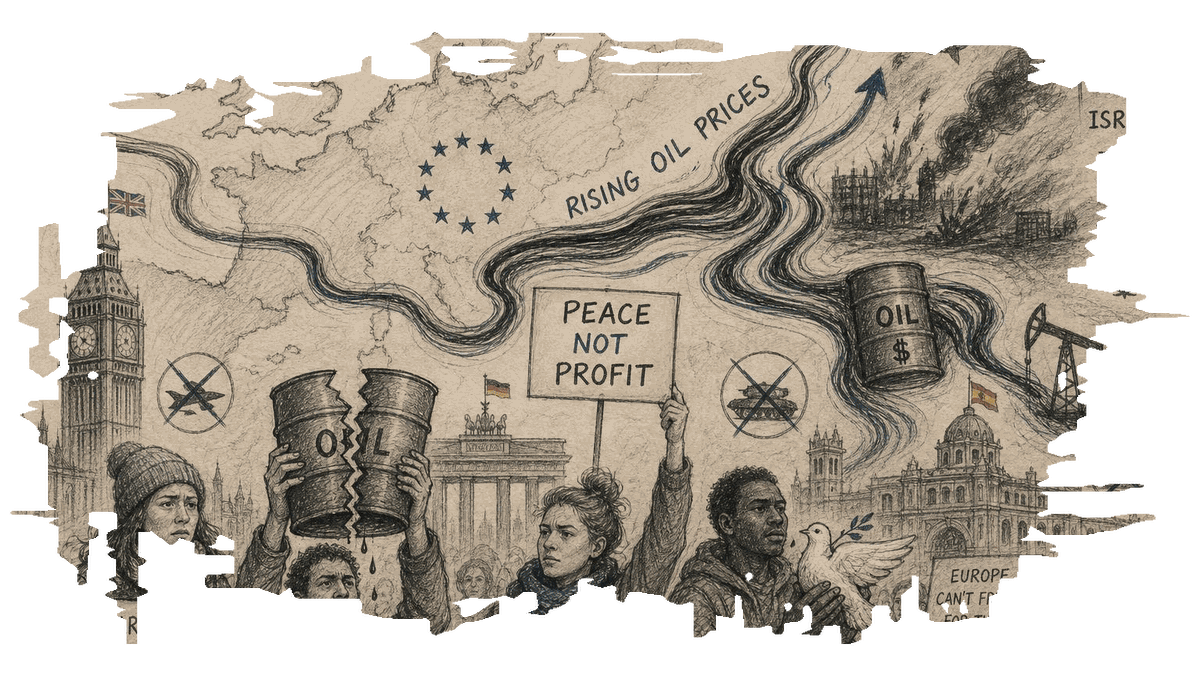
The ongoing US-Israeli conflict with Iran is having significant repercussions across Europe, as soaring global oil prices exacerbate an already severe cost of living crisis. This economic strain has led to widespread protests in major European cities, as citizens grapple with rising household costs amid the approach of winter. Several Western European nations, including Germany and the UK, have expressed opposition to the potential resumption of the war, advocating instead for diplomatic solutions to the conflict that has severely disrupted global oil supplies.
Iran’s Foreign Ministry spokesperson, Esmaeil Baghaei, highlighted a notable shift in Germany’s stance on the conflict. Baghaei pointed to German Chancellor Friedrich Merz’s previous support for Israel’s military actions, contrasting it with recent German warnings against renewed attacks and calls to prevent further escalation. This shift reflects a broader change in attitude across Europe, where leaders are increasingly questioning their support for the US-Israeli military actions against Iran.

The conflict began on February 28, 2026, when the US and Israel launched attacks on Iran, citing concerns over Iran’s nuclear program. Initially, European leaders, including those from Britain, France, and Germany, condemned Iran’s retaliatory strikes but did not denounce the US-Israeli attacks. However, as the conflict has dragged on, European governments are now explicitly warning against further military campaigns. In a recent meeting in Istanbul, foreign ministers from Britain, France, Germany, and Italy joined counterparts from Turkey, Saudi Arabia, Pakistan, and Egypt to discuss the conflict and its impact on the Strait of Hormuz. French Foreign Minister Jean-Noel Barrot emphasized the severe consequences that further escalation could have on hydrocarbon prices, urging restraint from both sides.
The economic implications of the conflict are particularly acute for Europe, which is entering winter with historically low gas reserves. The International Energy Agency has warned that Europe is vulnerable to further supply shocks, with the potential for rising costs of liquefied natural gas. The ongoing conflict in the Strait of Hormuz, a critical chokepoint for global energy supplies, has further strained Europe’s energy security, leading to increased competition for resources and higher prices.
Spain has been particularly vocal in its opposition to the US-Israeli campaign, with Prime Minister Pedro Sanchez describing the war as “illegal, unjust and unjustified.” Sanchez has linked the conflict to Europe’s mounting economic challenges, highlighting the need for a diplomatic resolution. Despite these calls, European nations remain divided over their involvement in the conflict. While some countries have allowed the use of their military bases for US operations, others have been more cautious, reflecting the complex geopolitical dynamics at play.
The conflict has also strained relations between Europe and the United States. European leaders are increasingly wary of aligning too closely with US military actions, especially given the domestic economic pressures they face. The situation remains fluid, with the potential for further escalation posing significant risks to European economies and societies.
As winter approaches, the impact of the conflict on European populations is becoming more pronounced. Protests over living standards have erupted across European capitals, driven by the rising cost of energy and other essential goods. These demonstrations underscore the broader social and economic challenges that the conflict has created, as governments struggle to balance international alliances with domestic needs.
In summary, the US-Israeli war on Iran is causing significant unrest in Europe, with rising oil prices exacerbating the cost of living crisis and prompting widespread protests. European leaders are increasingly calling for diplomacy to resolve the conflict, reflecting a shift in their positions and highlighting the complex interplay of geopolitical and economic factors at play.

0 Comments