

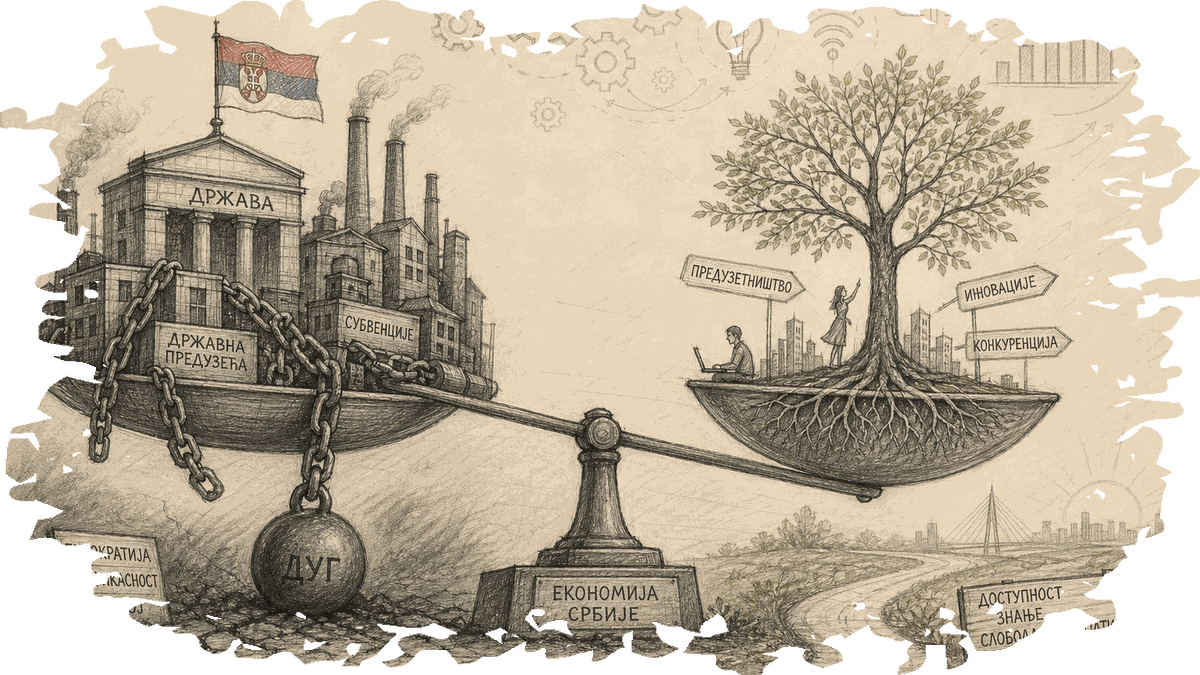
As Serbia concludes its parliamentary elections, the focus shifts towards the urgent need for a new economic model, as the current approach is considered unsustainable and potentially hazardous, according to a recent analysis published by Danas. The article emphasizes that regardless of the election outcome, the incoming government must abandon the existing development strategy, which has been characterized by quantitative growth rather than qualitative improvements.
The current economic model, which has been in place for over a decade, is heavily reliant on state intervention and has resulted in Serbia being trapped in a cycle of medium development. The country has amassed an external debt of 27 billion euros since 2012, aimed at financing growth and development. However, the return on this investment has been modest, with an average annual real growth rate of only 2.75% from 2013 to 2025. The analysis suggests that this approach, which prioritizes infrastructure projects such as highways, bridges, and stadiums, mirrors outdated Soviet-style economic planning and has led to minimal economic progress.

The article argues that the state’s interventionist policies have stifled domestic entrepreneurship, which is crucial for innovation and long-term economic development. It cites academician Pavle Petrović, who notes that the majority of Serbia’s economic growth stems from quantitative increases in capital and labor, rather than technological advancements and innovation. Petrović’s research indicates that three-quarters of economic growth in Serbia is due to quantitative factors, with the state responsible for over half of the investment growth. This has resulted in a skewed economic expansion, with only a few sectors, such as mining, construction, and information and communication, experiencing significant growth.
The analysis warns that the continuation of the current model could lead to another economic crisis, as state-led growth is not sustainable in the long term. Petrović asserts that the contribution of public investments to economic growth will decline due to reduced volume and efficiency, coupled with the deterioration of institutions managing these investments. The article highlights the lack of debate and challenge to Petrović’s thesis, underscoring the need for a new economic model that fosters entrepreneurship and minimizes state intervention.
To break free from the cycle of medium development, Serbia requires a model that supports private sector growth and innovation. The analysis calls for a radical shift that allows the domestic private sector more freedom to invest in new technologies and innovations without state interference. It points out that despite the growth of Serbia’s IT industry, this sector is largely driven by foreign investments attracted by cheap, skilled labor, with foreign companies dominating the market.
The article concludes that for Serbia to achieve substantial economic progress and catch up with the European Union average, it must achieve annual growth rates of 8% to 10%. This requires a significant reduction in state control and a greater emphasis on private sector-led growth. The analysis suggests that the new government must prioritize creating an environment conducive to entrepreneurship and innovation, which are essential for sustainable economic development.
0 Comments