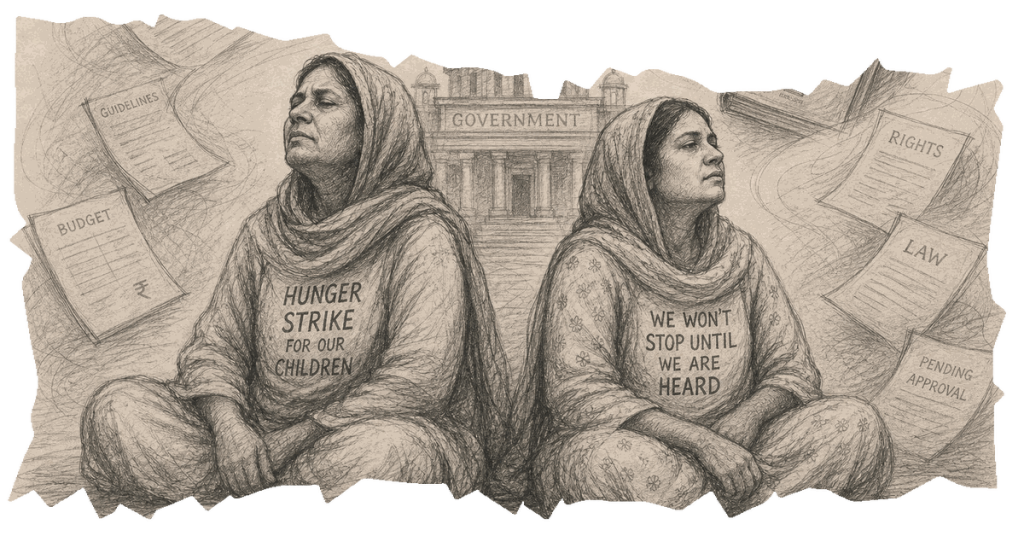
Two mothers in Bečej, Serbia, have begun a hunger strike outside the municipal building to protest the local government’s refusal to reimburse transportation costs for their children with disabilities. Kristina Demeter Filipčev, a journalist for the Bečejski Mozaik portal, and Iva Hromić, a local councilor, began their strike after exhausting all other avenues to resolve the issue.
The mothers claim they have been covering the transportation expenses for their children to attend school, despite existing laws mandating the municipality to shoulder these costs. According to Filipčev, the municipality’s failure to comply with the Law on the Fundamentals of the Education System and the Law on the Prohibition of Discrimination has left them with no choice but to take drastic action. “We are entering a hunger strike because the municipality does not respect the regulations,” Filipčev stated, emphasizing that the law clearly obligates the municipality to fund travel expenses for children with developmental disabilities and impairments.
The hunger strike follows a failed meeting with the deputy mayor of Bečej, where no concrete resolution was reached. Despite the municipality having access to data on the number of children with disabilities attending regular schools, Filipčev argues that the local government has unlawfully retained funds by not reimbursing parents. She expressed frustration over the lack of action, noting that her child has already completed the seventh grade without the promised financial support.
Filipčev stressed that the protest is not solely about financial compensation but also about ensuring that local and national governments adhere to existing laws. “Either they should abolish these laws and state that children with disabilities have no rights, or they should respect them as long as they exist,” she asserted.
The situation highlights broader systemic issues within Serbia’s approach to supporting children with disabilities. The lack of financial support for transportation can significantly impact these children’s access to education, which is legally mandated for all children, including those with mobility challenges. The mothers’ protest underscores the ongoing struggle for equal rights and the enforcement of laws designed to protect vulnerable populations.
Local authorities have yet to respond officially to the mothers’ demands since the hunger strike began. However, the issue has garnered attention from media outlets and advocacy groups, who are calling for a swift resolution. The mothers have also announced plans to file a lawsuit with the Administrative Court to challenge the rejection of their reimbursement claims.
The protest by Filipčev and Hromić reflects a growing frustration among parents of children with disabilities in Serbia, who often face bureaucratic hurdles and lack of support from local governments. This case has brought to light the need for more robust enforcement of existing laws and a reevaluation of how municipalities allocate resources to support children with disabilities.
As the hunger strike continues, the mothers remain determined to fight for their children’s rights. They plan to maintain their protest during the day, returning home at night to care for their children, who require both maternal and paternal attention. This dual responsibility highlights the personal sacrifices these parents make in their quest for justice and equality.
The outcome of this protest