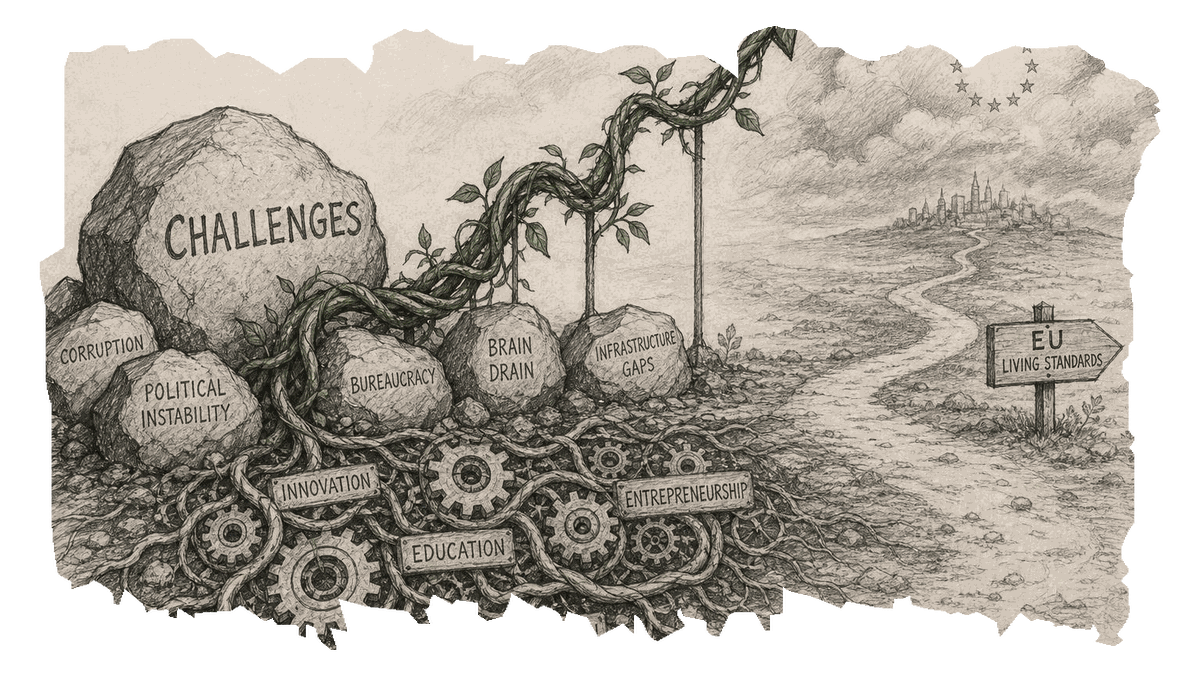
The Western Balkans have made strides in economic growth, yet the region faces significant hurdles in closing the gap with more developed European economies. According to the Organisation for Economic Co-operation and Development (OECD), the average GDP per capita in the Western Balkans reached 43% of the European Union average in 2025, an improvement from 27% in 2003. However, this progress is not occurring rapidly enough to significantly reduce the economic disparity with the EU. The European Bank for Reconstruction and Development (EBRD) has cautioned that, at the current rate, it could take the Western Balkans 70 years or more to achieve EU living standards.
The primary challenge for the region is no longer merely attracting capital but transforming it into productivity, competitive domestic companies, and higher-paying jobs. While foreign direct investments (FDIs) have been substantial, as seen in Serbia’s 4.6 billion euros in FDIs in 2024, the long-term economic impact depends on the integration of local suppliers into international supply chains and the development of skills and high-value activities within the country. This shift in focus underscores the importance of not only receiving investments but also ensuring that they contribute to the broader economic development.

The experiences of Poland and Romania offer valuable lessons for the Western Balkans. Both countries have leveraged EU membership and access to the single market to accelerate their economic convergence with more developed economies. Romania, for example, has successfully developed its computer and information services sector, thanks to targeted tax measures, sector liberalization, and a skilled workforce. This has resulted in Romania having the highest labor productivity in this sector among EBRD-member EU economies since 2010.
For the Western Balkans, the key takeaway is not to replicate Romania’s model but to identify and develop sectors where they can build a competitive advantage. This could range from industrial technologies and energy to software, financial services, and specialized manufacturing. The region must focus on creating an environment where domestic companies can thrive and compete internationally, which involves improving technology, management quality, business processes, and infrastructure.
The productivity challenge cannot be addressed solely by increasing effort or education levels among workers. It also requires modern equipment, well-organized processes, and a predictable business environment. Small and medium enterprises (SMEs) in particular need access to long-term financing to invest in automation and new technologies, which is crucial for scaling up operations and enhancing productivity.
The Western Balkans are at a crossroads where the focus must shift from merely attracting foreign investment to ensuring that such investments lead to sustainable economic growth and higher living standards. This involves fostering an ecosystem where domestic companies can innovate, expand, and compete on a global scale. The region’s ability to transform its economic landscape will determine how quickly it can close the gap with the EU and improve the quality of life for its citizens.