Actor Milan Marić has criticized the lack of support from cultural institutions for the upcoming Blacklist festival, which aims to provide a platform for artists who have faced professional setbacks due to their criticism of the Serbian government. The festival is set to run from October 14 to 21 across more than 25 cities in Serbia, featuring a diverse array of cultural events including theater performances, film screenings, and concerts, all free of charge.
Marić, speaking on the television program “Pokreni se” on Nova, highlighted the festival’s significance as a response to the oppressive cultural climate in Serbia. He pointed out that no cultural institution had agreed to host the festival, which underscores the challenges faced by artists in the country. “We have over 30 programs and 50 or 60 participants, yet not a single cultural institution dared to open its doors to us,” Marić stated, emphasizing the festival’s role in opposing the cultural policies of the government.

The Blacklist festival, organized under the initiative “Louder than Censorship,” is a direct response to what Marić describes as the government’s attempt to control cultural narratives by placing unqualified individuals in key cultural positions. These individuals, according to Marić, are more concerned with enforcing government agendas than fostering artistic expression. “It’s clear from those who manage the state and culture how they understand culture,” he remarked.
The festival will commence simultaneously in cities including Belgrade, Novi Sad, Požega, and Šabac. It will feature prominent artists such as Mirjana Karanović, Nataša Ninković, and Zoran Kesić. Marić expressed admiration for the resilience of the cultural community, noting that despite significant pressures, many artists continue to fight for their right to free expression. “When you’re backed against a wall, you have no choice but to capitulate or fight. I know very few in the cultural sector who will capitulate,” he said.
This event follows a pattern of cultural resistance in Serbia, where artists have increasingly found themselves at odds with government policies. The Blacklist festival is reminiscent of other initiatives like the ne:Bitef festival, which also highlighted the struggles of the arts community against political interference and censorship. These events reflect a broader dissatisfaction with the current state of cultural affairs in Serbia, where budget cuts and political appointments have undermined the independence and effectiveness of cultural institutions.
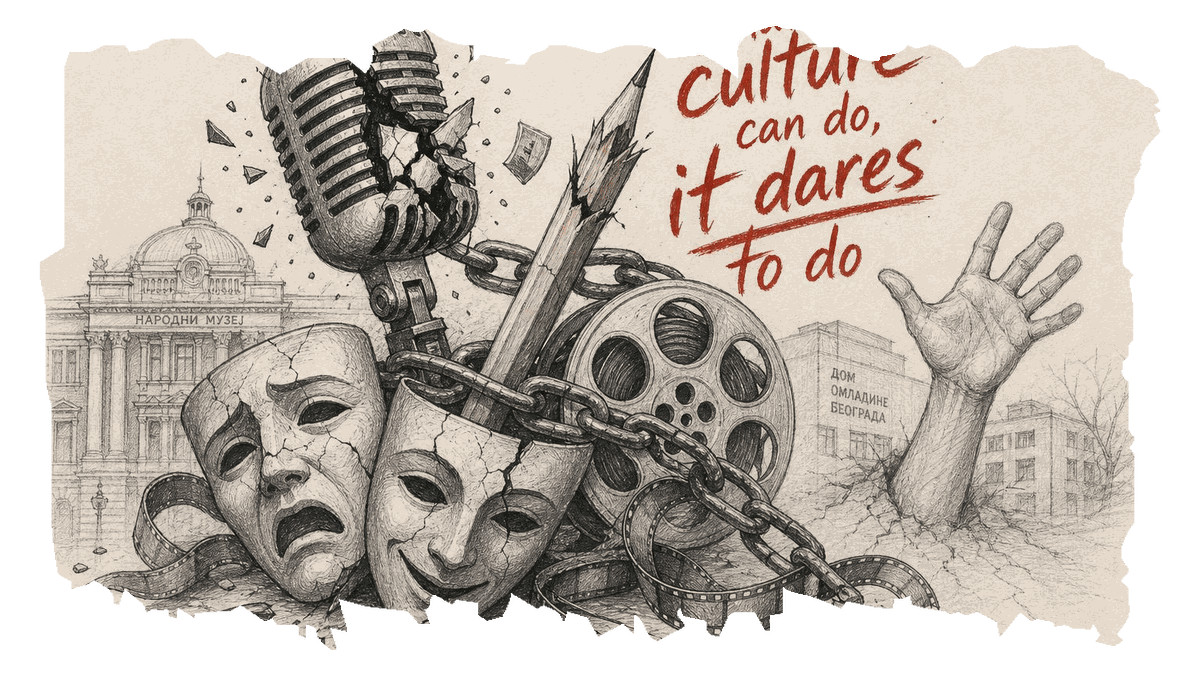
The festival’s slogan, “What culture can do, it dares to do,” encapsulates the defiant spirit of the event and its participants. As the festival unfolds, it is expected to draw attention to the ongoing issues of censorship and the need for greater institutional support for the arts in Serbia.