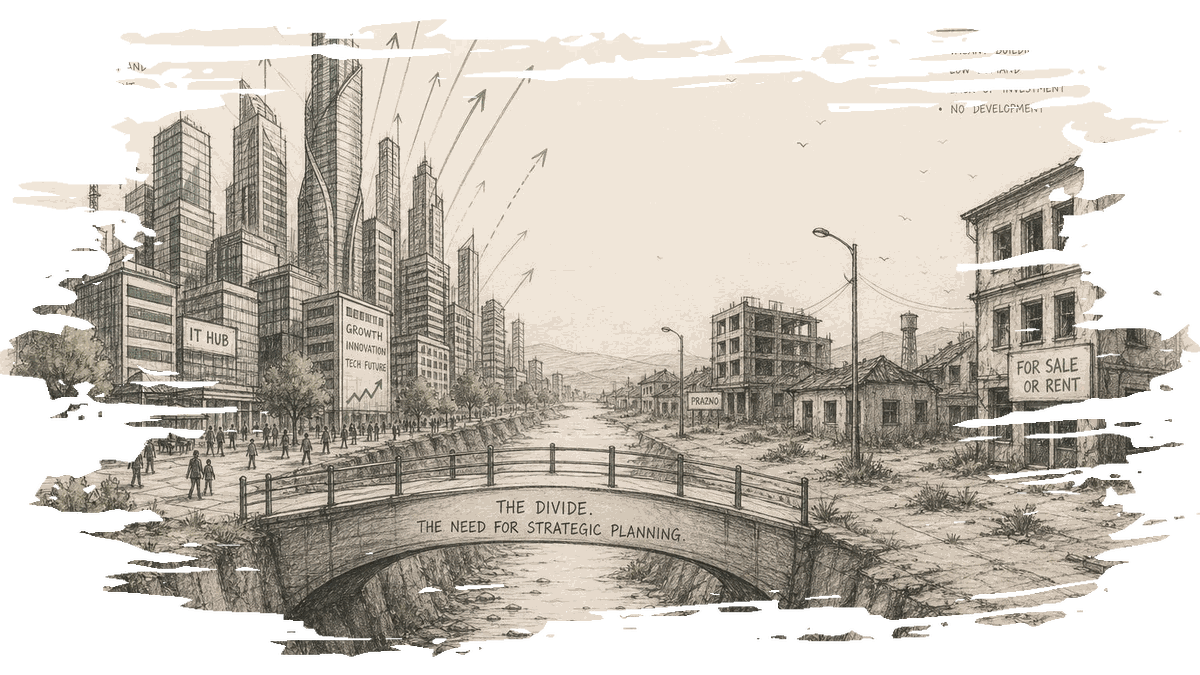
The commercial real estate market in Serbia is currently experiencing a pronounced divide, with urban areas like Belgrade seeing a surge in demand and prices, while many properties in smaller towns remain unoccupied. According to data reported by RTS, the value of commercial real estate transactions in Serbia has increased by approximately 30% in 2026. However, this growth is not evenly distributed across the country.
In Belgrade, the demand for quality office spaces is notably high, with only about 5% of A and B class office space available. The capital city boasts around 1.4 million square meters of business space in these categories, but the supply is struggling to keep up with the needs of various industries. IT companies are leading the demand, followed by pharmaceutical companies, law firms, consulting agencies, and real estate firms. Rental prices for A class office spaces range from 16.5 to 18.5 euros per square meter, with additional service costs of approximately 4.5 euros per square meter. The influx of Ukrainian companies relocating their operations to Serbia has also contributed to this increased demand, as noted by real estate agent Marko Jevtić.

Conversely, in smaller towns, there is an oversupply of commercial properties, resulting in many being left vacant. The situation is exemplified in Svilajnac, where there are about 1,070 business premises for a population of approximately 9,000, equating to one locale for every nine inhabitants. Predrag Milanović, the president of the municipality, attributes this to policies from the 1990s that favored the construction of commercial spaces over industrial development, with the expectation that trade expansion would naturally fill these spaces. However, many remain unused today.
A significant issue in these smaller towns is the lack of “turnkey” business spaces, which are ready for immediate use by tenants. Real estate agent Snežana Gajić from Valjevo highlights that landlords typically rent out bare spaces rather than fully equipped ones, which would allow tenants to move in and start operations immediately. The cost of equipping a space for specific purposes can range from 30,000 to 50,000 euros, further affecting rental prices and making it challenging for businesses to justify the investment.
In response to the scarcity of central locations, business developments in Belgrade are gradually shifting towards the outskirts of the city, along major roads and in the direction of the airport. Meanwhile, cities like Novi Sad, Niš, and Kragujevac are striving to meet the demand for modern business spaces, although they still lag behind Belgrade in terms of supply and infrastructure.
This disparity in the commercial real estate market reflects broader economic and policy challenges within Serbia. While urban centers thrive and attract investment, smaller towns face difficulties in revitalizing their commercial sectors. The ongoing trend underscores the need for strategic planning and investment to balance development across the country and ensure that smaller towns can also benefit from economic growth.