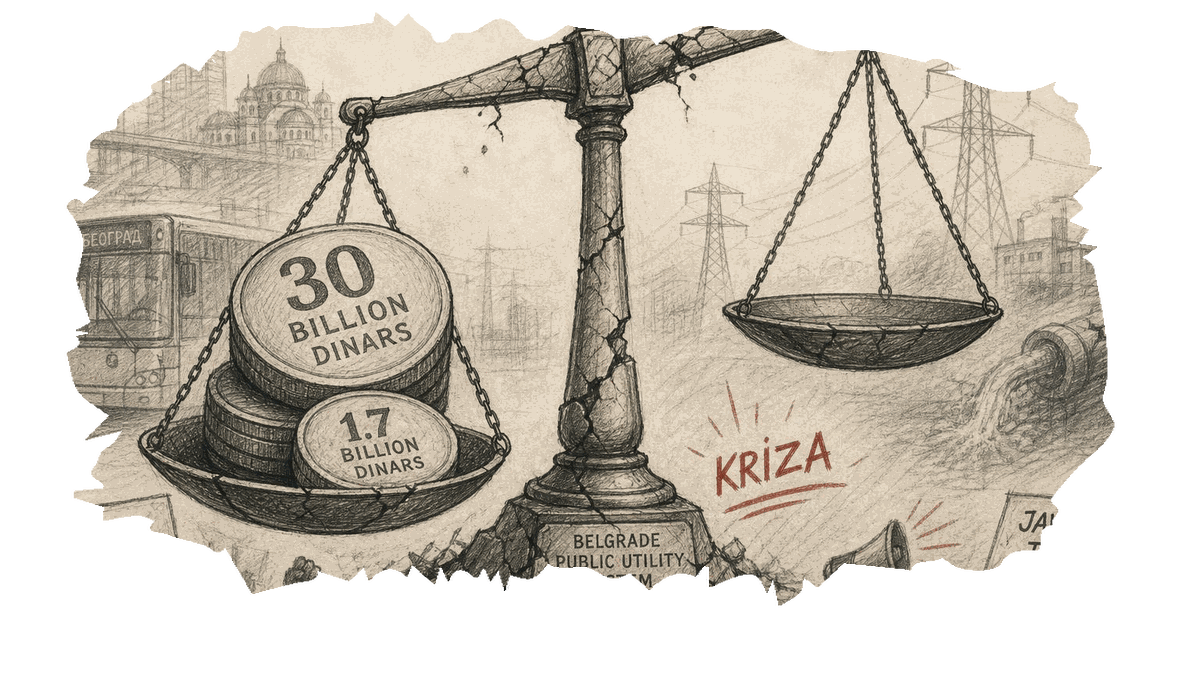
Belgrade’s public utility system is facing a severe financial crisis, with debts owed to suppliers reaching an unprecedented 30 billion dinars. This alarming situation has led to intensified calls for the resignation of the city’s mayor, Aleksandar Šapić. The financial instability of the public utility companies has been highlighted by recent reports showing that most of these entities are operating at a loss. By the end of 2025, the net losses of three major public companies in Belgrade had surpassed 1.7 billion dinars.
The Center for Local Self-Government’s director, Nikola Jovanović, has described the debts of the public utility companies as being at a historical maximum, attributing this crisis to “irresponsible business practices and wasteful spending.” He emphasized that the financial mismanagement is not only the fault of the companies’ directors but also the city administration led by Mayor Šapić, which has failed to ensure the basic functioning of the utility system.

Among the public utilities, the Belgrade City Transport Company (GSP) is in the most critical condition, with a debt of six billion dinars to suppliers, threatening a potential account freeze. Over 200 suppliers are reportedly considering lawsuits and forced collections due to unpaid bills. The GSP’s financial woes have been exacerbated by unsuccessful tenders and mounting debts, which have hindered regular vehicle maintenance and repairs. Ivan Banković from the GSP union highlighted the need for a thorough business analysis and prioritization of debt payments to suppliers to stabilize the situation.
The financial distress extends to other public utilities as well. For instance, Beogradske elektrane, a major heating company, reported a net loss of 1.4 billion dinars in 2025 and owes 15 billion dinars to Srbijagas for gas supplies this year alone. Meanwhile, Beograd-put, responsible for road maintenance, also reported significant losses.
In response to the crisis, there have been suggestions that the Serbian government might attempt to alleviate Belgrade’s financial troubles through budget reallocations. However, Jovanović argues that such measures would not address the systemic issues of poor financial management, inadequate planning, and corruption that have led to the current predicament.
The situation has sparked public debate and criticism of the city’s leadership, with opposition groups and experts calling for greater accountability and transparency in managing public resources. The financial turmoil in Belgrade’s public utilities raises concerns about the potential impact on essential services for residents and the overall economic stability of the city. As the crisis unfolds, the focus remains on how the city administration and national government will respond to prevent further deterioration of the utility system.