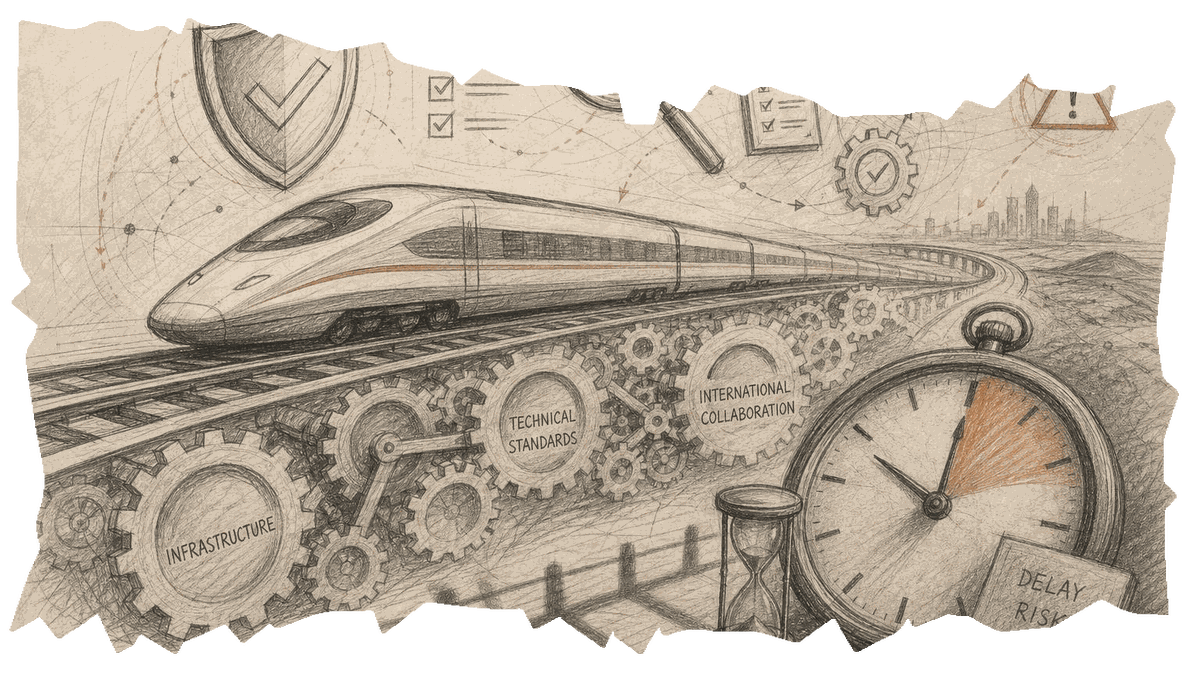
The high-speed train service between Belgrade and Budapest, known as Soko, has commenced operations, but passengers have yet to board due to ongoing safety concerns. Hungarian authorities are conducting extensive tests on the railway, citing apprehensions about the quality of work executed by Chinese contractors and the Serbian government. The Hungarian Minister of Transport, David Vitezi, has described the testing as the most comprehensive in history, emphasizing that passenger transport will only begin once safety is assured.
The rigorous testing regime follows a series of political and technical challenges that have delayed the project. Initially expected to begin several months ago, the launch of the passenger service has been postponed due to safety evaluations. The Hungarian government, following a change in leadership, has been particularly cautious, with Vitezi noting that the train control system, crucial for ensuring safety at high speeds, has been functioning well during the tests. However, he reiterated that safety remains the top priority, and passenger services will commence only when all safety standards are met.

This development comes after a series of non-transparent dealings involving the previous Hungarian administration under Viktor Orban, Chinese contractors, and the Serbian regime. These dealings have led to increased scrutiny and a lack of trust in the project’s integrity. The Hungarian authorities have been particularly vigilant following an incident in Novi Sad, where the collapse of a canopy led to political and social unrest, further influencing the cautious approach to the train’s launch.
The Serbian government, represented by the Minister of Construction, Transport, and Infrastructure, Aleksandra Sofronijević, has stated that Serbia is ready to commence passenger services to Budapest. However, the decision now rests with the Hungarian side, which is conducting the necessary technical and safety checks. Despite the delays, freight trains have been operating on the high-speed line since February 27, as previously announced by former Serbian President Aleksandar Vučić.
The project, which aims to enhance connectivity between the two capitals, has faced several challenges, including technical issues with the European Train Control System (ETCS), which is essential for safe operations at the intended speed of 160 kilometers per hour. These issues have necessitated further testing and validation by the Hungarian national carrier MAV and other relevant authorities.
The delays have sparked public interest and concern regarding the project’s transparency and the effectiveness of international collaborations in infrastructure development. The Hungarian Minister of Transport has called for greater transparency from Chinese authorities, urging them to make contracts and associated documentation publicly available to address ongoing concerns.
As the safety evaluations continue, the timeline for the commencement of passenger services remains uncertain. The Hungarian authorities have pledged to keep the public informed about the progress and results of the safety tests, underscoring the importance of transparency and public awareness in infrastructure projects of this scale. The outcome of these evaluations will determine when passengers can finally travel on the high-speed line between Belgrade and Budapest, marking a significant milestone in regional connectivity.