

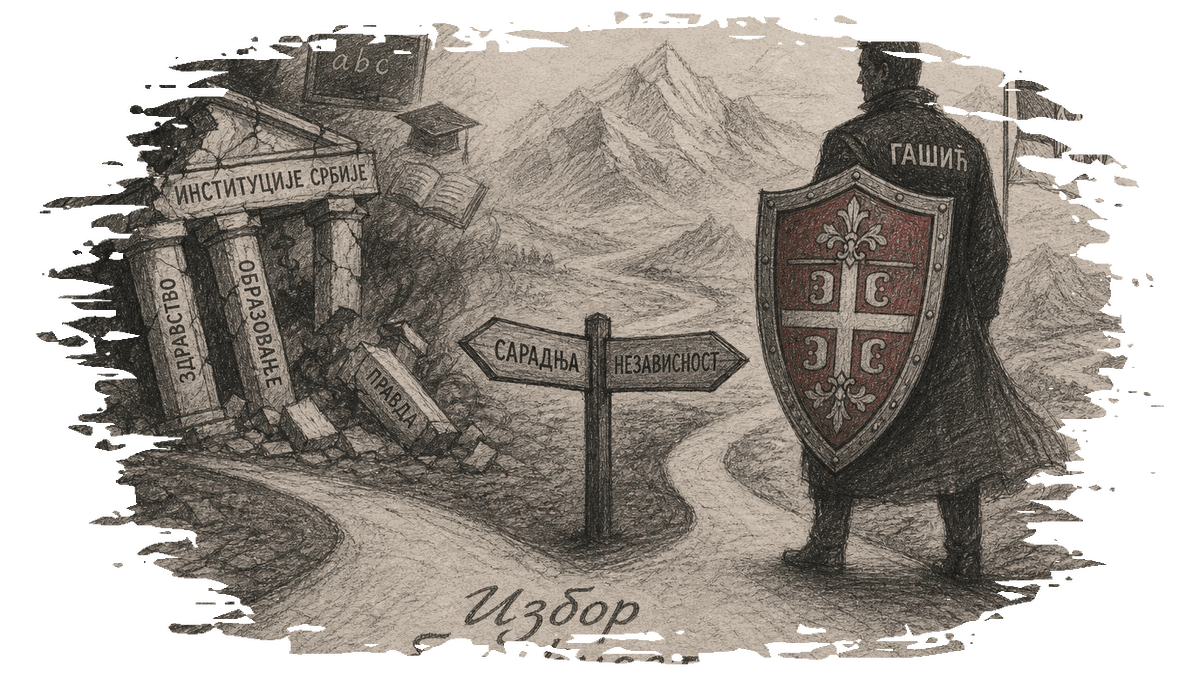
Jugoslav Gašić, a representative of the Students’ List in the Serbian National Assembly, has announced a significant shift in the political landscape by stating that the Students’ List will not collaborate with the Serbian List. This announcement comes amid growing concerns about the future of Serbian institutions in Kosovo, particularly in the areas of healthcare and education. Gašić emphasized the potential consequences of losing these essential services, warning that it could trigger a mass emigration of Serbs from Kosovo.
Gašić, who also serves as an assistant professor at the Medical Faculty of the University of Priština in Kosovska Mitrovica, highlighted the impending threat posed by the Law on Foreigners, which could adversely affect the University in Kosovska Mitrovica. He noted that the delay in the application of this law expires on March 15, posing a significant risk to the educational system. Gašić stressed the importance of ensuring financial, physical, and institutional security for Serbs in Kosovo to prevent such an exodus.
In a recent meeting, the Students’ List engaged in discussions with representatives of the Serbian opposition from Kosovo, although specific parties involved were not disclosed. Gašić reiterated that the Students’ List will not recognize Kosovo as an independent entity and accused the Serbian List of political engineering and coercion to secure electoral support. He expressed confidence that the effects of the changing political circumstances would become evident in the upcoming election cycle.
The Students’ List, which recently gained a majority in the Serbian National Assembly, has been vocal about its priorities, including the preservation of Serbian institutions in Kosovo. Gašić acknowledged the challenges faced by the new government in addressing the issues inherited from previous administrations but affirmed the commitment to improve the situation.
Additionally, Gašić criticized the draft law on the Central Inspectorate for Cultural Heritage in Kosovo, which he argued poses a threat to the Serbian Orthodox Church and the Serbian community in Kosovo. He pointed out that the proposed law conflicts with existing laws and guarantees enjoyed by the church, potentially allowing the Ministry of Culture in Priština to interfere with church activities.
The Students’ List’s decision to break ties with the Serbian List marks a pivotal moment in Serbian politics, as it seeks to engage with other political actors in Kosovo. Gašić’s statements underscore the urgency of addressing the challenges facing Serbs in Kosovo, particularly in maintaining access to essential services and safeguarding cultural heritage. The developments highlight the complex political dynamics in the region and the need for strategic engagement with international stakeholders to ensure the security and stability of Serbian communities in Kosovo.



0 Comments