

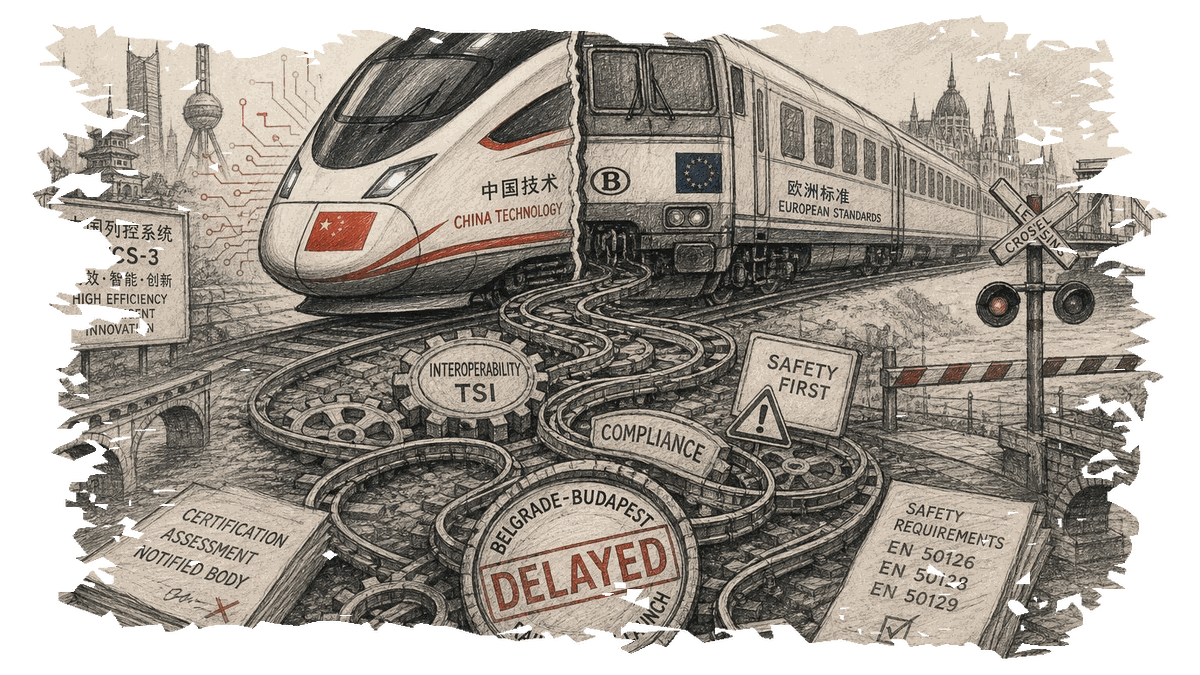
The launch of the passenger train service between Belgrade and Budapest is facing delays due to compliance issues with the Chinese train control system, which needs to meet European safety standards. Hungarian Transport Minister David Vitezi announced that the start of the service could be postponed for several months, depending on the outcomes of further testing. Vitezi acknowledged that earlier timelines for the service’s commencement were overly optimistic.
The primary issue lies with the Chinese train control system, which is responsible for monitoring train movements and preventing collisions. Although the system was initially reported to be complete by the Chinese company CRSC in 2026, discrepancies in the software’s functionality compared to European systems have raised concerns during testing. The European certification body has confirmed that the system complies with relevant European regulations, but three additional verification stages remain. These include approval from the Hungarian railway authority, consent from the infrastructure manager MAV, and an independent quality assessment by the company TUV.
The Hungarian section of the railway presents unique challenges due to the presence of level crossings, which require the system to manage a large number of these intersections. In contrast, the section between Belgrade and the Hungarian border does not have such crossings, allowing trains to travel at speeds of up to 200 kilometers per hour, while the maximum speed on the Hungarian section is set at 160 kilometers per hour.
Vitezi explained that the decision to use the Chinese system was made following discussions between Hungarian and Chinese officials, despite initial plans to install a European system. The minister’s recent statements highlight the complexity of integrating the Chinese system with European standards and the potential impact on the timeline for launching the service.
The delay in the train service’s launch is significant for travelers and the broader regional connectivity between Serbia and Hungary. The project, which was initially expected to commence by December 2026, had earlier been anticipated to start as early as late October or early November. The uncertainty surrounding the exact duration of the delay remains, with further testing results pending, which could affect future timelines.
The Belgrade-Budapest railway project is a key infrastructure initiative aimed at enhancing transportation links between the two capitals. The delay underscores the challenges of international collaboration in large-scale infrastructure projects, particularly when integrating different technological standards. As the situation develops, stakeholders and potential passengers will be closely monitoring the progress of the compliance testing and the eventual launch of the train service.




0 Comments