

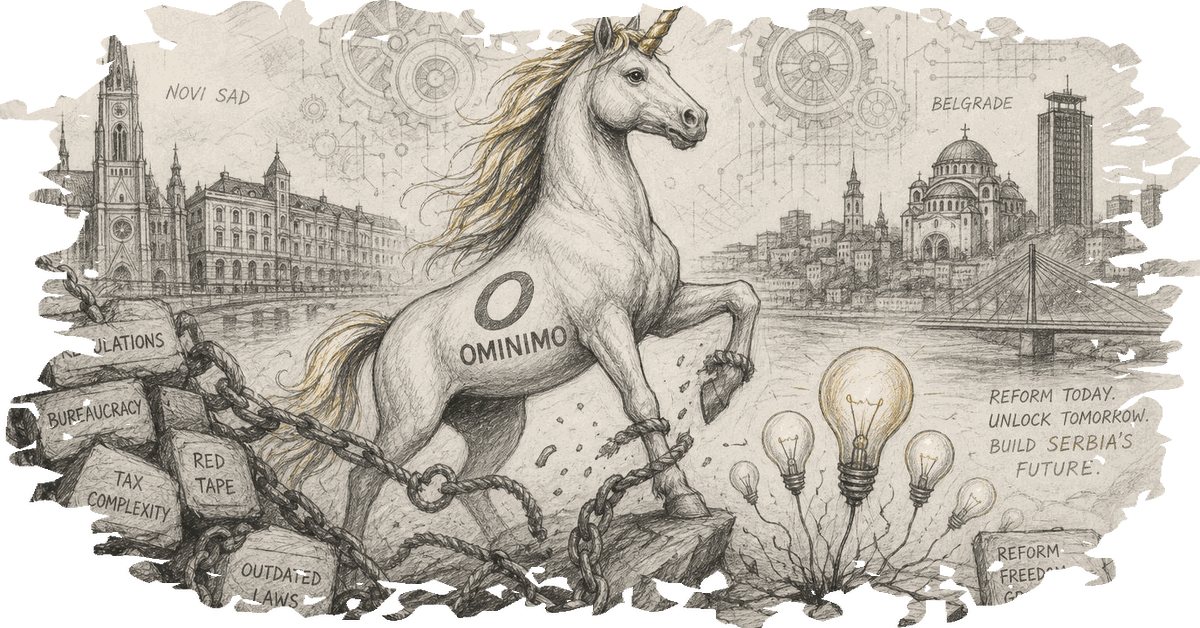
Serbia has recently celebrated the emergence of its first unicorn, Ominimo, a tech startup now valued at over $1 billion. The company, which specializes in AI-driven insurance products, operates development centers in Novi Sad and Belgrade. Despite this significant achievement, Ominimo’s success highlights the broader challenges faced by the Serbian startup ecosystem, particularly in terms of regulatory hurdles and economic contribution.
Ominimo’s services are primarily sold abroad, which means its impact on Serbia’s GDP is limited. The company’s owner, Dušan Komar, has been vocal about the need for regulatory reforms in Serbia to better support local startups. In various interviews, Komar has emphasized the importance of establishing the rule of law, reducing bureaucracy, offering tax relief, and creating a more flexible foreign exchange law to foster a more conducive environment for tech companies.

The success of Ominimo is set against a backdrop where Slovenia, a neighboring country, boasts four unicorns, showcasing a more developed startup ecosystem in the region. Slovenia’s achievements in this area are attributed to strategic paths ranging from self-financing to global mergers and technological acquisitions. This contrast underscores the potential for growth in Serbia’s tech sector if similar supportive measures are implemented.
While Ominimo’s valuation marks a milestone for Serbia, it also raises questions about the sustainability of its business model and its potential influence on the local market. The company’s global focus, similar to other successful startups in the region, reflects a strategy to adapt products to international standards, given the limited size of the domestic market.
The emergence of Ominimo as a unicorn has significant implications for other startups in Serbia. It highlights the capabilities of young Serbian engineers who are developing cutting-edge solutions that attract global interest, yet are not fully utilized within their own country due to regulatory constraints. This situation presents an opportunity for Serbia to reassess its policies and create an environment that not only nurtures local talent but also retains the economic benefits of their innovations within the country.
In conclusion, while Ominimo’s rise to unicorn status is a testament to the potential of Serbia’s tech industry, it also serves as a call to action for regulatory changes that can support the growth of local startups. By addressing these challenges, Serbia could enhance its position in the regional tech landscape and ensure that its burgeoning tech sector contributes more significantly to the national economy.



0 Comments