


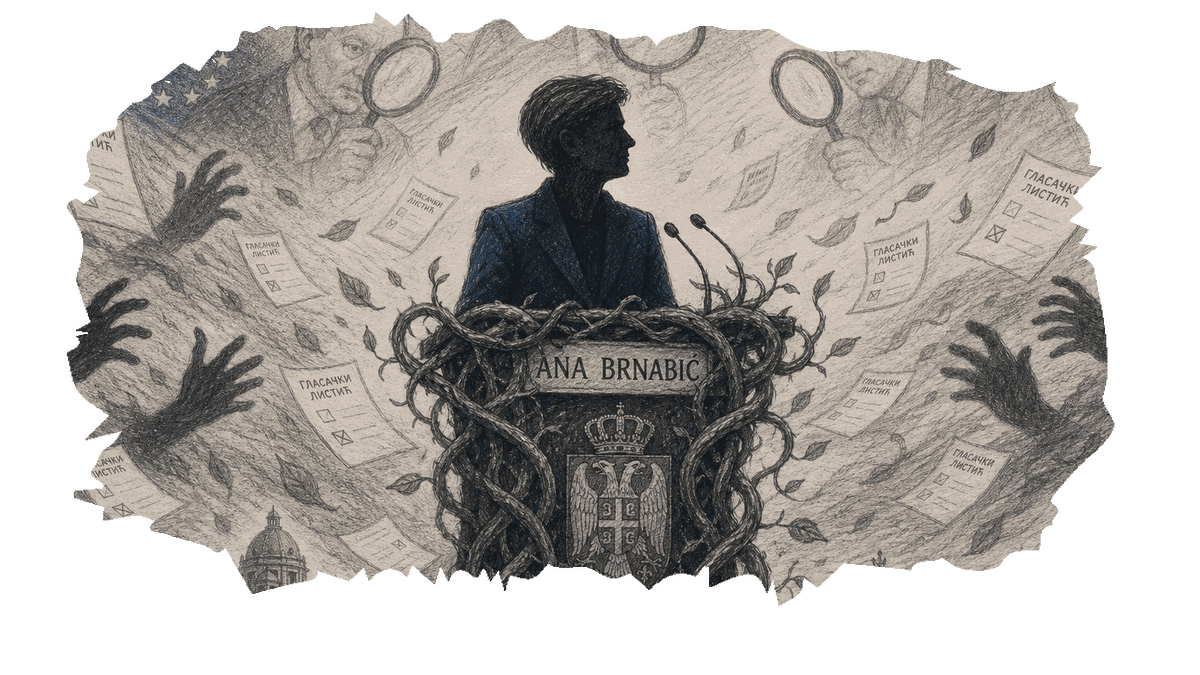
Serbia’s upcoming parliamentary elections are set to feature a campaign strategy heavily centered around President Aleksandar Vučić, with the Serbian Progressive Party (SNS) relying on his personal appeal to drive voter engagement. According to reports, Vučić’s campaign will predominantly highlight his presence, with limited appearances by select party members such as Miloš Vučević, Zorana Mihajlović, and Ana Brnabić. This approach aims to minimize the visibility of less popular figures within the party, a tactic that has been used in previous campaigns.
The strategy involves Vučić engaging in smaller gatherings, allowing him to connect more personally with voters and convey his message more effectively than at large rallies. These events are complemented by larger public festivities where Vučić occasionally makes appearances, and where selected SNS officials entertain the crowd. Critics argue that this method underscores the party’s lack of viable candidates beyond Vučić, as noted by Zoran Alimpić, a member of the Democratic Party. Alimpić suggests that the campaign will likely feature “new faces” such as artists and professionals to obscure the party’s unpopular figures.

Political analysts have pointed out that Vučić’s campaign strategy reflects a broader trend of consolidating power within the SNS, where dissent is minimized, and the focus remains on Vučić as the central figure. Miroslav Parović, founder of the National Freedom Movement, highlights that Vučić’s leadership style leaves no room for a “number two” in the party, emphasizing that other party figures serve mainly to reinforce Vučić’s singular authority.
The campaign also appears to be strategically rebranded, as Vučić distances himself from the SNS’s local leaders, some of whom are reportedly unpopular or facing legal issues in their regions. Đorđe Miketić, a member of the association “Belgrade Stays,” suggests that Vučić’s campaign will position him against his own party’s local “sheriffs,” portraying himself as a savior of the people from both external and internal threats.
This tightly controlled campaign approach raises questions about the SNS’s internal dynamics and the potential impact on voter perception. The use of “new faces” in the campaign is seen by some as a temporary measure, with these individuals likely to fade from the political scene after the elections, as has been observed in previous campaigns. Analysts hope that Serbian voters will not be swayed by these tactics, recalling similar strategies used in past elections.
The opposition, meanwhile, views the campaign as an opportunity to highlight the lack of substantial leadership within the SNS beyond Vučić. They argue that the party’s reliance on Vučić’s personal appeal indicates a weakness in its broader political structure. As the elections approach, the effectiveness of Vučić’s campaign strategy and its impact on the SNS’s electoral prospects remain to be seen.
0 Comments