

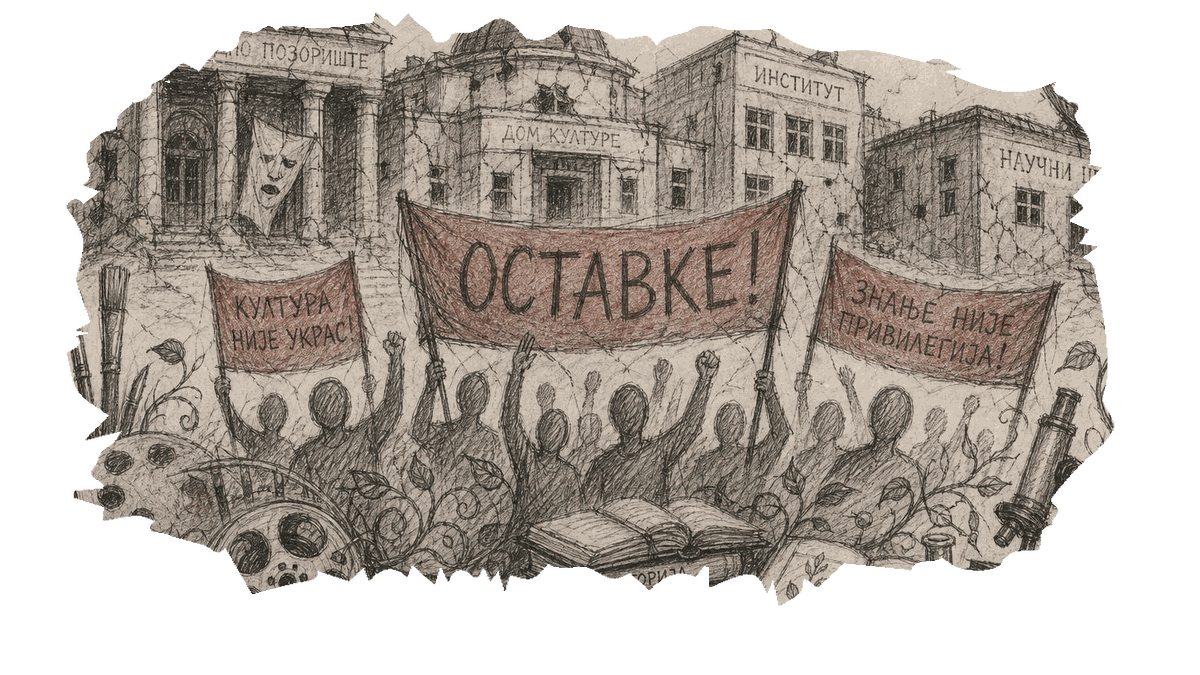
In the wake of the recent political changes in Serbia, a wave of resignation demands has swept through the country’s cultural and scientific institutions. Since the fall of Aleksandar Vučić’s government, employees from various theaters, film associations, and research institutes have been vocal in calling for the resignation of their leaders, citing a need for accountability and change in leadership.
The demands began on October 26, the day after the parliamentary elections, with the ensemble of Šabačko pozorište requesting the resignation of their director, Aleksandra Delić. Delić, however, refused to step down, stating that she was appointed by the city’s Serbian Progressive Party (SNS), which remains in power. This move set off a series of similar demands across the cultural sector.
On October 27, Atelje 212 in Belgrade used social media to urge their acting manager, Ljubiša Ristić, to resign. The actors followed up with a one-hour warning strike, demanding that if Ristić did not resign voluntarily, the Secretariat for Culture of the City of Belgrade should dismiss him. Similarly, actors from the National Theatre in Belgrade and the Serbian National Theatre in Novi Sad have called for the resignation of their respective directors.
The film industry has also seen significant upheaval. Seven film associations have demanded the resignation of the acting director of the Film Center of Serbia, Jakov Petrović, and its board members. They have given a 48-hour deadline for these resignations, citing the center’s failure to fulfill its mission as prescribed by law.
Researchers at the Institute for Literature and Art have joined the movement, demanding the resignation of their director, Dr. Svetlana Šeatović, and the board members. They staged a warning strike outside the institute’s premises to emphasize their demands.
The unrest has extended to other sectors as well. On October 29, the Association of Film Directors of Serbia called for the leadership of Telekom Srbija to resign, demanding transparency in financial dealings and a halt to new film and TV series productions. The Free Citizens Movement has also called for resignations within the Ministry of Culture, highlighting a widespread demand for change across various cultural institutions.
The Republic Institute for the Protection of Cultural Monuments has not been immune to these demands. On October 30, its union called for the resignation of acting director Goran Vasić, whose mandate expired in June 2025 and who is currently facing a criminal investigation.
These demands reflect a broader movement for change in Serbia’s cultural landscape, driven by recent political shifts. The fall of Vučić’s government has emboldened employees in cultural and scientific institutions to seek accountability and new leadership, aligning with public sentiment for reform. The outcomes of these demands remain uncertain, and the situation continues to evolve, potentially affecting the stability and future direction of Serbia’s cultural institutions.


0 Comments