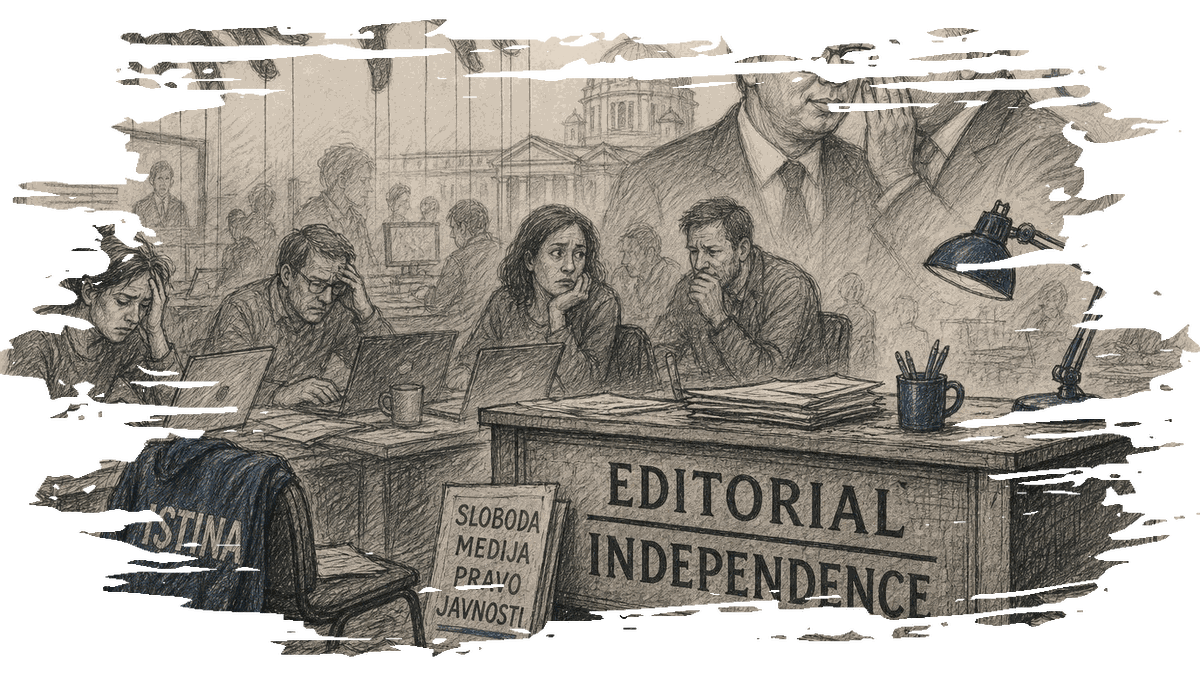
A recent incident at the newsroom of the Serbian media outlet Nova has sparked discussions about media autonomy and political influence in Serbia. A video circulating on social media depicts a journalist being introduced to new editors by foreign representatives, an act perceived by some as a colonial-style imposition on the media outlet. This event has unfolded against the backdrop of Serbia’s politically charged environment, with elections looming.
The video shows Pedro Vargas David, a wealthy Portuguese businessman, and Brent Sadler, a former CNN war correspondent, entering the Nova newsroom to introduce new editorial leadership. Ratko Femić, the deputy editor of Nova, openly criticized this move, expressing concerns over the autonomy of the newsroom. Femić reportedly confronted the new editorial appointee, Marko Stjepanović, stating, “This is a disgrace, Marko,” and accused the management of treating the 60-member staff as fools by imposing an “octroised” editor. Femić’s remarks highlight his disapproval of the changes, which he believes aim to silence the portal and newspaper Nova until after the elections.

The introduction of new editors at Nova is seen by some as part of a broader pattern of media control and political influence in Serbia. This incident is not isolated but reflects ongoing issues of media manipulation, especially under the influence of political figures such as Aleksandar Vučić. The timing of the editorial changes, just before the elections, has raised suspicions about the motivations behind the move. Femić’s public criticism and defense of his team suggest a significant rift within the newsroom regarding the new leadership.
Marko Stjepanović, the newly appointed editor, has a history of working in tabloid journalism and was previously associated with Blic, a major Serbian tabloid. His appointment at Nova, facilitated by Vargas and Sadler, has been met with skepticism by the staff, who view him as someone imposed by external forces. Despite his reputation for driving digital engagement and clicks, Stjepanović’s past association with a media outlet known for aligning with government narratives adds to the controversy surrounding his new role.
Brent Sadler, who has been involved with United Group’s media operations in Serbia, including N1 and Nova S, was questioned by Femić about his role in potentially undermining independent media. Sadler, who has a long-standing connection to Serbia, denied any intention to harm media independence, emphasizing a commitment to professionalism and balanced reporting. However, the presence of foreign representatives in the newsroom has intensified concerns about external influence over Serbian media.
The incident at Nova is emblematic of the broader challenges facing media freedom in Serbia. The country’s media landscape has been subject to criticism for its lack of independence and susceptibility to political pressures. As the elections approach, the control over media narratives becomes increasingly significant, with implications for public discourse and electoral outcomes.
The reactions from within Nova suggest a deep-seated concern among journalists about maintaining editorial independence in the face of external pressures. The broader context of media manipulation in Serbia, particularly under Vučić’s administration, underscores the stakes involved in this incident. As the political climate intensifies, the autonomy of media outlets like Nova remains a contentious issue, reflecting the ongoing struggle for media freedom in Serbia.