Čedomir Antić, a prominent Serbian historian and political commentator, has issued a critical assessment of the current state of the Serbian opposition, arguing that it has developed destructive motives such as spite and contempt for citizens. Writing for the Serbian newspaper “Blic,” Antić expressed concern over the degradation of social cohesion, attributing it to the attitudes of the opposition, the academic community, and student protest organizers. He accused these groups of selfishness and political bias, suggesting that their actions reflect a disdain for the majority of citizens.
Antić’s critique extends to a broader reflection on Serbian political history, questioning whether the Serbian people have willingly chosen their current political fate or if it has been imposed upon them. He draws parallels between the present situation and historical events, noting that the Serbian populace has traditionally favored stability and peace, as evidenced by their political choices over the past decades. He recalls the political landscape of the 1990s, highlighting the cautious nature of Serbian voters who, on average, were older than 40 years at the time and thus inclined towards stability.

The historian also revisits the political dynamics of the 1990s, referencing the 1997 presidential elections when Vojislav Šešelj, leader of the Serbian Radical Party (SRS), won against the regime’s candidate, Zoran Lilić, in a controversial second round. Antić describes this period as one where the opposition failed to unite, leading to a fragmented political landscape. He suggests that a similar phenomenon of spiteful opposition was evident in 2012 when the “beli listići” (blank ballots) movement emerged, indirectly aiding Tomislav Nikolić’s victory over then-President Boris Tadić.
Antić warns that the current opposition’s spiteful motives could lead to self-destructive outcomes, as was seen in previous political cycles. He argues that such attitudes obscure rational decision-making and are ultimately detrimental to the opposition’s goals. He cites the example of the 2012 elections, where the blank ballot protest was perceived as a significant, albeit not decisive, factor in the electoral defeat of pro-European parties.
Furthermore, Antić criticizes the current student protest movements, suggesting that their popularity is rooted not in political or economic grievances but in a perceived defense of dignity. He points out that these movements, along with their supporters, have targeted corruption and regime rhetoric, viewing the government and its supporters as an “absolute evil.”
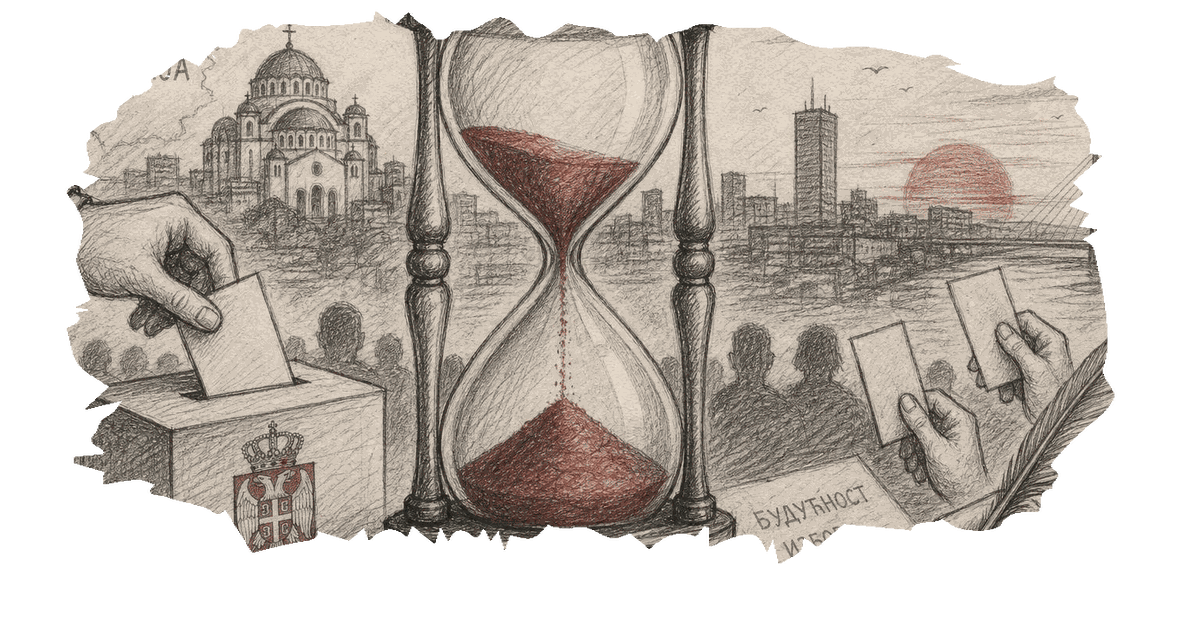
The historian’s commentary comes at a time when Serbia is approaching parliamentary elections, with the political climate marked by significant polarization and debate over the direction of the country’s governance. His reflections offer a lens into the historical and cultural factors that continue to shape Serbian politics, emphasizing the need for introspection and a reassessment of opposition strategies in the face of entrenched political challenges.