

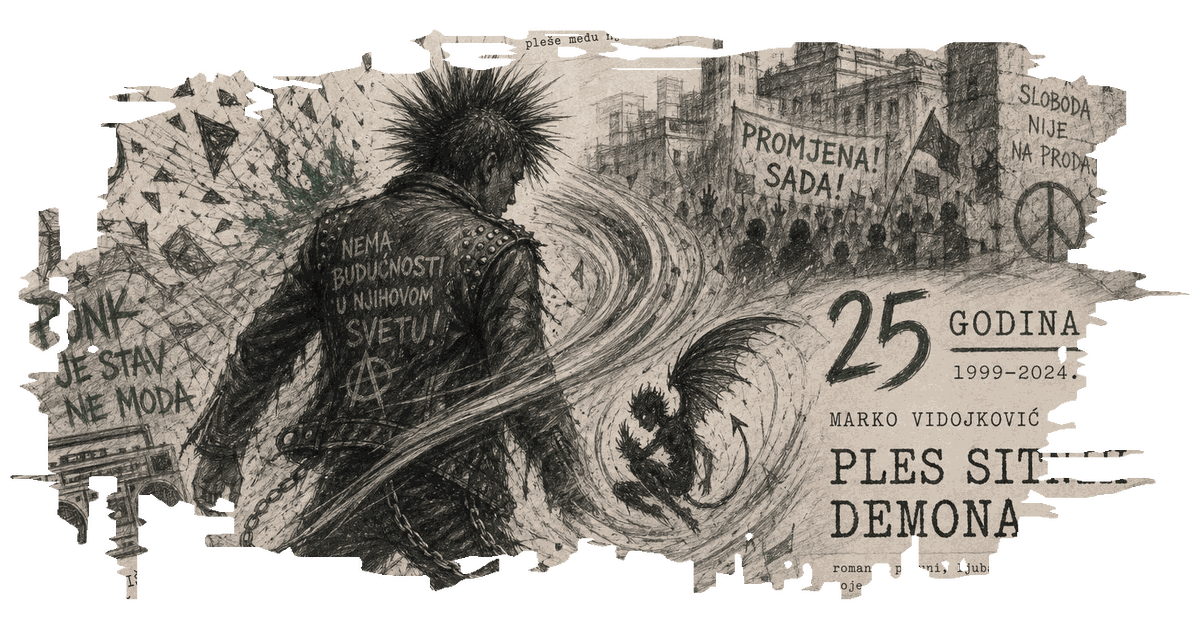
Marko Vidojković, a prominent Serbian author, is reflecting on the 25th anniversary of his debut novel, “Ples sitnih demona” (“Dance of the Little Demons”), which was published in September 2001. The novel, released by Narodna knjiga in Belgrade, was crafted during a tumultuous period in Serbia, just before the fall of Slobodan Milošević. Vidojković’s work is recognized for its exploration of themes related to Serbian youth and societal issues, capturing the zeitgeist of a nation on the brink of significant political change.
The writing process for “Ples sitnih demona” was notably swift, taking place over just twelve days from late August to early September 2000. Vidojković attributes his rapid writing pace to his proficiency in typing, a skill he honed during his education at a legal-bureaucratic school. This efficiency allowed him to quickly channel his ideas into the novel, which he describes as a reflection of his own experiences and the socio-political climate of the time.

The novel centers on Boban Šestić, a character reminiscent of Vidojković himself, navigating his second year of high school as a punk rock enthusiast. This narrative resonated with readers, particularly the younger generation, who saw their own struggles and aspirations mirrored in the story. Vidojković’s depiction of youth culture and rebellion against the backdrop of a politically charged Serbia provided a voice to a generation grappling with rapid societal changes.
Initially, Vidojković faced challenges in finding a publisher. He recounts how his earlier attempts at writing novels were met with limited success, including a story about the first Serbian astronaut and another about the NATO bombing, both of which he deemed unsatisfactory. However, the manuscript for “Ples sitnih demona” caught the attention of Radivoje Mikić at Narodna knjiga, who recognized its potential and included it in the publisher’s plans for 2001.
The novel’s publication coincided with a pivotal moment in Serbian history, as the country was transitioning from the Milošević era. This context added layers of meaning to Vidojković’s work, as it captured the essence of a society in flux. The themes of disillusionment and the search for identity resonated with readers who were experiencing similar upheavals in their own lives.
Over the years, “Ples sitnih demona” has been reprinted by various publishers, including Samizdat B92 and Laguna, indicating its lasting impact on Serbian literature. Vidojković’s reflections on the novel’s anniversary highlight not only his personal journey as a writer but also the broader cultural and historical significance of his work.
The novel’s enduring popularity underscores its role in shaping contemporary Serbian literature and its ability to capture the complexities of a nation in transition. As Vidojković celebrates this milestone, “Ples sitnih demona” remains a poignant reminder of the challenges and triumphs of a generation navigating a rapidly changing world.



0 Comments