

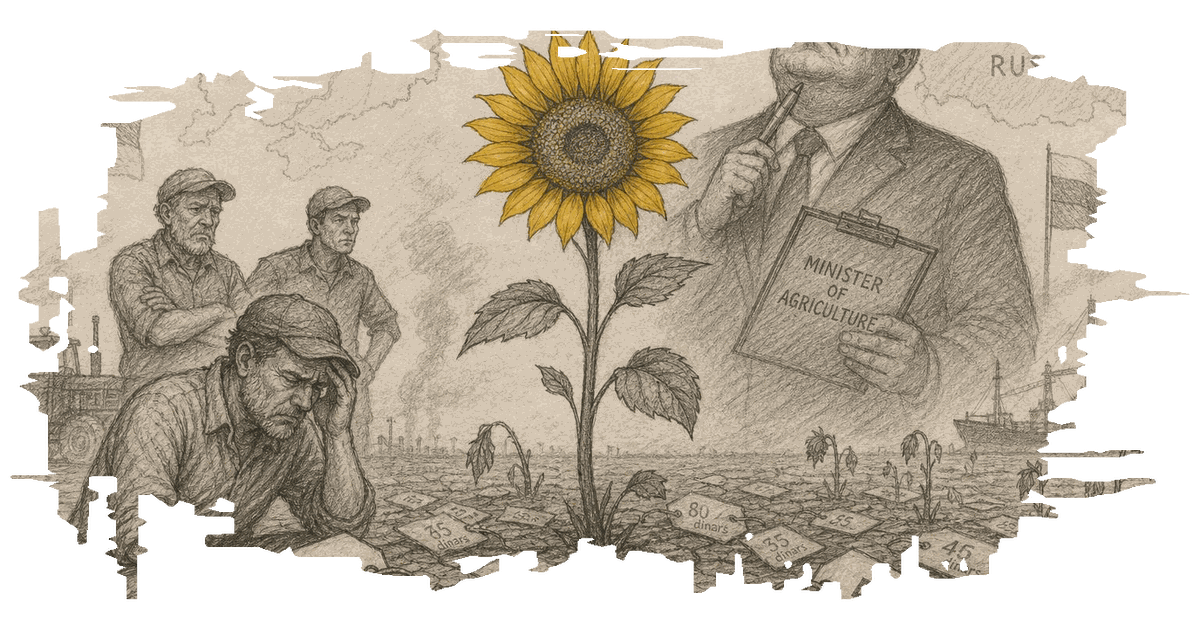
Minister of Agriculture Dragan Glamočić has criticized the ongoing protests by sunflower farmers in Serbia, labeling them as politically motivated. The farmers are demanding a minimum purchase price of 70 dinars per kilogram for sunflower, while the current market price has increased to over 50 dinars. Glamočić made these remarks during an appearance on Radio-Television Serbia (RTS), suggesting that a minority of farmers are using the situation for political promotion.
Glamočić acknowledged that the initial purchase price of 40 dinars was indeed low, but he emphasized that the price has since risen. He stated that the final purchase price will be determined in September, with significant influence from the geopolitical events in Ukraine and Russia. The minister also compared the situation in Serbia with neighboring Hungary, where sunflower prices are between 57 and 58 dinars, noting that higher prices in the region are associated with sunflower varieties that have elevated oleic acid levels, which are not currently grown in Serbia.

Despite the drought conditions, Glamočić reported that the current year’s sunflower yield is better than the previous year’s. He highlighted that Serbia requires approximately 110,000 tons of sunflower oil for domestic consumption, with an additional 180,000 tons available for export and 200 tons of sunflower meal.
The protests by farmers reflect broader economic concerns within Serbia’s agriculture sector. While Glamočić attributes political motivations to the protests, the farmers’ demands underscore the economic pressures they face due to fluctuating market prices and external geopolitical factors affecting commodity prices. The minister’s comments suggest a complex interplay between local agricultural economics and international market dynamics, particularly given the ongoing conflict in Ukraine, which has significant implications for global agricultural markets.
In addition to addressing the sunflower price issue, Glamočić also commented on the outbreak of African swine fever in Serbia. He reported that 36,632 animals have either died or been euthanized due to the disease, which is localized in seven districts, 13 municipalities, and 62 settlements. While recent cases have been sporadic, Glamočić emphasized the need for continued vigilance against the disease.
The situation highlights the challenges faced by Serbian farmers, who are navigating both domestic economic pressures and the impacts of international events on agricultural markets. The government’s response, as articulated by Glamočić, indicates an awareness of these challenges but also suggests a degree of skepticism regarding the motivations behind the farmers’ protests. As the final purchase price for sunflowers is set to be determined in the coming month, the outcome will likely have significant implications for both the farmers and the broader agricultural sector in Serbia.




0 Comments