
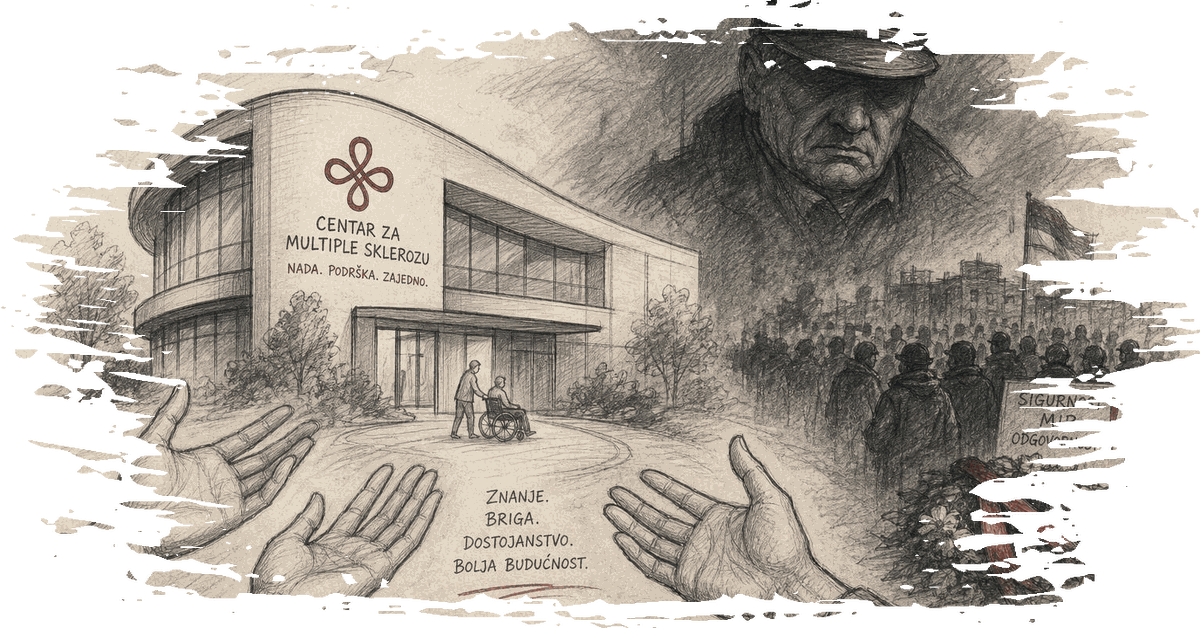
President Aleksandar Vučić of Serbia has announced the establishment of a new center dedicated to the treatment of multiple sclerosis at the Clinical Center of Serbia (KCS). This development, revealed during Vučić’s visit to the Association of Multiple Sclerosis Patients in Novi Kneževac, is set to enhance healthcare services for individuals suffering from the condition. The center, slated to open on September 10, will provide access to specialized medical staff, including physiotherapists, gynecologists, urologists, and ophthalmologists. Health Minister Zlatibor Lončar emphasized the significance of this initiative, noting the government’s commitment to improving the quality of life for patients through advanced medical care.
In a separate but concurrent development, Vučić confirmed that the body of Ratko Mladić, the former commander of the Army of Republika Srpska, has been retrieved from The Hague and is expected to arrive in Serbia later today. Mladić, who was convicted of genocide by the International Criminal Tribunal for the former Yugoslavia, passed away recently, and his return to Serbia has sparked significant public interest and security concerns. The Serbian government anticipates tens of thousands of attendees at Mladić’s funeral, presenting a complex challenge for public safety measures.
Security assessments conducted by various agencies, including the Security Information Agency, the Military Security Agency, and the Ministry of Internal Affairs, indicate a substantial turnout for the funeral. Vučić acknowledged the difficulty in ensuring safety for all attendees, given the expected large crowd and the sensitive nature of the event. He assured that the state would deploy all available resources to maintain public order and security.
The funeral arrangements for Mladić have been a topic of considerable attention, with his family expected to provide further details in the coming days. The Serbian government has pledged logistical support to facilitate the funeral proceedings, adhering to the family’s wishes. This commitment underscores the delicate balance the government must maintain in addressing the legacy of Mladić, a figure whose actions during the Bosnian War continue to evoke strong emotions and political implications within Serbia and beyond.
The dual announcements highlight the intersection of public health initiatives and political sensitivities in Serbia. The opening of the multiple sclerosis center represents a significant step forward in healthcare provision, while the return of Mladić’s body underscores ongoing challenges related to Serbia’s historical and political landscape. As the country prepares for the funeral, the government’s handling of the situation will likely be scrutinized both domestically and internationally, reflecting broader tensions surrounding Serbia’s approach to its past and its efforts to navigate contemporary political dynamics.




0 Comments