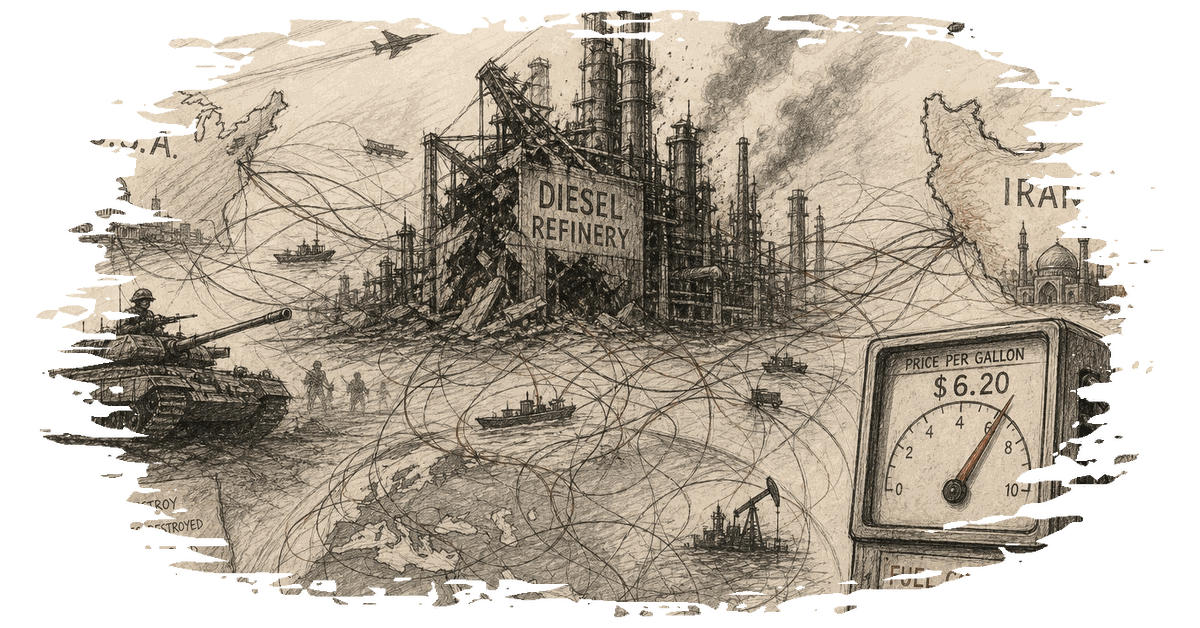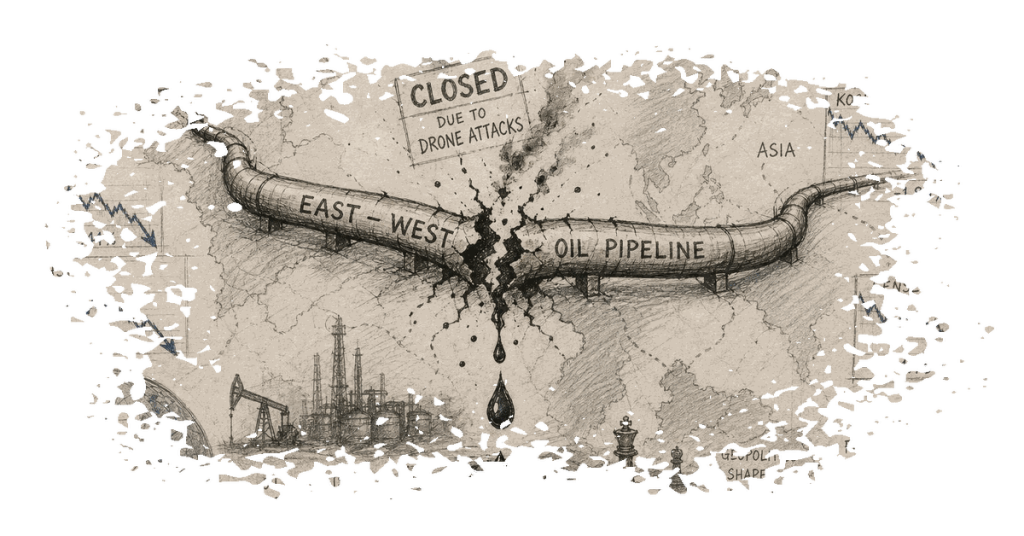
Saudi Arabia has closed its critical East-West oil pipeline following drone attacks originating from Iraq, leading to significant disruptions in Asian stock markets. The extent of the damage and the duration of the pipeline’s closure remain undisclosed, contributing to market uncertainty. The pipeline, a vital route that bypasses the Strait of Hormuz, has been a crucial component of Saudi Arabia’s oil export strategy, especially amid regional tensions.
In response to the closure, Asian markets have experienced notable declines. The Japanese Nikkei 225 index fell by 1%, while South Korea’s Kospi dropped by 2.51%. Other markets in the region showed mixed reactions; for instance, Hong Kong’s Hang Seng index saw a slight increase of 0.35%, and the Chinese CSI 300 index decreased by 0.32%. Australia’s S&P/ASX 200 index remained unchanged.

The closure of the pipeline underscores the vulnerability of global oil supply chains to geopolitical tensions, particularly in the Middle East. Historically, conflicts in this region have led to fluctuations in oil prices, with recent increases linked to ongoing geopolitical conflicts, including those involving Iran. The pipeline’s shutdown adds to the existing pressures on the oil market, which has seen prices rise due to various regional conflicts.
The lack of detailed information about the pipeline’s damage and the timeline for its reopening has created uncertainty in the markets. This uncertainty is reflected in the fluctuating stock indices, as investors react to potential disruptions in oil supply and the broader implications for global energy markets.
Experts are closely monitoring the situation, as the prolonged closure of the pipeline could have significant repercussions on oil prices and market stability. The pipeline’s strategic importance lies in its ability to transport oil without passing through the Strait of Hormuz, a chokepoint that has been the focus of previous geopolitical conflicts.
The impact of the pipeline closure is not limited to Asia. It could have broader implications for global oil markets, potentially affecting economies that rely heavily on oil imports, such as those in the Balkans. As the situation develops, market analysts and policymakers will be assessing the potential for further disruptions and their impact on global economic stability.
In the absence of further details from Saudi authorities, the market remains on edge, with investors bracing for potential volatility. The situation highlights the interconnected nature of global markets and the far-reaching effects of regional conflicts on economic stability worldwide.