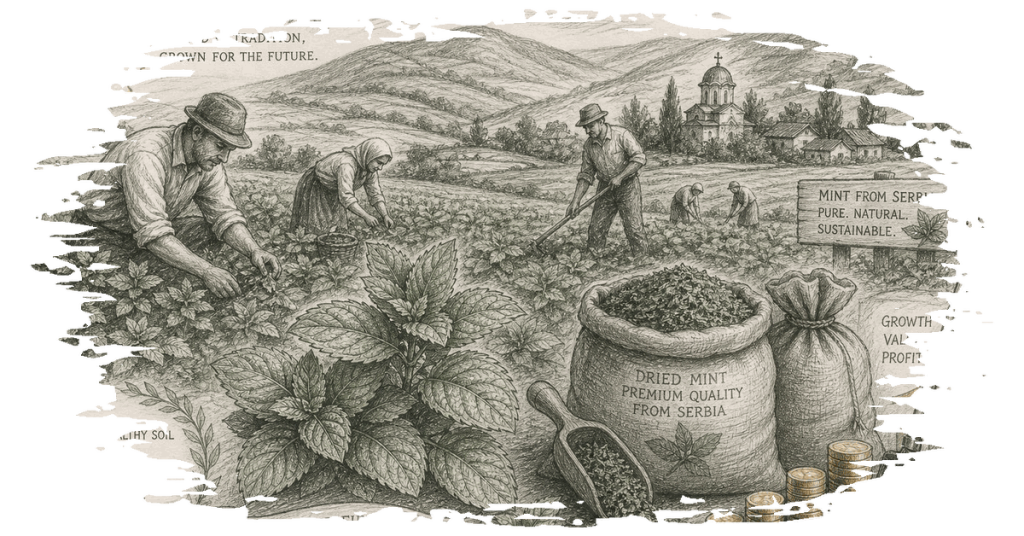
The cultivation of mint in Serbia is experiencing a significant surge in demand, presenting lucrative opportunities for local farmers. According to a recent report by Blic, farmers can earn between 6,000 and 7,000 euros per hectare from mint cultivation, driven by a high demand for the herb across Europe and beyond. This trend is supported by European funds and rural development programs, which provide financial assistance for establishing mint plantations, purchasing necessary equipment, and constructing drying facilities.
Mint has become an attractive crop for Serbian farmers due to its relatively low initial investment and high yield potential. The cost of establishing and maintaining a mint plantation is estimated at around 2,000 euros per hectare, covering expenses such as planting materials, labor, irrigation, and drying processes. With the potential to produce up to 1,500 kilograms of dried mint leaves per hectare, and market prices ranging from 4 to 5 euros per kilogram, farmers can anticipate a substantial return on investment.

The demand for mint is driven by its extensive use in the pharmaceutical and food industries, where it is a key ingredient in products like teas, syrups, essential oils, candies, juices, and cosmetics. Organic mint, in particular, commands a premium price on export markets, sometimes fetching up to 30% more than non-organic varieties. This consistent demand ensures that the purchase of mint is practically guaranteed, with buyers often visiting farms directly to procure the crop. Farmers with their own drying or oil distillation facilities can further increase their profits.
Mint cultivation is accessible to both small family farms and large commercial estates, as it does not require expensive machinery. The process involves planting mint in the spring, with the possibility of harvesting leaves within the same year. Experts advise that careful attention to irrigation and timely harvesting is crucial to ensure the quality and quantity of the dried leaves, which directly affects market prices.
The rise in mint cultivation is part of a broader trend in Serbia’s agricultural sector, where farmers are increasingly turning to crops that offer quick returns and stable markets. European funding plays a crucial role in this shift, providing the necessary financial support for agricultural innovation and sustainability. This support not only helps farmers establish mint plantations but also opens up opportunities for job creation and export, contributing to the economic development of rural areas.
While the current outlook for mint farming in Serbia appears promising, the article does not delve into potential risks or market fluctuations that could impact long-term sustainability. Additionally, firsthand insights from farmers currently engaged in mint cultivation are not included, which could provide a more comprehensive understanding of the challenges and opportunities in this sector.
Overall, the growing demand for mint and the financial incentives available highlight the potential for mint cultivation to become a significant contributor to Serbia’s agricultural economy. As farmers continue to explore this profitable crop, the role of European funding in supporting sustainable agricultural practices will be vital in ensuring the continued success of mint farming in the region.