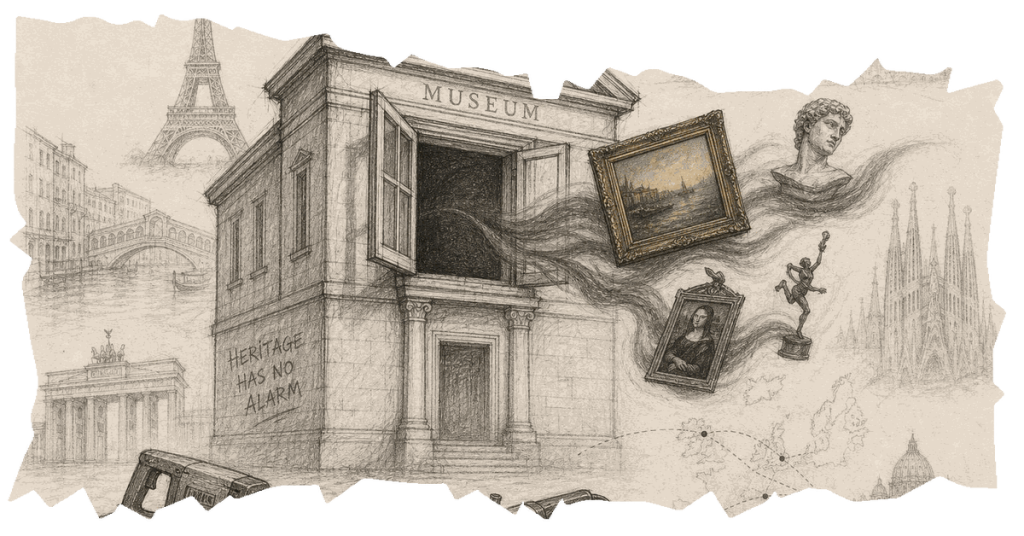
Thieves recently executed a bold heist at the Renoir Museum in Cagnes-sur-Mer, southern France, stealing four paintings by the renowned Impressionist painter Pierre-Auguste Renoir, valued at millions of euros. The incident, which took place in early September, is part of a growing trend of museum thefts across Europe, according to Europol. These crimes have become increasingly frequent and audacious over the past two years, with thieves employing more aggressive tactics and targeting high-value items such as precious metals and gemstones.
The Renoir Museum heist is the latest in a series of thefts that have alarmed cultural institutions across Europe. The thieves reportedly cut through the museum’s fence using an electric knife and metal saw, managing to steal the paintings in under five minutes. Although two of the stolen artworks were later found in the museum’s garden, the remaining pieces are still missing. This incident follows a notable theft at the Louvre in Paris last October, where thieves made off with jewels and artifacts worth 88 million euros in a seven-minute operation. The stolen items, which included emeralds, diamonds, sapphires, and pearls, remain unrecovered.

Art detective Arthur Brand, who has been involved in recovering stolen artworks, predicted the likelihood of further thefts of significant pieces following the Louvre heist. He noted that the success of such high-profile crimes inspires other criminals worldwide to attempt similar heists, often targeting local museums with valuable collections. Europol’s recent report highlights a shift in the methods and targets of these thefts, with a preference for small, portable items that can be quickly taken and sold.
The rise in museum thefts poses a significant threat to cultural heritage, as these institutions house artifacts of immense historical and cultural importance. The Association for Research into Crimes against Art (ARCA) has observed a “persistent preference for small, portable, immediately accessible items,” with many thefts executed in mere minutes. This trend underscores the vulnerability of museums, which often lack the financial resources to implement robust security measures. Museums are typically housed in older buildings that are challenging to secure, and the open nature of these spaces makes them susceptible to theft.
Brand and Ibrahim Bulut, a museum security expert from a Belgian consultancy, suggest that many recent thefts are copycat crimes inspired by the Louvre heist. They emphasize that museums worldwide are now under pressure to enhance security, with meetings being held with security officers and police to address these concerns. Despite these efforts, the reality remains that even well-secured museums can fall victim to armed and determined thieves.
The implications of these thefts extend beyond the immediate loss of valuable artworks. They threaten the preservation of cultural heritage and national identity, as museums play a crucial role in safeguarding historical artifacts. In Serbia, where museums house significant collections, the rise in European museum thefts has prompted discussions about the security of cultural institutions. While specific measures being taken by Serbian museums in response to these trends are not detailed, the broader European context highlights the need for increased vigilance and investment in security.
As museum thefts continue to rise, the challenge for cultural institutions is to balance the need for public accessibility with the imperative of protecting invaluable artifacts. The recent spate of thefts serves as a stark reminder of the ongoing threats to cultural heritage and the importance of safeguarding these treasures for future generations.