

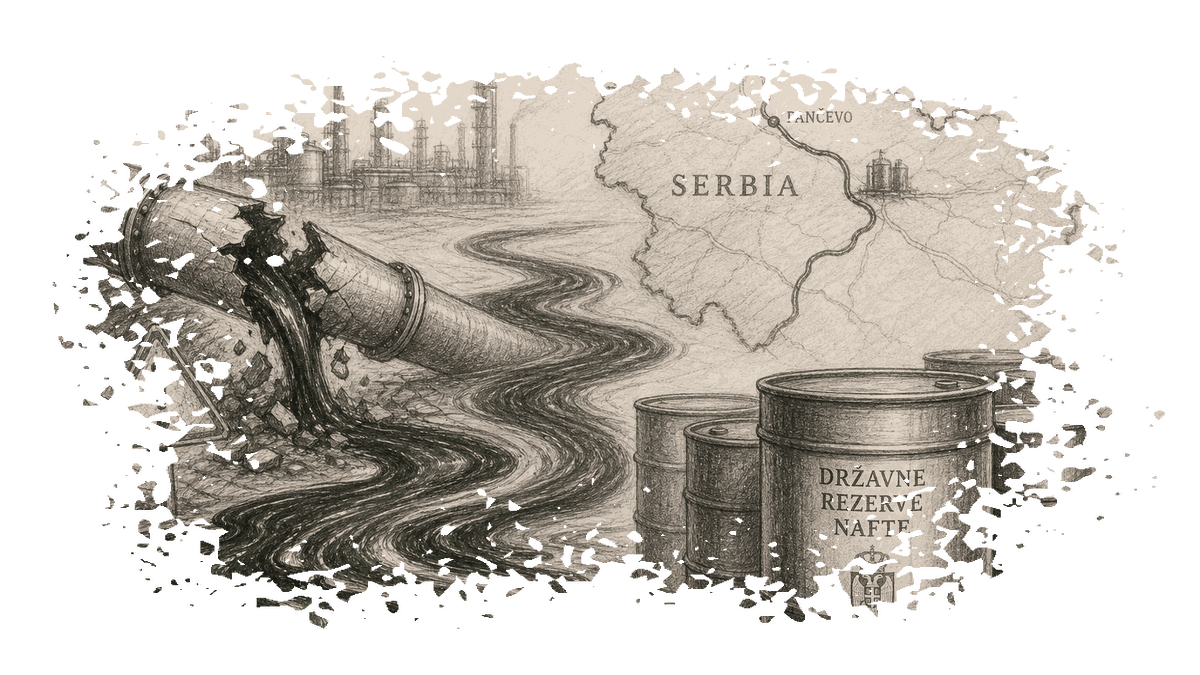
The Naftna Industrija Srbije (NIS) has requested access to Serbia’s state oil reserves following a significant disruption in oil supply caused by a leak in the Jadranski naftovod (Janaf) pipeline. The pipeline, which is crucial for transporting crude oil from the terminal on the island of Krk to the refinery in Pančevo, has been shut down since November 6, 2026, after a leak resulted in the spillage of approximately 500,000 liters of oil near Sisak. This incident has halted the transport of oil, which is expected to resume only by the beginning of December.
NIS, a major supplier covering about 70% of Serbia’s oil market, has formally approached the Serbian government to utilize crude oil from the state reserves to mitigate the supply issues. The government is currently considering this request to ensure the continuity of oil supply and maintain operations at the Pančevo refinery, which has already reduced its production of oil derivatives due to the disruption.
Serbia’s reliance on imported crude oil is significant, with approximately 80% of its oil being imported, while domestic production accounts for the remaining 20%. The disruption in the Janaf pipeline has raised concerns about potential shortages, although experts like Miloš Zdravković, an energy specialist, have assured the public that there is no immediate cause for panic. Zdravković noted that Serbia has oil reserves sufficient for about 60 days and expressed confidence that the issue with the Janaf pipeline would be resolved swiftly, given the economic interests involved.
The leak occurred during maintenance work by an external contractor, leading to the contamination of several thousand square meters of land. Janaf has stated that the collection of the remaining oil in the damaged pipeline is underway, and physical repairs will commence once the pipeline is fully emptied. The cleanup of the surrounding area is also ongoing.
The Serbian government, currently in a technical mandate, is evaluating the situation to protect vital national interests. In the meantime, NIS has assured that its gas stations are well-stocked with all types of fuel and that the company is in constant communication with Janaf and relevant state authorities to address the issue.
The potential impact on fuel prices remains uncertain. Zdravković believes that the disruption is a temporary issue and is unlikely to lead to a price increase. However, the situation is compounded by broader geopolitical factors, such as the European Union’s sanctions on Russian oil and the ongoing conflict in Iran, which have already caused fluctuations in oil prices this year.
The timeline for the repair of the Janaf pipeline remains unclear, and the Serbian government’s response to NIS’s request for state reserves access is awaited. This situation highlights the challenges faced by Serbia in securing a stable oil supply, given its high dependency on imports and the lack of alternative routes for crude oil transportation.




0 Comments