

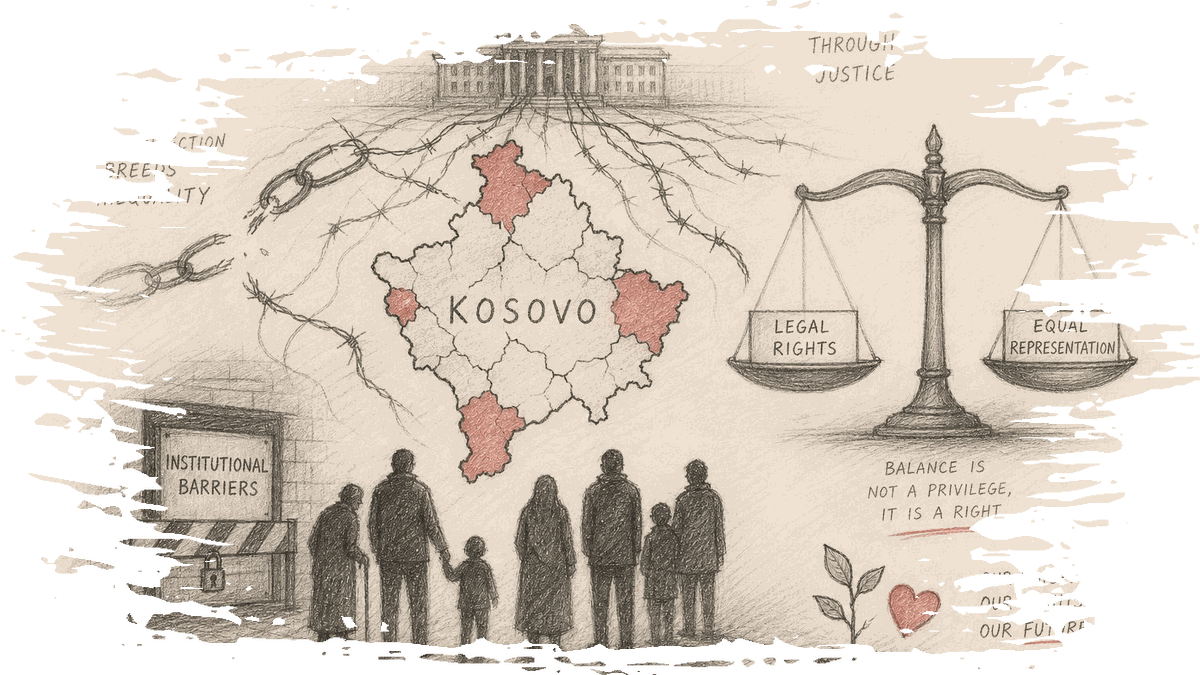
Igor Simić, president of the Serbian List parliamentary group, has called for the urgent formation of the Community of Serbian Municipalities (CSM) in Kosovo, a commitment made in the 2013 Brussels Agreement that remains unfulfilled. Speaking in the assembly in Priština, Simić highlighted the latest European Commission report for 2026, which underscores serious ongoing issues faced by the Serbian community in Kosovo, including strained relations between central institutions and Serbian-majority municipalities.
Simić emphasized the need to cease unilateral measures against institutions supported by Serbia and to respect the jurisdiction of municipalities with Serbian majorities. He pointed out that the European Commission’s report confirms the challenges that the Serbian community has been vocal about for years, now officially documented. “Today, in front of us is not just a report from the European Commission; it is a document that clearly shows the problems the Serbian community is facing and how much work is still needed by the institutions regarding the respect of basic rights, the rule of law, and the functioning of institutions, especially local government bodies,” Simić stated in a video shared on Instagram.
The European Commission report highlights ongoing tensions between central institutions and Serbian-majority municipalities, noting that in some cases, the police and the Ministry of Local Government Administration have limited municipal authority, even when decisions were made through legally prescribed procedures. Simić criticized this as a violation of law and local governance, rather than a mere political disagreement.
He also reiterated the necessity of forming the CSM, a process that has seen no progress since its agreement in 2013. “How many more years must pass for the obligations to be fulfilled? How many more European Commission reports need to state the same problem?” Simić asked, emphasizing that the demand for the CSM is not a political invention but a right derived from agreements that must be respected.
Simić further addressed the report’s findings on the closure of institutions supported by Serbia, which impacts job availability and access to public services for citizens. He highlighted the inadequate representation of Serbs in Kosovo’s institutions, particularly in the police and judiciary, where reintegration has been hindered by institutional decisions. The report criticizes these decisions as inconsistent with the objectives of the 2015 judicial agreements.
The report also raises concerns about legal security and property rights, with Simić condemning the demolition of structures in northern Kosovo without municipal or court approval, often with the assistance of Kosovo police. He called for equal application of the law, ensuring that property disputes are resolved through proper legal channels.
Simić’s statements come amidst a backdrop of historical tensions between Serbian and Albanian communities in Kosovo, which have persisted since the 1990s. The formation of the CSM was intended to address some of these issues by granting greater autonomy to Serbian-majority areas, but its implementation has stalled, contributing to ongoing friction.
The European Commission’s report and Simić’s urgent call for action highlight the complexities and challenges in Kosovo’s governance, particularly concerning the rights and representation of the Serbian community. The situation remains fluid, with the potential for international and local responses influencing future developments.

0 Comments