

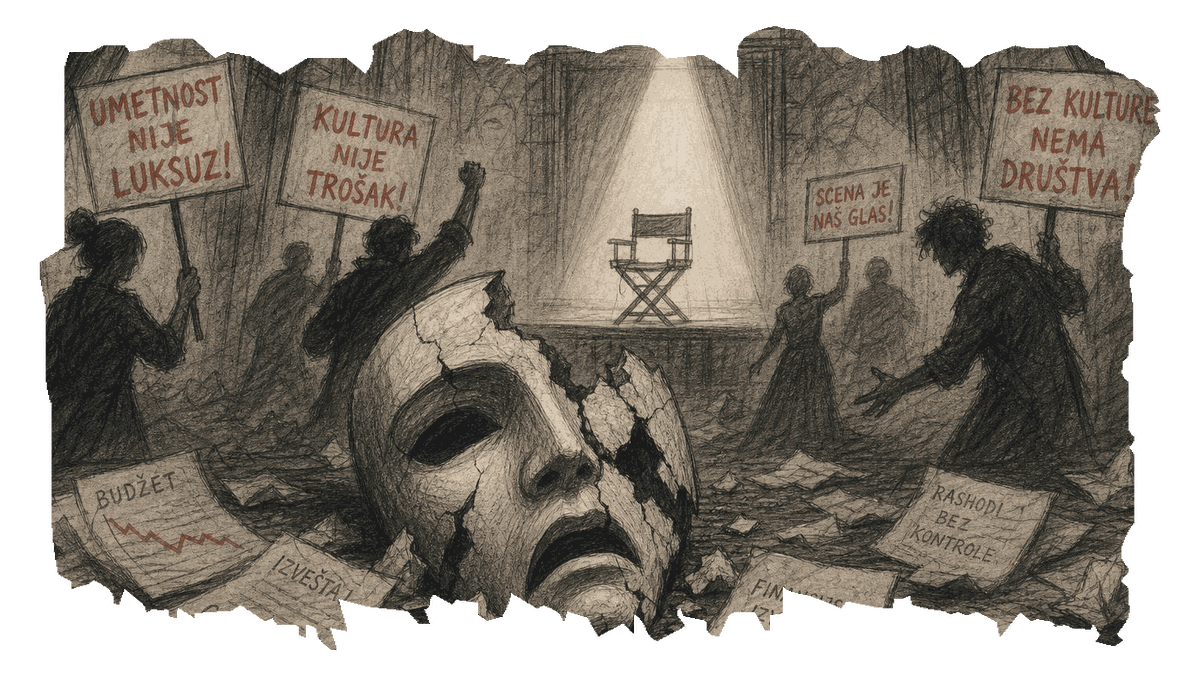
Atelje 212, one of Serbia’s most esteemed theaters, marked its 70th anniversary on November 13, 2026, amid a protest by its ensemble and staff against acting director Ljubiša Ristić. The protest, which coincided with the opening of an exhibition dedicated to the late actor Petar Kralj, highlighted significant financial mismanagement under Ristić’s leadership, threatening the theater’s future.
The ensemble’s call for Ristić’s resignation stems from concerns over financial discrepancies that have surfaced since his appointment by the previous government on July 23, 2026. Actors Hana Selimović, Ivan Mihailović, and Ana Mandić, speaking on behalf of the staff, emphasized the importance of the anniversary and the need to fight for the institution’s survival. They criticized Ristić for not acknowledging the significance of the milestone and for failing to address the financial crisis facing the theater.
The protest was supported by numerous colleagues and cultural figures, creating a vibrant atmosphere reminiscent of a premiere. This support was further bolstered by the opening of a photography exhibition honoring Petar Kralj, marking 15 years since his passing.
Financial issues under Ristić’s management include a sharp increase in expenses due to altered contracts for freelance collaborators, which in just one month amounted to approximately 13 million dinars, while revenues were around 9 million dinars. This discrepancy, according to the ensemble, results from Ristić’s strategy to financially incentivize freelance engagements, which they argue undermines the theater’s structure and the stability of its permanent staff.
The protest also criticized the response from Jelena Medaković, the city secretary for culture, who has not acted on the demands for Ristić’s removal despite financial warnings and a formal request from the theater’s board and union. Instead, Medaković proposed appointing a new board to conduct a director search, a move the ensemble sees as irresponsible given the current political instability.
The ensemble’s demands include Ristić’s immediate dismissal, the appointment of an interim director from within the staff, the revision of detrimental contracts, and the postponement of a director search until greater political stability is achieved. They argue that the public deserves transparency regarding the impending crisis, as the theater is publicly funded and its operations are of significant cultural interest.
The protest at Atelje 212 reflects broader unrest in Serbia’s cultural sector, where similar demands for leadership changes have emerged in response to perceived mismanagement and political influence. The situation at Atelje 212 remains unresolved, with potential implications for the theater’s operations and its role in Serbia’s cultural landscape.


0 Comments