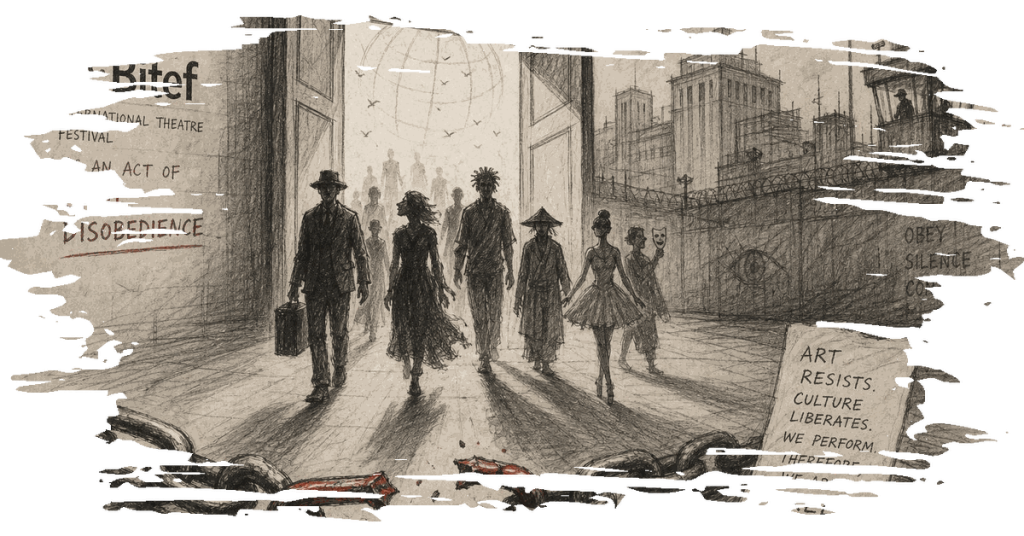
The ne:Bitef festival, scheduled to take place on September 20, 2026, in Belgrade, is set to feature a lineup of international participants who have chosen not to attend the official Bitef festival, highlighting ongoing tensions between cultural expression and governmental authority in Serbia. This event is organized by a team of prominent cultural figures, including Miloš Lolić, Ana Vujanović, Borisav Matić, Jelena Knežević, Miona Đenisijević, and Mladen Savković, who view the festival as a form of civil disobedience against what they perceive as the authoritarianism of local authorities.
Milo Rau, a notable figure in contemporary theater, will participate in ne:Bitef despite being considered persona non grata by local authorities. The festival will also see contributions from the German collective Gob Squad and the Italian theater troupe Motus, both of whom have refused to participate in the official Bitef festival. Other participants include Anja Suša, a perennial selector of Bitef and winner of the Grand Prix “Mira Trailović” in 2023, and director Euđenio Barba, who will be present online. Dragan Živojinov from Slovenia is also expected to attend, ensuring a diverse and international presence at the festival.

Ana Vujanović, one of the organizers, expressed that last year’s ne:Bitef was born out of enthusiasm and a deep commitment to the values of Bitef, which she describes as a mythical symbol of freedom, experiment, and critical thought. She noted that the continuation of ne:Bitef this year was spurred by what she sees as the overreach of autocratic ruling structures, which prompted the cultural community to gather in free spaces and oppose the perceived devastation of the festival.
Borisav Matić, another organizer, emphasized that the Secretariat for Culture of the City of Belgrade cannot prevent the holding of ne:Bitef. He criticized the current and previous secretaries for their perceived incompetence in organizing events of public importance, citing the failure to hold Bitef and Fest in their institutional forms last year. Matić argued that the cultural community’s resistance is a duty, asserting that their guerrilla enterprise is beyond the reach of the authorities.
The ne:Bitef festival is not just a protest but a significant cultural event that aims to preserve the spirit of the original Bitef festival, which has a long history as a symbol of freedom and critical thought in Serbian culture. The festival’s organizers have positioned it as a response to what they see as the occupation of cultural assets by governmental authorities. This year’s edition is expected to continue the tradition of last year’s spontaneous act of solidarity with the local art scene, which has now evolved into a recurring event.
The festival’s significance extends beyond its immediate cultural impact, as it challenges the broader political climate in Serbia. The involvement of international artists underscores its cultural importance and highlights the complexities of cultural politics in the region. As the festival approaches, it remains to be seen how local authorities will respond and what impact this event will have on the future of cultural expression in Serbia.