The funeral of Ratko Mladić, the former Bosnian Serb Army commander convicted of genocide and war crimes, has sparked significant diplomatic tensions between Serbia and its neighbors, particularly Bosnia and Herzegovina. The funeral, which took place in Belgrade, has led to Bosnia and Herzegovina declaring two Serbian embassy officials as undesirable, escalating diplomatic friction in the region.
Bosnia and Herzegovina’s Foreign Minister, Elmedin Konaković, announced that two officials from the Serbian Embassy in Sarajevo, military attaché Milan Dulanović and BIA representative advisor Darko Maksimović, were declared persona non grata and given 48 hours to leave the country. This decision was attributed to the manner in which Mladić’s funeral was conducted in Serbia, which Konaković described as crossing all red lines.

In response to these developments, Serbian President Aleksandar Vučić stated that Serbia would not react hysterically to the fallout from the funeral. Speaking on Radio-Television Serbia, Vučić emphasized that Serbia would make rational decisions and hinted at reciprocal measures, although he stressed the importance of maintaining harmony, especially considering the significant Bosniak population in Serbia. “We have more than 200,000 Bosniaks living in Serbia,” Vučić noted, highlighting their equal status as Serbian citizens.
The funeral has also drawn critical reactions from European leaders. European Commission President Ursula von der Leyen described the images from the funeral as shocking, asserting that they reflect Serbia’s struggle to confront its past. She expressed that the presence of Serbian officials at the funeral sends a deeply regrettable message and contradicts the values that underpin Serbia’s path to European Union membership. Von der Leyen’s sentiments were echoed by European Council President Antonio Costa.
Tonino Picula, the European Parliament’s rapporteur for Serbia, commented on the political implications of the funeral, stating that Serbia’s path to EU membership requires a clear stance on war crimes and alignment with international court rulings. He criticized the attendance of state representatives and members of the Serbian Army at the funeral, viewing it as a political statement.
Despite the controversy, the European Commission has not yet announced specific sanctions against Serbia. However, spokesperson Christian Wigand reiterated that glorifying war criminals and denying genocide are inconsistent with European values. The Commission has communicated its position to Serbian authorities, and any potential future actions will be determined as necessary. The Commission also noted that its previous intervention had an impact, as Mladić was ultimately not buried with state honors.
The funeral has further strained Serbia’s relations with its neighbors and the EU, with calls from some regional leaders for sanctions against Serbia. Croatian Prime Minister Andrej Plenković has criticized the European Commission for not responding more forcefully, and there have been demands for a suspension of Serbia’s EU accession talks.
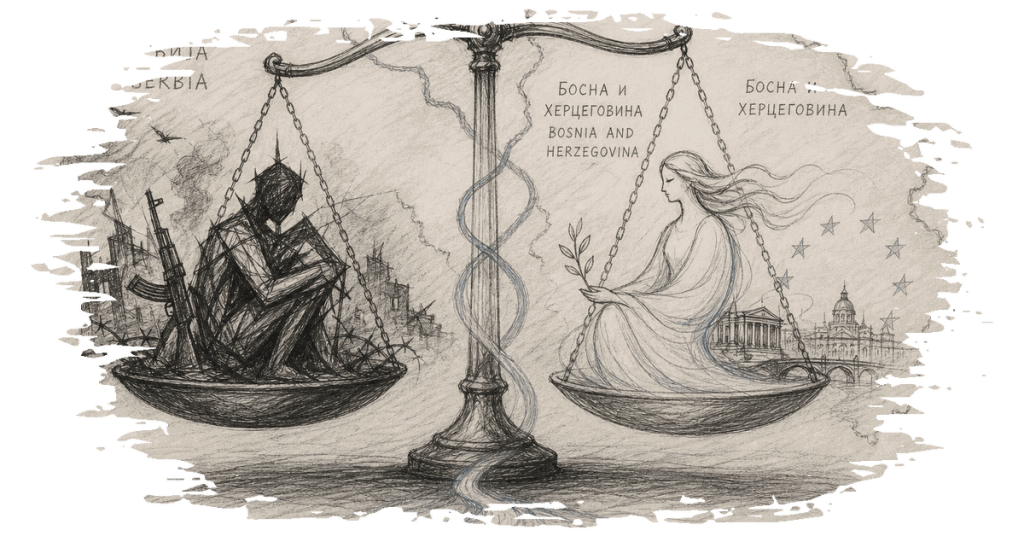
The event has reignited debates over Serbia’s handling of its wartime history and the legacy of figures like Mladić. While some in Serbia view Mladić as a defender of the Serbian people, others see his funeral as a glorification of a convicted war criminal. This division underscores the ongoing challenges Serbia faces in reconciling its past with its aspirations for European integration. The situation remains fluid, with potential implications for Serbia’s diplomatic relations and its EU accession prospects.