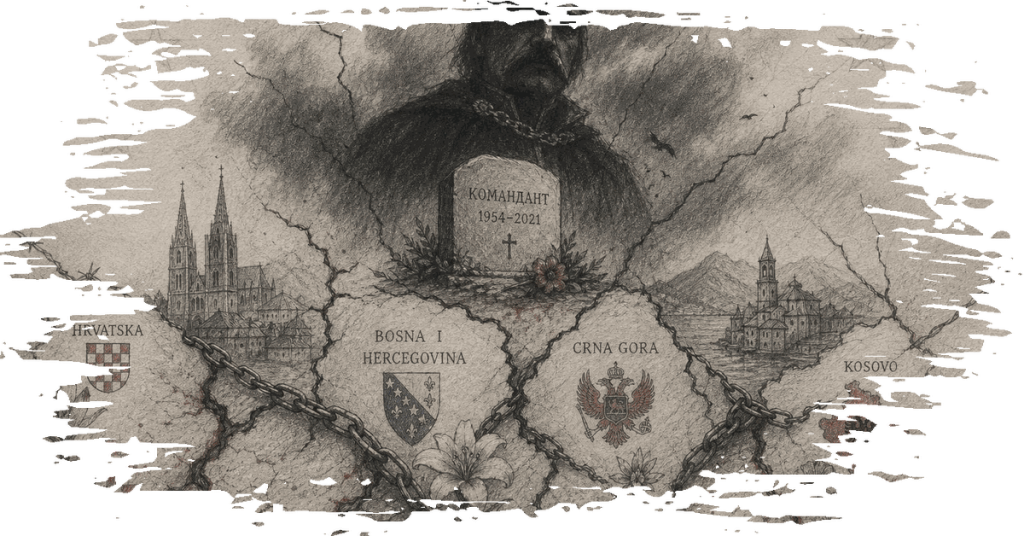
The recent burial of Ratko Mladić in Serbia has sparked a significant backlash from neighboring countries, with political leaders and media outlets in Croatia, Bosnia and Herzegovina, Montenegro, and Kosovo calling for the European Union to impose sanctions on Serbia. The coordinated response comes less than 24 hours after Mladić was laid to rest at Topčider Cemetery in Belgrade. Croatian Prime Minister Andrej Plenković has been particularly vocal, criticizing the European Commission for its perceived lack of a strong response. He has urged prominent EU figures, including Ursula von der Leyen, Antonio Costa, and Kaja Kallas, to take a stand and has called for the suspension of Serbia’s EU accession talks.
This regional outcry is echoed in the media, with outlets like Croatia’s “Jutarnji list” and “Index” describing the burial as a “shame” and a “farce.” Similar sentiments are being expressed in Sarajevo, where publications such as “Klix” and “Dnevni avaz” have accused Serbia of “celebrating evil.” In Montenegro and Kosovo, media narratives align with this critical stance, calling for punitive measures against Serbia.

The burial of Mladić, a former Bosnian Serb Army commander convicted of genocide and war crimes, remains a deeply divisive issue. His actions during the Yugoslav Wars, particularly the Srebrenica massacre and the siege of Sarajevo, have left a lasting impact on regional relations. The glorification of Mladić in Serbia has been a contentious topic, reflecting broader societal divisions.
The Serbian government, led by President Aleksandar Vučić, has maintained that the burial was a private family affair, with Vučić notably absent from the ceremony. Despite this, regional critics argue that the burial should be viewed as a political act, with implications for Serbia’s international relations. The European Commission has previously stated its position on the matter, but the renewed calls for action highlight ongoing tensions.
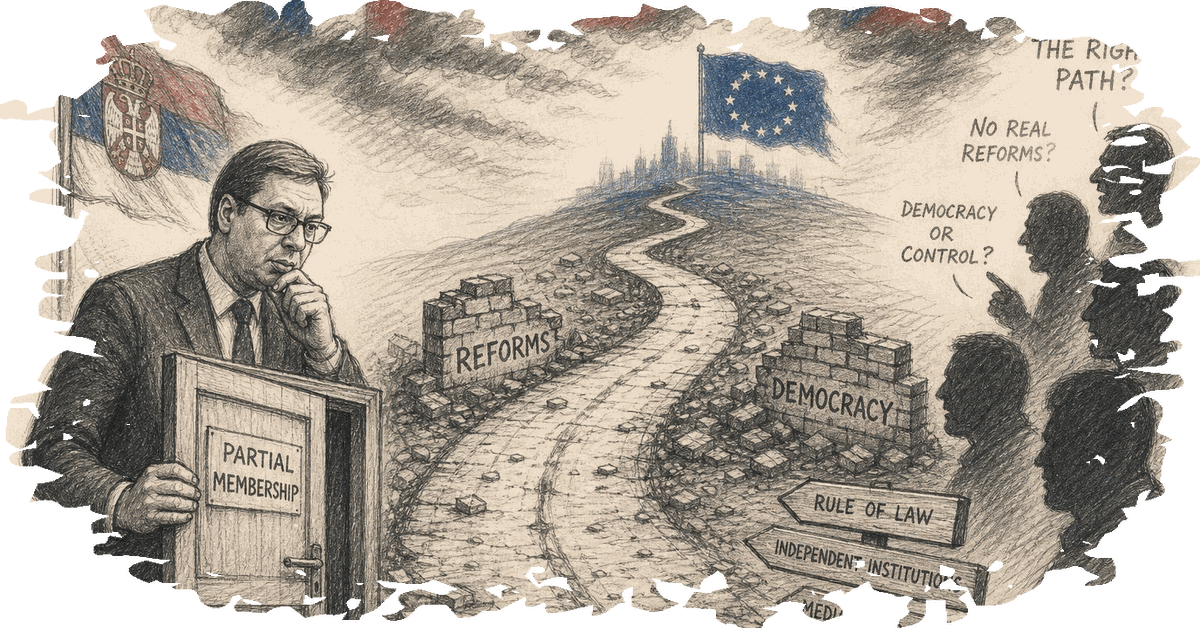
The situation raises questions about Serbia’s path towards EU integration and the potential for increased diplomatic pressure from neighboring countries. The coordinated regional response suggests a growing alliance against Serbia, with leaders using the burial as a catalyst to push for broader political and economic consequences.
As the European Union considers its next steps, the incident underscores the complex interplay between historical grievances and contemporary politics in the Balkans. The burial of Ratko Mladić has not only reignited regional tensions but also brought to the forefront the challenges facing Serbia in its efforts to reconcile its past with its aspirations for future integration into the European community.