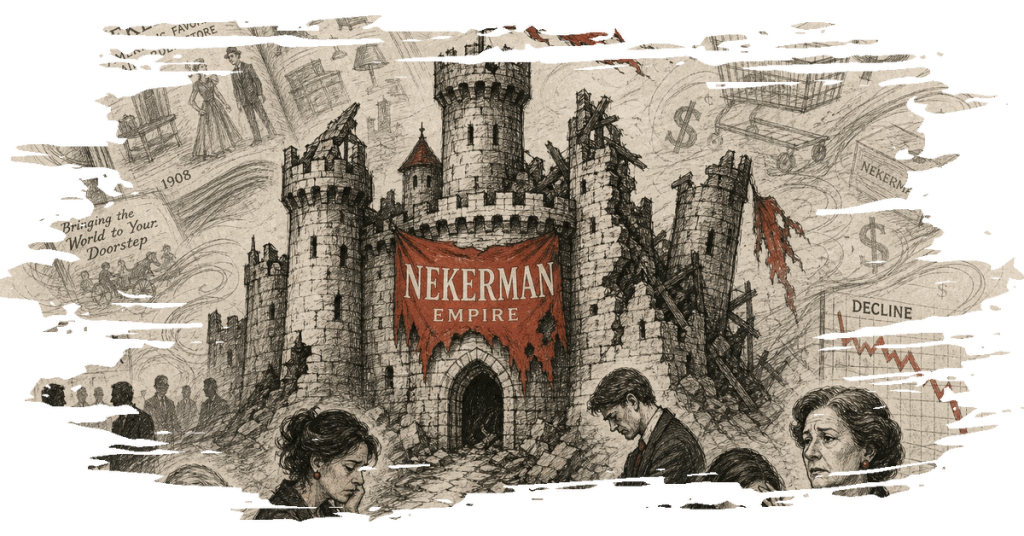
Jozef Nekerman’s once-thriving business empire, known for its extensive range of consumer products, experienced a dramatic downfall following a hostile takeover in 1976. This event marked a significant turning point for the company, which had become a symbol of post-war German economic recovery. The takeover, led by Karstadt, a major German department store chain, was one of the first of its kind in Germany, highlighting the nascent nature of hostile takeovers in the country during the 1970s.
Jozef Nekerman had built a billion-dollar empire by offering a wide array of products, from boats to household appliances, directly to consumers through mail-order catalogs. This innovative approach made the company a household name across Germany. However, financial mismanagement and poor capitalization eventually led to the company’s vulnerability. According to Jozef’s son, Johanes Nekerman, the family’s financial struggles were exacerbated by a loss of over 220 million German marks in 1976, necessitating external partnership to prevent bankruptcy.

Johanes Nekerman, who witnessed the decline of his family’s business, recounted the events leading up to the takeover in an interview with the German newspaper Bild. He revealed that his father, Jozef, had preferred a different solution to the financial crisis—splitting the business into two separate family-run companies. However, the need for financial support led to negotiations with Karstadt, which resulted in Karstadt acquiring a 51.2% majority stake in the company by 1977, effectively stripping the Nekerman family of control.
The takeover was not just a business transaction but a personal blow to the Nekerman family. Johanes recounted the protracted negotiations and the eventual loss of the company’s distinctive slogan, “Nekerman enables,” which he believed was crucial to their sales strategy. The new management’s decision to bring in consultants from McKinsey further alienated Johanes, who eventually left the company, citing irreconcilable differences with the new direction.
The Nekerman case serves as a cautionary tale about the risks of hostile takeovers and financial mismanagement. It underscores the importance of robust financial planning and capitalization to safeguard against such vulnerabilities. The story also highlights the emotional and personal toll that business decisions can have on family-run enterprises.
Jozef Nekerman’s business journey began in a much darker era. During the Nazi regime, he profited from the “Aryanization” of Jewish businesses, acquiring companies at a fraction of their value. One notable acquisition was a textile company from Jewish entrepreneur Karl Amson Joel, the grandfather of American musician Billy Joel. After the war, Jozef Nekerman reached a settlement with Joel, paying two million German marks as compensation.
The rise and fall of the Nekerman empire reflect broader economic and social dynamics in post-war Germany. The company’s initial success was emblematic of the country’s economic miracle, while its downfall illustrates the complexities and challenges of navigating hostile takeovers and financial instability. The Nekerman case remains a significant example of the impact of business strategies and market forces on family-owned enterprises.