

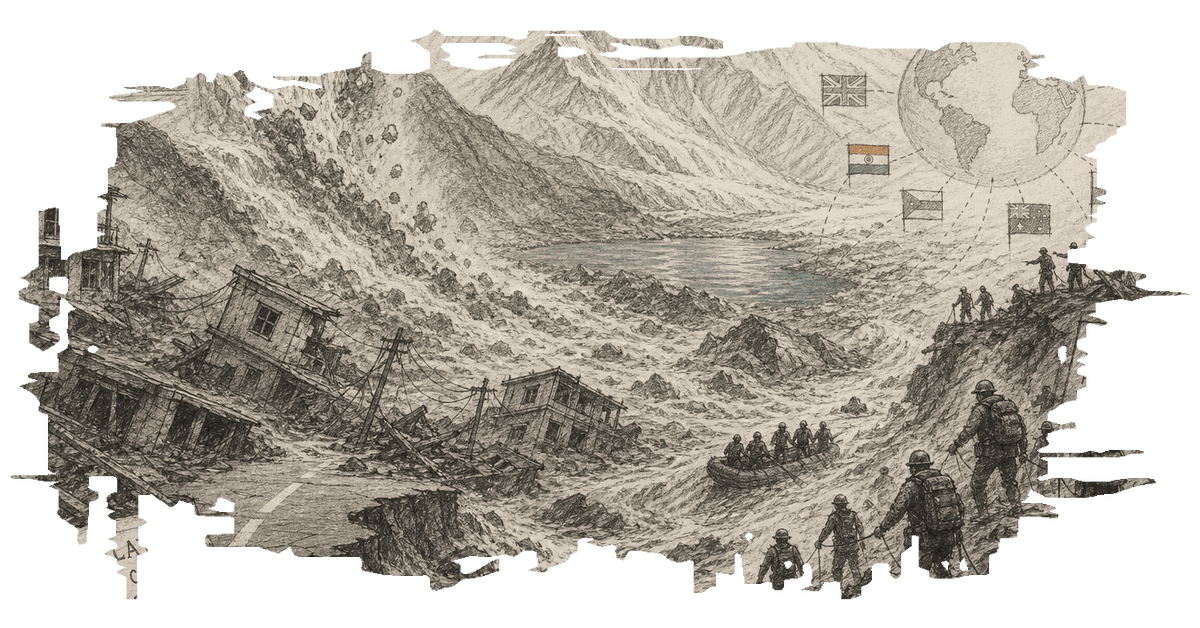
A devastating flood in Nepal, triggered by the collapse of a glacier, has resulted in over 700 deaths and left more than 2,426 people missing, according to Nepal’s disaster management service. Among the missing is a Serbian woman, highlighting the international dimension of the disaster. The floods have caused widespread destruction, with houses and roads swept away and a crucial border crossing between Nepal and Tibet destroyed.
The disaster unfolded after a massive chunk of glacier broke off in the Himalayas, unleashing a torrent of water, mud, and debris downstream. The American Geological Survey confirmed that the event was not caused by an earthquake, as initially reported, but by the glacier’s collapse. This has led to catastrophic consequences, including the formation of new lakes upstream, which pose a risk of further flooding.

Rescue operations are currently underway, involving nearly 20,000 security personnel. The efforts are hampered by the challenging terrain and the threat of additional floods. A Red Cross official expressed concerns about the potential for another flood wave, which could exacerbate the already dire situation. The official emphasized the importance of rapid information sharing between China and Nepal to mitigate further risks.
The floods have also affected Tibet, where three people have died and over 550 are missing. The overlap between the missing persons in Nepal and Tibet is not yet clear. Chinese President Xi Jinping has called for comprehensive search efforts and improved monitoring systems to prevent secondary disasters.
The human toll of the disaster is significant, with survivors recounting harrowing experiences. Kalpana Mala from Nepal’s Nuwakot district described watching her family members swept away by the flood, while she and her son managed to survive by climbing onto a roof. Another resident, Goma Pandit, lost all her livestock and crops to the floodwaters.
The disaster has drawn attention to the vulnerability of the region to natural calamities, exacerbated by its mountainous terrain and glacial activity. Jeff Da Costa, a researcher specializing in flood and disaster risk, noted that the debris from the disaster has blocked rivers, forming new lakes that could burst and cause further flooding. He stressed the need for effective monitoring and information sharing to address the evolving situation.
The incident underscores the broader implications of climate change, as rising temperatures contribute to the destabilization of glaciers and increase the frequency of such disasters. The situation remains fluid, with rescue teams racing against time to find survivors and prevent further loss of life.



0 Comments