

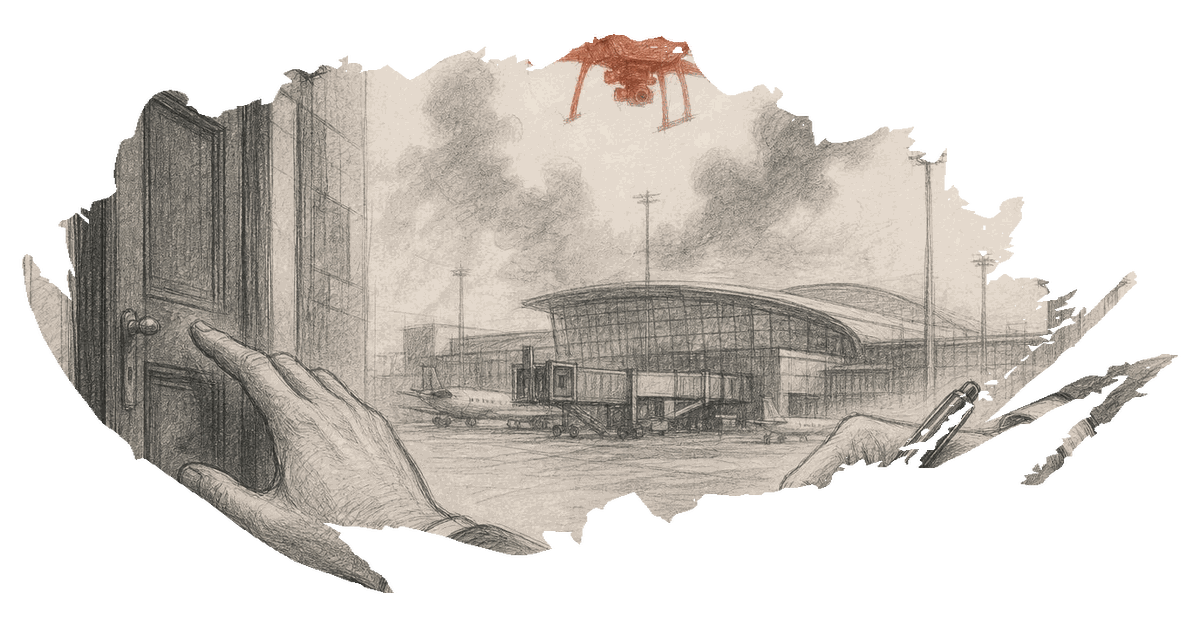
Germany has accused Russia of orchestrating a failed drone attack on Leipzig airport, an incident that has heightened tensions between the two nations. On August 4, 2026, an aircraft equipped with explosives and an activation mechanism was discovered in the security zone of the airport, which serves as a critical hub for military aid to Ukraine. This revelation has prompted Germany to take diplomatic actions against Russia, including the closure of the Russian House in Berlin and tightening entry restrictions for Russian citizens.
German Interior Minister Alexander Dobrint announced on September 1 that the attack preparation demonstrated a high level of technical expertise and significant organizational effort. He noted that the means used in the attack were consistent with other known Russian hybrid operations. Despite the gravity of the situation, the German government had initially been hesitant to publicly accuse Russia. However, the evidence compelled them to make the accusation, marking a significant shift in their diplomatic stance.

Chancellor Friedrich Mertz, while not directly naming Russia in his earlier comments, had previously stated that those responsible for hybrid attacks would face consequences. Following the incident, Germany has decided to close the Russian Consulate General in Bonn and act more decisively against the Russian “shadow fleet.” However, the specifics of these measures and their implementation timeline remain unclear.
In response to Germany’s actions, Moscow announced the closure of the Goethe Institute in Russia and criticized Germany’s punitive measures as a “grave mistake.” Russian President Vladimir Putin accused Berlin of falsifying evidence, while Dmitry Medvedev, deputy chairman of the Russian National Security Council, issued threats against German military equipment production facilities.
The incident has sparked a debate within Germany about the adequacy of the government’s response. Sarah Nani, the Green Party’s spokeswoman for security policy, expressed dissatisfaction with the measures, urging for more decisive action to stop the flow of money to Russia’s war efforts. Similarly, Roderich Kiesewetter, a security expert from the ruling Christian Democratic Union, called for the delivery of “Taurus” cruise missiles to Ukraine and the activation of Article 4 of the NATO treaty, which involves consultations among allies in the face of external threats.
The drone attack and its aftermath underscore the ongoing tensions between Germany and Russia, exacerbated by previous incidents like the Nord Stream bombings. These events have strained diplomatic relations and raised concerns about security and espionage activities. German officials maintain that the country is not at war with Russia but acknowledge being a target of hybrid warfare. The situation remains precarious, with potential implications for Germany’s security policy and its role in the broader geopolitical landscape, particularly concerning the conflict in Ukraine.




0 Comments