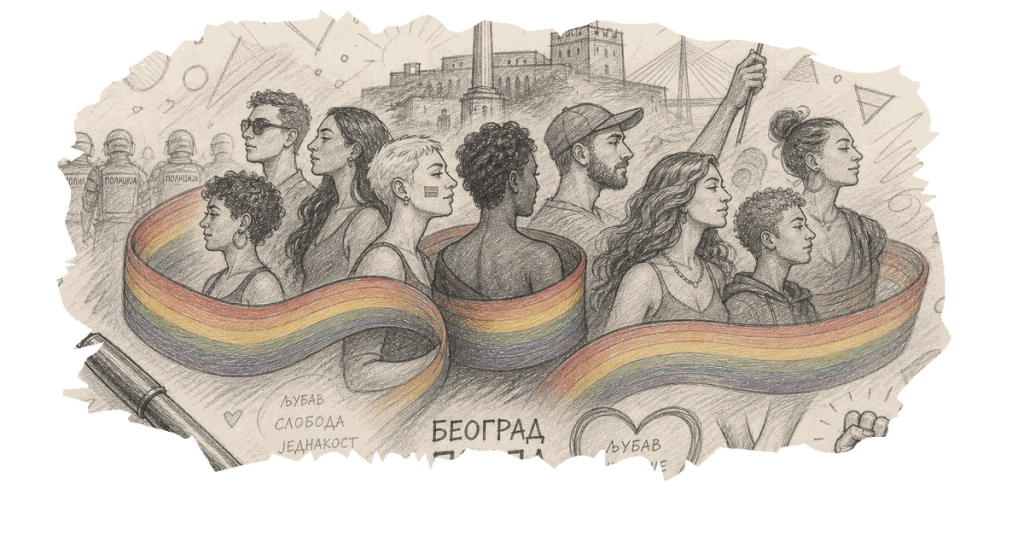
The Belgrade Pride Parade 2026 concluded successfully under the slogan “Ima mesta za sve nas” (There is room for all of us), marking the 25th anniversary of the first Pride event in Serbia. The parade, which took place on September 5, saw participants march from Manjež Park through central Belgrade, accompanied by a significant police presence to ensure safety. The event featured speeches from organizers and participants, emphasizing the ongoing challenges faced by the LGBTI+ community in Serbia.
Goran Miletić, one of the organizers, highlighted the expectation of significant social changes since the first Pride Parade in 2001. Despite the passage of time, he noted that many of the community’s demands remain unmet, particularly the enactment of laws concerning same-sex partnerships and gender identity. The parade’s participants carried a large rainbow flag and banners with messages such as “Visibility is not propaganda” and “God loves everyone,” underscoring their call for equality and acceptance.

The parade was not without tension. A minor verbal confrontation occurred between Pride participants and a group of citizens near the Vaznesenjska Church. The situation was quickly managed by police, preventing any escalation. Additionally, a clergyman was removed by police near the Serbian Parliament after attempting to breach the police cordon with several other individuals.
In her address, Danica Vučenić, this year’s Pride Parade “godmother” and a journalist, reflected on the persistent struggle for LGBTI+ rights. She remarked that despite the parade’s long history, the community continues to face significant challenges, including violence and discrimination. Vučenić criticized the lack of progress in fulfilling the community’s demands, stating that the societal atmosphere remains one of threatened human rights.
Mirjana Karanović, an actress and former Pride “godmother,” congratulated the participants on the parade’s 25th anniversary. She emphasized the importance of living life according to one’s own terms and the right to joy and self-expression. Karanović’s remarks resonated with the parade’s overarching theme of inclusivity and resilience.
The event also featured a musical program back at Manjež Park, with performances by various artists, including Ivana Peters and the band Dolores. The presence of representatives from embassies and European delegations highlighted the international support for the event.
Despite the celebratory atmosphere, the parade underscored the ongoing struggle for LGBTI+ rights in Serbia. Organizers reiterated the need for legislative changes to ensure equal rights for all citizens, a message that has been a consistent theme throughout the parade’s history. The event served as a reminder of both the progress made and the work still required to achieve full equality and acceptance for the LGBTI+ community in Serbia.