

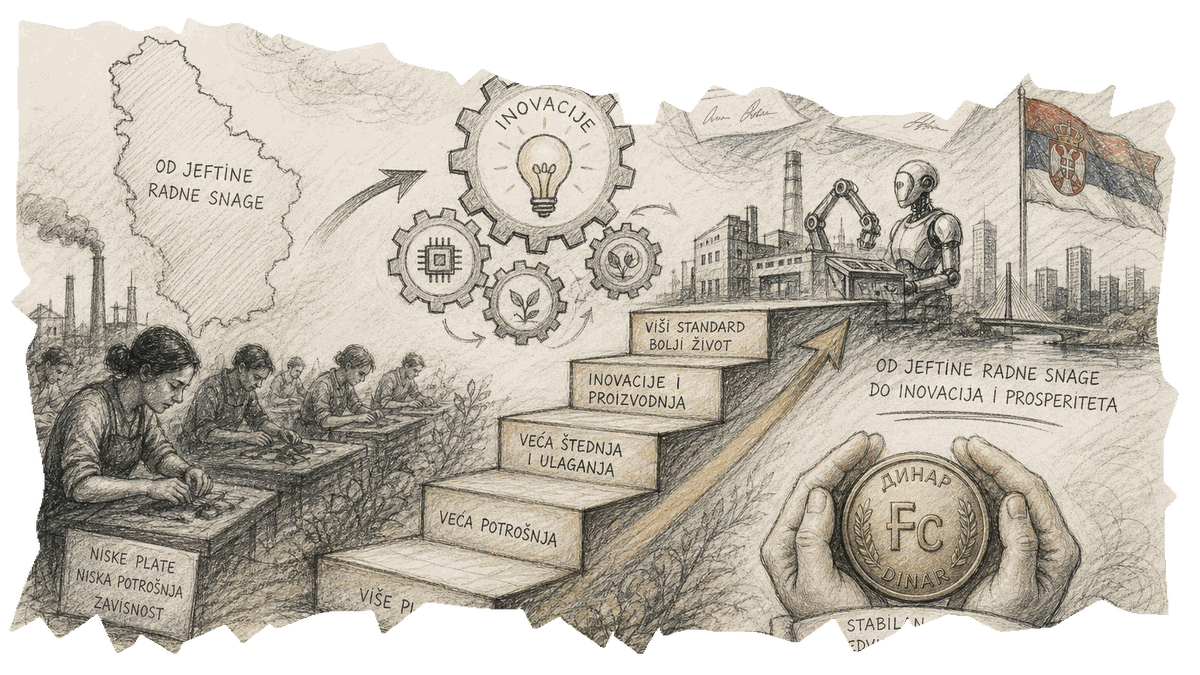
The newly elected Serbian government, led by the Students’ List, has unveiled an economic program that aims to shift the country’s focus towards higher wages and innovation, moving away from its previous reliance on attracting foreign investments through low labor costs. The program, presented on November 28, 2026, proposes a series of reforms designed to enhance Serbia’s economic landscape by linking subsidies to wage levels and maintaining the stability of the dinar exchange rate.
One of the key measures in the program is the increase of the non-taxable portion of salaries from 23% to 35%, a move intended to boost disposable income and stimulate domestic consumption. Additionally, the program emphasizes the importance of attracting innovative firms and enhancing domestic production. This will be facilitated through favorable credit terms offered by the Development Bank of Serbia, targeting knowledge-based industries and competitive firms on the international market.
Public enterprises deemed strategically important will remain under state control, and the government has committed to transparency by making all state contracts public. The program also maintains that the current stable dinar exchange rate will be preserved to ensure economic predictability.
Economist Dr. Veljko Mijušković, a docent at the Faculty of Economics in Belgrade, has expressed support for the gradual approach adopted by the Students’ List, noting that radical changes are not always necessary, especially in areas of economic policy that have been successful. He highlights the importance of maintaining stability and predictability, which have been beneficial for both domestic and international perceptions of Serbia’s economic environment.
Despite these initiatives, there are concerns about the program’s implementation and its effectiveness in attracting foreign investment. Mijušković warns that while the previous model of attracting foreign investors through low labor costs may need modification, it is crucial to ensure that Serbia remains an attractive destination for high-tech companies offering well-paid jobs. He suggests that favorable credit conditions could help retain foreign investors and integrate them into local supply chains, complementing efforts to strengthen domestic small and medium-sized enterprises.
The program’s focus on innovation and knowledge economy is further underscored by the government’s commitment to enhancing education and research. The recent opening of a humanoid robot factory in Šabac, in collaboration with Chinese partners, marks the beginning of new investments in advanced technologies. This development aligns with the government’s strategy to improve the quality of jobs and reduce unemployment, a goal that has been partially achieved in recent years.
Mijušković emphasizes the need to create an attractive environment for investors and suggests that additional criteria and modifications may be necessary to evaluate the program’s impact on attracting investment and stimulating domestic industry. He also points out the importance of having a well-educated workforce, which requires investment in education and alignment of school programs with market needs.
The Students’ List’s victory in the October 2026 elections marked a significant political shift in Serbia, with the new government now tasked with implementing these economic reforms. While the proposed measures aim to modernize Serbia’s economy and improve living standards, the success of the program will largely depend on its execution and the ability to attract and retain foreign investment amidst global economic uncertainties.



0 Comments