

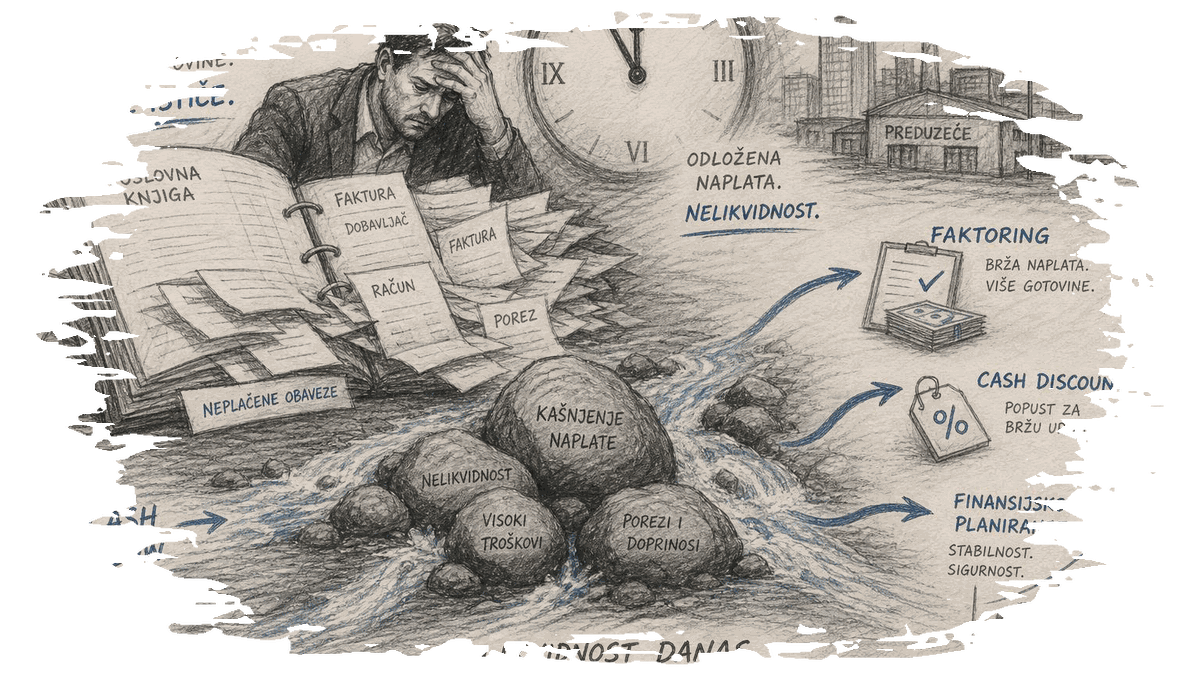
As the end of the year approaches, businesses in Serbia are grappling with cash flow challenges due to delayed B2B payments, which can significantly impact their liquidity. This period is particularly stressful for companies as they face a convergence of financial obligations, including regular salaries, annual bonuses, taxes, loan installments, and supplier invoices, all due before December 31. The situation is exacerbated by the fact that while invoiced revenues may appear robust on paper, the actual cash flow often does not reflect this, leading to potential liquidity crises.
The legal framework in Serbia mandates that payment deadlines should not exceed 60 days in the private sector and 45 days in the public sector. However, in practice, these deadlines are frequently extended, with businesses encountering delays as clients postpone invoice acceptance or offer compensations rather than cash payments. This practice can transform a company into an involuntary creditor, financing its clients’ operations without interest, while simultaneously bearing the cost of its own financial obligations, such as VAT payments on invoices not yet settled.
To address these liquidity issues, two financial strategies are recommended: factoring and offering cash discounts. Factoring involves selling outstanding invoices to a bank or a factoring company, which provides immediate cash—typically 80 to 90 percent of the invoice value—while taking on the risk of non-payment. This option is particularly beneficial for businesses dealing with large retail chains or exporters with extended payment terms. Although factoring incurs a fee, it is often less costly than the financial strain caused by liquidity shortages.
Alternatively, businesses can offer cash discounts to incentivize early payments. By providing a two to three percent discount for immediate payment or settlement within a week, companies can quickly improve their cash flow without resorting to expensive short-term loans. This strategy is especially appealing to companies with surplus cash at the end of the year, as it offers direct savings on procurement costs while enhancing the liquidity of the offering business.
The decision to halt deliveries to key clients who delay payments is another critical consideration for businesses. While the sales department may prioritize meeting annual targets, the finance department may advocate for freezing credit limits until outstanding debts are cleared. Establishing a clear credit policy, including credit checks and automatic reminders, can help businesses manage this delicate balance and protect against financial risks.
As businesses prepare for the new fiscal year, it is crucial to reassess and clean up their balance sheets, particularly concerning uncollectible receivables. Holding onto old, disputed invoices can distort financial statements and hinder future financial planning. By implementing these strategies, Serbian businesses can better navigate the financial pressures of year-end and position themselves for stability and growth in the upcoming year.

0 Comments