

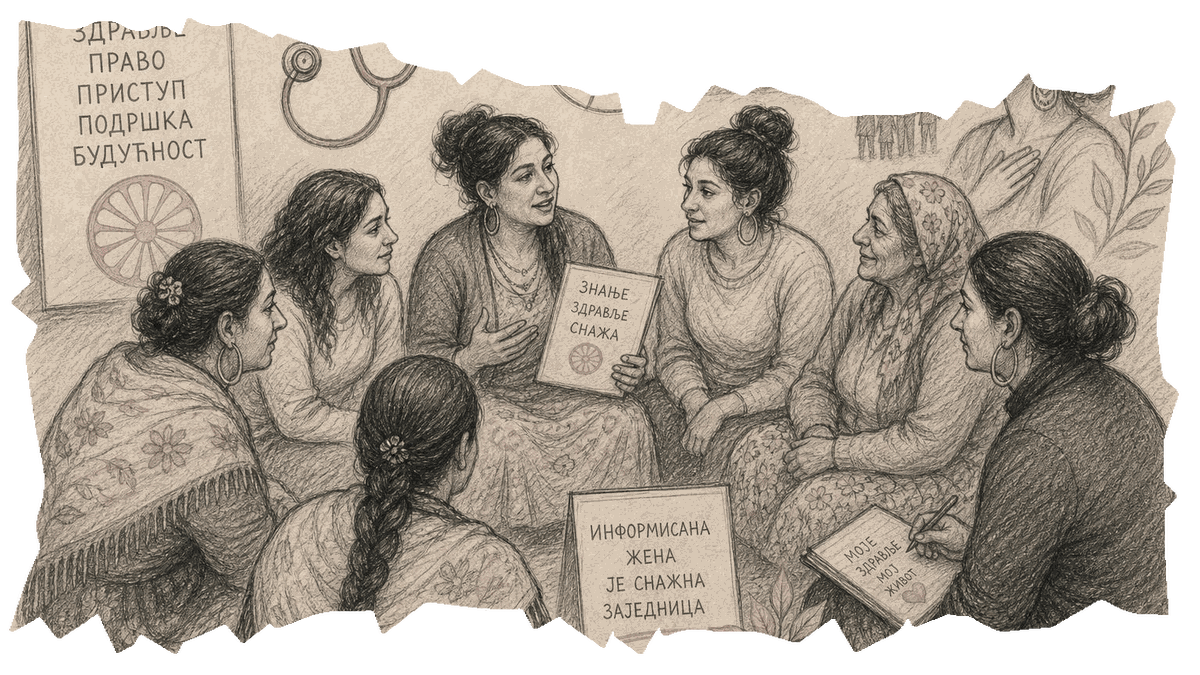
Over 300 Romani women in Serbia have completed a series of health education workshops aimed at improving reproductive health awareness and access to healthcare services. The initiative, titled “Enhanced Health Literacy and Access to Health Services for Romani Women in Serbia,” was presented at a concluding conference in Belgrade. It involved more than 200 educational workshops conducted across five cities: Belgrade, Šabac, Kragujevac, Leskovac, and Pirot. The project was implemented by the Romski ženski centar “Bibija” in collaboration with the United Nations Population Fund (UNFPA) and supported by the pharmaceutical company MSD.
The workshops focused on critical topics such as reproductive health, family planning, disease prevention, HPV vaccination, healthy pregnancy, and the importance of regular gynecological check-ups. A significant outcome of the project was the provision of support to 130 women who had not previously attended gynecological examinations, enabling them to schedule preventive check-ups. Additionally, around 200 women independently decided to undergo examinations at local health institutions.
Local Romani educators played a crucial role in the project’s success by facilitating open discussions on sensitive topics that are often accompanied by a lack of information, prejudice, and shame. The involvement of these educators helped bridge the gap between the Romani community and healthcare services, fostering a more inclusive approach to health education.
The final conference highlighted the necessity for ongoing education, accessible preventive screenings, and a more responsible institutional approach to the needs of the Romani community. It was emphasized that the right to health care should be equally accessible to all, regardless of origin, place of residence, or financial status. The project underscored the importance of ensuring that every Romani woman has access to information, healthcare services, and dignified treatment within the healthcare system.
Panel discussions at the conference, moderated by Nevena Sović, a sexual and reproductive health advisor at UNFPA in Serbia, featured participants such as Svetlana Marinković, Laura Saitović, Sofka Vasiljković, and Sanja Hasanović. They shared experiences from Romani settlements, discussed barriers to accessing healthcare, and stressed the importance of linking education with tangible support from health institutions.
The project also highlighted the role of health mediators, who serve as vital links between Romani communities and the healthcare system. Their work in providing information, field support, and connecting citizens with health services is invaluable, and there is a call for ensuring stable institutional and employment conditions for these professional collaborators.
The initiative represents a significant step forward in addressing health disparities faced by Romani women in Serbia, who have historically had lower rates of healthcare access compared to the general population. However, the long-term impact of this initiative on health outcomes remains to be seen, and further studies may be needed to assess its effectiveness. There are also challenges in maintaining engagement and follow-up care for participants after the workshops. Nonetheless, the project demonstrates the potential for educational initiatives to bring about concrete changes in health behaviors and access to services in marginalized communities.



0 Comments