

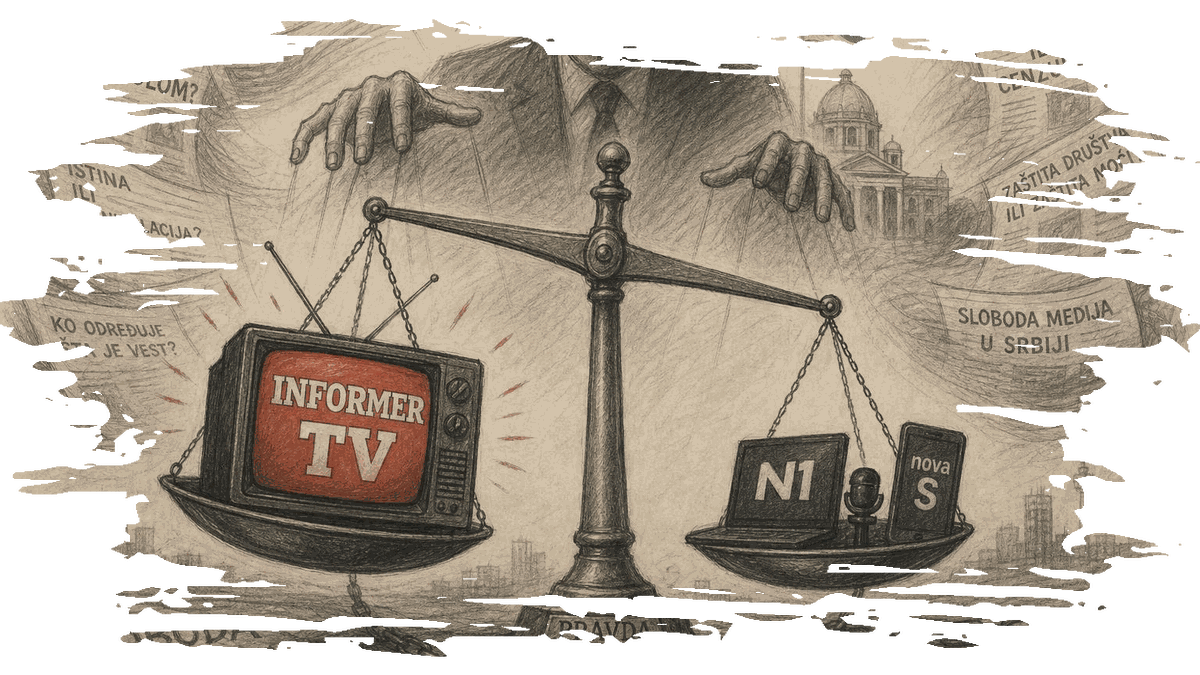
Ana Brnabić, acting President of Serbia and President of the National Assembly, has publicly criticized the Regulatory Body for Electronic Media (REM) for its decision to ban Informer TV, which she claims is the most-watched cable channel in Serbia. In a post on social media, Brnabić accused REM of hypocrisy, arguing that while Informer TV faces restrictions, other media outlets, such as N1 and Nova S, continue to operate despite allegedly engaging in biased reporting against the government and violating election silence.
Brnabić’s comments come amid ongoing tensions between the Serbian government and independent media, following the Students’ List’s victory in the parliamentary elections on October 25, 2026. This political shift has heightened scrutiny on media freedom in Serbia, with concerns about how the new government is handling dissenting media voices.
In her statement, Brnabić accused N1 and Nova S of conducting a campaign against former President Aleksandar Vučić and the Serbian Progressive Party (SNS) during the election period. She alleged that these outlets not only violated the election silence but also openly celebrated the Students’ List’s victory, questioning their legitimacy as media organizations. “They are the brain and heart of a psychological operation against the citizens of Serbia,” Brnabić claimed, criticizing REM for allowing these channels to operate as foreign entities under Luxembourg’s jurisdiction.
The REM’s ban on Informer TV has sparked significant controversy, with Brnabić suggesting that the decision reflects a broader agenda to suppress media that do not align with the Students’ List. This accusation is part of a larger narrative from Brnabić and other SNS members, who have described recent regulatory actions as indicative of a “witch hunt” against opposition voices and an attempt to establish a media monopoly favoring the new ruling party.
The backdrop to these developments includes past criticisms of Informer TV for its inflammatory content and alleged breaches of journalistic standards. Critics have pointed to instances where the channel has been accused of hate speech and inciting violence, raising questions about its role in Serbia’s media landscape. Despite these controversies, Brnabić and other government officials have framed the ban as an attack on freedom of expression.
This situation underscores the complex dynamics of media regulation in Serbia, where the balance between maintaining journalistic standards and protecting media freedom is increasingly contentious. As the Students’ List begins to consolidate its power, the treatment of media outlets like Informer TV will likely remain a focal point of political and public debate, reflecting broader concerns about the direction of democracy and media independence in the country.

0 Comments